Spanish traditions shape daily life as much as they define national identity, linking family rituals, regional customs, food, music, religion, and public celebration in ways that visitors notice immediately and residents often absorb from childhood without naming them. In the broadest sense, a tradition is a practice passed across generations because it carries meaning, social value, or collective memory, and in Spain those practices range from the solemn rhythm of Holy Week processions to the explosive joy of neighborhood fiestas and the expressive force of flamenco. I have worked with Spanish cultural programming and community language projects long enough to see the same pattern repeatedly: people may first arrive for the spectacle, but they stay interested because traditions explain how Spanish communities interact, celebrate, mourn, gather, and mark time. Understanding Spanish traditions matters because they are not decorative extras for tourism brochures; they influence school calendars, local economies, family schedules, religious life, regional identity, and even the etiquette of conversation and hospitality. This hub article maps the miscellaneous side of the topic by showing how major symbols such as flamenco and fiesta connect to wider customs, why different regions express tradition differently, and how older practices continue to adapt in modern Spain.
Flamenco as music, dance, and social memory
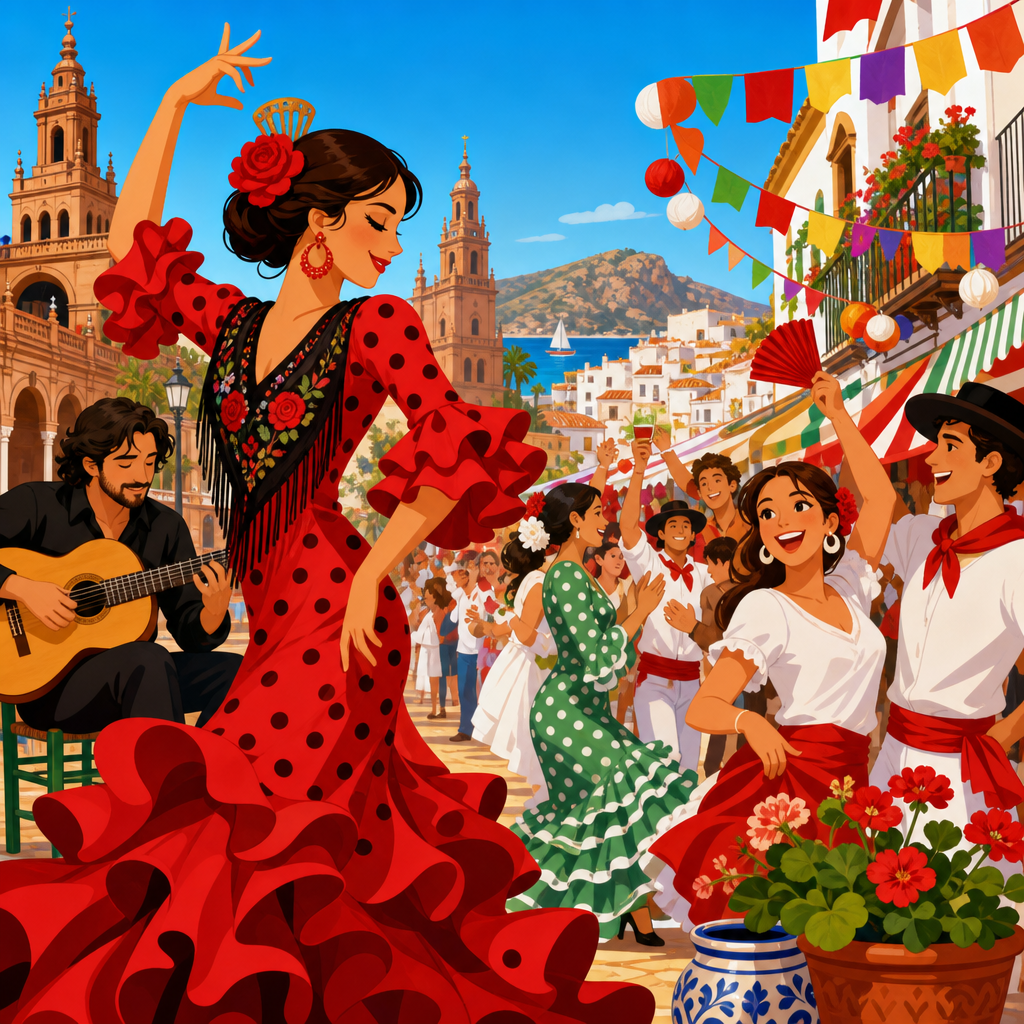
Flamenco is one of the most recognized Spanish traditions, yet reducing it to a dance performed for tourists misses its depth. Flamenco is a complex artistic tradition rooted especially in Andalusia and shaped by Romani, Andalusi, Moorish, Jewish, and broader Iberian influences over centuries. Its core forms include cante, the singing; toque, the guitar playing; and baile, the dance. In practice, palmas, rhythmic handclapping, jaleo, vocal encouragement, and precise compás, or rhythmic structure, are just as important. UNESCO added flamenco to its Intangible Cultural Heritage list in 2010, not because it is simply famous, but because it functions as a living cultural language passed through families, neighborhoods, academies, peñas, and informal gatherings.
When I have watched local flamenco performances outside major tourist circuits, the biggest difference is emotional context. In a small peña flamenca, the audience understands when a soleá feels introspective, when a bulería invites playful challenge, and when a seguiriya carries grief. That shared understanding is part of the tradition itself. Flamenco also reveals a broader truth about Spanish community life: performance is rarely isolated from social bonds. Whether in Seville, Jerez de la Frontera, or Granada, flamenco often appears at ferias, family events, neighborhood festivals, and cultural centers. It is both staged art and lived expression, and that dual role explains why it remains central to discussions of Spanish traditions.
Fiestas and the local calendar of belonging
A fiesta in Spain is not just a party. It is a structured community event tied to a saint’s day, harvest cycle, historical memory, neighborhood identity, or civic anniversary. Many Spanish towns organize their year around these celebrations, and municipal budgets, volunteer associations, music bands, food vendors, religious brotherhoods, and family travel plans all align with them. A well-known example is Las Fallas in Valencia, where enormous satirical sculptures called fallas are built, displayed, judged, and finally burned in March. The spectacle attracts international attention, but for locals it is also the result of year-round neighborhood organization, artisan labor, and intergenerational participation.
Other fiestas illustrate how varied the category is. Feria de Abril in Seville combines casetas, flamenco dress, horses, music, and social visiting. San Fermín in Pamplona is globally associated with the running of the bulls, yet the broader festival includes processions, concerts, traditional dress, and extensive community programming. La Tomatina in Buñol is unusual and highly mediatic, but even it reflects the Spanish tendency to turn public space into communal ritual. Across the country, village fiestas patronales honor patron saints with fireworks, brass bands, open-air meals, dances, and late-night gatherings in the plaza. These events matter because they reinforce belonging: even Spaniards who move to Madrid or Barcelona often return to their hometown for the annual fiesta.
Religious traditions in public life
Spain is more secular than in previous generations, but religious traditions still shape public culture, especially through the Catholic calendar. Semana Santa, or Holy Week, is the clearest example. In cities such as Seville, Málaga, Valladolid, and Zamora, brotherhoods known as cofradías organize elaborate processions featuring pasos, large religious floats carried through the streets, accompanied by penitents, musicians, candles, and dense crowds. The atmosphere varies by region. In Andalusia, processions can include dramatic music and emotional public response; in Castilian cities, silence and austerity often dominate. Both styles express reverence, discipline, and community memory.
Christmas traditions also reveal Spain’s distinctive rhythm. While Christmas Eve and Christmas Day are important, many children traditionally receive gifts on January 6, the Epiphany, known as Día de los Reyes Magos. On the evening of January 5, towns and cities host cabalgatas, parades of the Three Kings, where sweets are distributed to children. Another widely observed custom is eating twelve grapes at midnight on New Year’s Eve, one with each stroke of the clock, for luck in the coming year. These rituals continue because they are repeatable, family-centered, and public. Even when religious belief weakens, the structure of these customs still organizes social interaction and national memory.
Food traditions at the table and in the street
Spanish food traditions are not limited to famous dishes; they are patterns of eating, gathering, sourcing, and celebrating. The tapas culture found in many cities illustrates this perfectly. Tapas can mean small dishes, but the larger tradition is social eating through movement and conversation, often across multiple bars in one evening. In Granada, some bars still serve a tapa automatically with a drink, while in San Sebastián the pintxo tradition emphasizes carefully assembled bites displayed at the bar. Paella, strongly associated with Valencia, is another case where context matters. An authentic Valencian paella has a specific regional history and traditional ingredients; treating any mixed rice dish as paella flattens a distinct culinary tradition.
Seasonality remains important. Turrón is strongly associated with Christmas, torrijas with Lent and Holy Week, churros with festive mornings, and roscón de Reyes with Epiphany. Lunch often remains the main meal of the day, especially outside major business centers, and sobremesa, the conversation that continues after eating, is itself a social tradition. In my experience, people learning Spanish culture often focus first on recipes, but the deeper lesson is timing and relationship. Meals in Spain frequently extend longer than visitors expect because eating is not only about nutrition. It is about conversation, family structure, friendship networks, and the use of shared public and domestic space.
Regional diversity behind the idea of one Spain
Anyone asking what Spanish traditions are should begin with a simple answer: there is no single uniform set. Spain is a highly diverse country with strong regional cultures, co-official languages in several autonomous communities, and traditions that carry local rather than purely national meaning. Catalonia has castells, the human towers built by coordinated teams using technique, trust, and rehearsed structure. Galicia is known for music centered on the gaita, or bagpipe, and for pilgrimage culture linked to Santiago de Compostela. The Basque Country has distinctive rural sports, strong gastronomic societies, and festival traditions grounded in local identity. Andalusia projects many of the images foreigners associate with Spain, but those images should never erase northern, eastern, island, or interior customs.
This diversity is why a hub article on miscellaneous traditions is useful. It helps readers move beyond stereotypes and understand how local history shapes public practice. Moorish architectural heritage influences festivals and civic symbolism in southern cities. Maritime economies affect celebrations along the coast. Agricultural cycles still inform village fairs inland. Regional governments, municipalities, parishes, neighborhood associations, and cultural clubs all play a role in maintaining tradition. In practical terms, if you want to understand Spanish community interaction, study local calendars before national ones. A small town’s patron saint festival can reveal more about lived tradition than a generic list of famous customs ever will.
Traditions of social interaction and everyday etiquette
Some of the most durable Spanish traditions are not spectacular at all. They appear in greeting habits, visiting patterns, leisure routines, and the use of public space. Two kisses as a greeting have long been common in many informal settings, though practices have shifted somewhat after the pandemic and vary by age, region, and context. The paseo, the custom of strolling through town in the evening, continues in many places, especially in smaller communities. Plazas remain central social stages where children play, older residents talk, and families meet after work. This pattern matters because Spanish traditions are often spatial: streets, squares, bars, markets, and promenades function as extensions of social life.
Conversation style is another important area. Spaniards often value warmth, directness, and animated exchange more than rigid formality, though business settings can be more structured. Hospitality frequently includes offering food or drink quickly, and refusing too abruptly may seem cold. Time is also experienced socially. While punctuality matters in professional environments, social events often allow more flexibility than visitors from northern Europe or North America expect. None of this means everyone behaves the same way, but these recurring habits help explain why community ties in Spain often feel visible. Tradition here is not only what happens once a year; it is what people repeat every week without needing an official program.
Key Spanish traditions at a glance
| Tradition | Main Region or Setting | What Happens | Why It Matters |
|---|---|---|---|
| Flamenco | Andalusia, peñas, festivals, theaters | Singing, guitar, dance, handclapping, improvisational expression | Preserves artistic heritage and communal emotional memory |
| Semana Santa | Nationwide, especially Seville, Málaga, Valladolid | Religious processions with floats, music, robes, and brotherhoods | Links faith, craftsmanship, local identity, and public ritual |
| Las Fallas | Valencia | Large artistic monuments are displayed and burned | Combines satire, neighborhood organization, and artisan skill |
| Tapas culture | Bars and social districts across Spain | Shared small dishes eaten while socializing and moving between venues | Turns eating into a form of community interaction |
| Día de los Reyes Magos | Family and municipal celebrations nationwide | Parades and gift giving centered on the Three Kings | Maintains a family tradition that shapes the holiday season |
How traditions change without disappearing
Spanish traditions survive because they adapt. That adaptation is visible in tourism, migration, media, education, and debates about authenticity. Flamenco schools now train international students, yet the strongest performers still study compás and lineage seriously. Major fiestas are marketed globally, but local councils still negotiate noise limits, crowd control, public safety, and neighborhood concerns. Food traditions evolve as chefs reinterpret classics, while protected designations of origin defend local products such as Jamón de Huelva, Manchego cheese, or Rioja wine. Change does not automatically weaken tradition; often it forces communities to define what must remain intact.
There are also tensions. Some celebrations face criticism over animal welfare, commercialization, or overcrowding. Young Spaniards may prefer contemporary music at festivals once dominated by traditional bands. Urban housing pressure in historic centers can make it harder for long-term residents to sustain neighborhood customs. At the same time, cultural associations, dance academies, cooking schools, municipal archives, and heritage programs are documenting and transmitting local knowledge more deliberately than before. From what I have seen, the healthiest traditions are neither frozen nor stripped of meaning. They keep their core social function while allowing new generations to participate in their own way.
Spanish traditions, from flamenco to fiesta, make the country easier to understand because they reveal how people in Spain create continuity through shared acts, repeated symbols, and public participation. The key takeaway is that these customs are not isolated attractions. Flamenco connects art to memory and regional identity. Fiestas organize local calendars and strengthen belonging. Religious observances still influence public life even in a more secular society. Food customs teach timing, sociability, and place. Everyday etiquette shows that tradition lives in conversation, movement, and hospitality as much as in major annual events. Just as important, regional diversity prevents any simplistic definition of what counts as a Spanish tradition. Spain contains many cultural rhythms, and the richest understanding comes from comparing them rather than flattening them.
For anyone exploring Spanish community and interaction, this miscellaneous hub is the right starting point because it provides the framework that links specialized topics together. If you want to go deeper, use these traditions as entry points: study one region’s festival calendar, attend a local performance instead of only a staged tourist show, learn the social rules around meals and greetings, and compare how national holidays are observed in different cities. That approach turns curiosity into understanding. Spanish traditions endure because communities keep practicing them. Follow those practices closely, and the culture becomes far more legible, human, and memorable.
Frequently Asked Questions
What are the most important Spanish traditions that define everyday life and national identity?
Spanish traditions are not limited to major festivals or famous performances; they are woven into ordinary life in ways that shape family relationships, local identity, social habits, and public culture. At the most basic level, tradition in Spain often means shared practices passed down through generations because they express belonging, memory, and values. These include family meals that bring several generations together, patron saint festivals that organize the calendar of towns and neighborhoods, religious observances that still influence public life, and a strong culture of gathering in plazas, cafés, and streets rather than keeping social life hidden behind closed doors.
What makes Spanish tradition especially rich is its regional diversity. Andalusia may be associated with flamenco, Easter processions, and feria culture, while Valencia is known for Las Fallas, Catalonia for castells and Sant Jordi, Galicia for pilgrimage traditions and Celtic-influenced music, and the Basque Country for strong local festivals and communal food customs. These are not minor variations on a single national culture; they are distinct traditions with deep historical roots. At the same time, there are broad themes that unite Spain, including the importance of family, hospitality, local pride, food as a social ritual, and public celebration as a form of community expression.
In practical terms, Spanish traditions define daily life through rhythm and repetition. Sunday lunch, summer town festivals, Christmas gatherings, Holy Week observances, and neighborhood celebrations all reinforce a sense of continuity. Many residents grow up participating in these customs without consciously labeling them as “tradition” because they are simply part of life. For visitors, however, these practices often stand out immediately: long communal meals, processions filling historic streets, late-night festivals, and the way music, religion, and social life overlap so naturally. Together, these customs help explain why tradition in Spain is not just heritage preserved for tourists, but a living framework for identity and belonging.
Why is flamenco such an important symbol of Spanish tradition?
Flamenco is one of the most internationally recognized expressions of Spanish culture, but its significance goes far beyond colorful dresses or dramatic stage performances. At its core, flamenco is a deeply emotional art form rooted especially in Andalusia, shaped by centuries of cultural exchange among Roma communities, as well as Moorish, Jewish, and broader Iberian influences. It combines singing, guitar, dance, rhythm, and improvisation into a form of expression that communicates sorrow, joy, longing, pride, and resistance. That emotional intensity is one reason flamenco has become such a powerful symbol of Spanish tradition.
It is important, however, to understand that flamenco is both regional and national in meaning. It does not represent every part of Spain equally, and not all Spanish traditions are flamenco-based. Yet it has taken on national symbolic importance because it captures several qualities often associated with Spanish cultural identity: passion, artistry, communal participation, and respect for inherited forms that still leave room for personal interpretation. In traditional settings, flamenco is not just performed for an audience; it can also emerge in intimate gatherings where singers, dancers, and musicians respond to one another in real time. That living, participatory quality makes it feel less like a museum piece and more like a tradition carried through practice.
Flamenco also matters because it reflects the connection between art and everyday life in Spain. It can be found in formal tablaos and festivals, but also in family celebrations, local ferias, and cultural events where performance is part of social experience rather than separate from it. Over time, flamenco has evolved, incorporating new influences while preserving classic forms known as palos. This balance between continuity and reinvention is central to how many Spanish traditions survive. Flamenco endures not because it remains frozen in the past, but because each generation reinterprets it while respecting its roots.
How do Spanish festivals and fiestas reflect the country’s cultural diversity?
Spanish festivals and fiestas are among the clearest windows into the country’s diversity because they reveal how each region, city, and town expresses its own history and values through public celebration. While outsiders often speak of “Spanish fiestas” as if they were all alike, in reality they vary dramatically in tone, purpose, and symbolism. Some are religious, such as Semana Santa processions, which can be solemn, ceremonial, and emotionally intense. Others are explosive and theatrical, such as Las Fallas in Valencia, where giant artistic monuments are built and then burned. Still others are rooted in harvest cycles, local legends, patron saints, or historical commemorations.
These festivals reflect Spain’s layered identity. The country has been shaped by Roman, Visigothic, Islamic, Jewish, Christian, and local regional traditions, and fiestas often preserve traces of that long historical development. In one place, a festival may center on church ritual and sacred imagery; in another, it may highlight folk dance, fireworks, costumes, masks, or communal feasting. Even within the same celebration, religious devotion, civic pride, music, food, and social gathering may all coexist. This mixing of sacred and festive elements is a hallmark of many Spanish public traditions.
Fiestas also show how local identity remains powerful in Spain. People often feel strong attachment not only to the nation, but also to their autonomous community, province, city, and even neighborhood. Annual festivals reinforce those ties by bringing residents into the streets, involving local associations, and passing customs from elders to children. Visitors may notice decorations, marching bands, traditional clothing, processions, open-air dancing, and late-night celebration, but for locals these events are also about continuity, memory, and participation. In that sense, Spanish festivals are not simply entertainment. They are social rituals that make community visible and keep regional culture alive.
What role do food and family rituals play in Spanish traditions?
Food and family rituals are central to Spanish tradition because they turn everyday life into a repeated expression of connection, hospitality, and continuity. In Spain, eating is often treated not merely as a practical necessity but as a social event. Meals are a time to gather, talk, linger, and reinforce relationships. This is especially true for family lunches on weekends, holiday meals at Christmas and Easter, and celebrations tied to baptisms, weddings, communions, village festivals, and saint days. Through these occasions, recipes, table customs, and social expectations are passed across generations almost effortlessly.
Spanish culinary tradition also reflects the country’s regional richness. Paella in Valencia, pintxos in the Basque Country, gazpacho in Andalusia, seafood in Galicia, cocido in central Spain, and cured ham across many regions all represent local ingredients, climate, and history. But what matters just as much as the dish itself is the ritual surrounding it. Sharing tapas, extending a sobremesa after a meal, bringing together relatives for a long Sunday lunch, or preparing seasonal sweets during religious holidays all create a sense of continuity between past and present. Children learn not only what to eat, but when, with whom, and why certain foods belong to certain moments of the year.
Family rituals in Spain are often quiet carriers of tradition. A grandmother’s recipe, an annual town visit in summer, a meal after Mass, or the expectation that relatives gather for important dates can preserve identity just as effectively as famous festivals do. These customs are especially significant because they anchor larger public traditions in private life. A procession, feria, or holiday celebration feels meaningful in part because it is connected to family reunion, shared food, and inherited habits. For that reason, understanding Spanish traditions requires looking not only at grand spectacles, but also at the dining table, the family calendar, and the ordinary gatherings through which culture is lived.
How have Spanish traditions changed over time while still remaining important today?
Spanish traditions have never been completely fixed; they have adapted continuously in response to political change, urbanization, migration, tourism, secularization, and globalization. What has allowed them to remain important is not rigid preservation, but their ability to evolve without losing symbolic meaning. A religious festival, for example, may still draw practicing believers, but it may also attract people who participate primarily for family, artistic, or local reasons. Flamenco may appear on major international stages while still surviving in intimate community settings. Traditional foods may be reinterpreted by modern chefs while continuing to anchor family celebrations and regional pride.
This flexibility helps explain why tradition remains so visible in contemporary Spain. Younger generations may express customs differently than their grandparents did, yet many still return for village festivals, holiday meals, Holy Week events, summer ferias, or local patron saint days. Social media and tourism have undoubtedly changed the presentation of some traditions, making them more public and sometimes more commercial. Even so, many celebrations retain deep local meaning because residents continue to organize, rehearse, cook, dress, sing, march, and gather as active participants rather than passive spectators.
At the same time, there is ongoing debate within Spain about which traditions should be preserved, reformed, or reconsidered. That debate is itself a sign that tradition still matters. Customs that no longer align with contemporary values may face criticism, while others are revived precisely because they strengthen community and regional identity in a fast-changing world. In modern Spain, tradition often serves as a bridge between memory and adaptation. It reminds people where they come from, even as they reinterpret inherited practices to fit present-day life. That is why Spanish