Understanding Spanish etiquette and social norms helps visitors, expats, students, and international professionals navigate daily life in Spain with more confidence and far fewer awkward moments. Etiquette refers to the expected behaviors that shape greetings, conversations, meals, public conduct, dress, invitations, and respect for personal boundaries. Social norms are the unwritten rules that determine what feels polite, rude, warm, distant, formal, or trustworthy in a specific culture. In Spain, these rules are influenced by family ties, regional identity, Catholic traditions, urban modernity, and a strong preference for sociability in public life.
I have found that many misunderstandings happen not because people are disrespectful, but because they apply the etiquette of their home country too literally. A traveler may arrive on time to a casual dinner and discover the host is still preparing. A foreign manager may interpret animated discussion as conflict when it is simply engaged conversation. Someone used to quick service may mistake a long meal for inefficiency, when in Spain lingering at the table is part of the point. Learning these norms matters because it improves relationships, avoids unintended offense, and makes everyday interactions smoother.
This hub article covers the miscellaneous practical side of Spanish community and interaction: how to greet people, address them appropriately, behave in homes and restaurants, understand time and punctuality, manage conversation, respect local customs, and adapt to differences between regions and generations. Spain is not culturally uniform, so the most useful approach is to learn the broad national patterns while staying alert to context. Madrid, Seville, Bilbao, Barcelona, Valencia, and smaller towns can feel different in rhythm and style, yet several core expectations appear again and again. If you understand those expectations, you can participate more naturally in Spanish social life.
Greetings, introductions, and forms of address
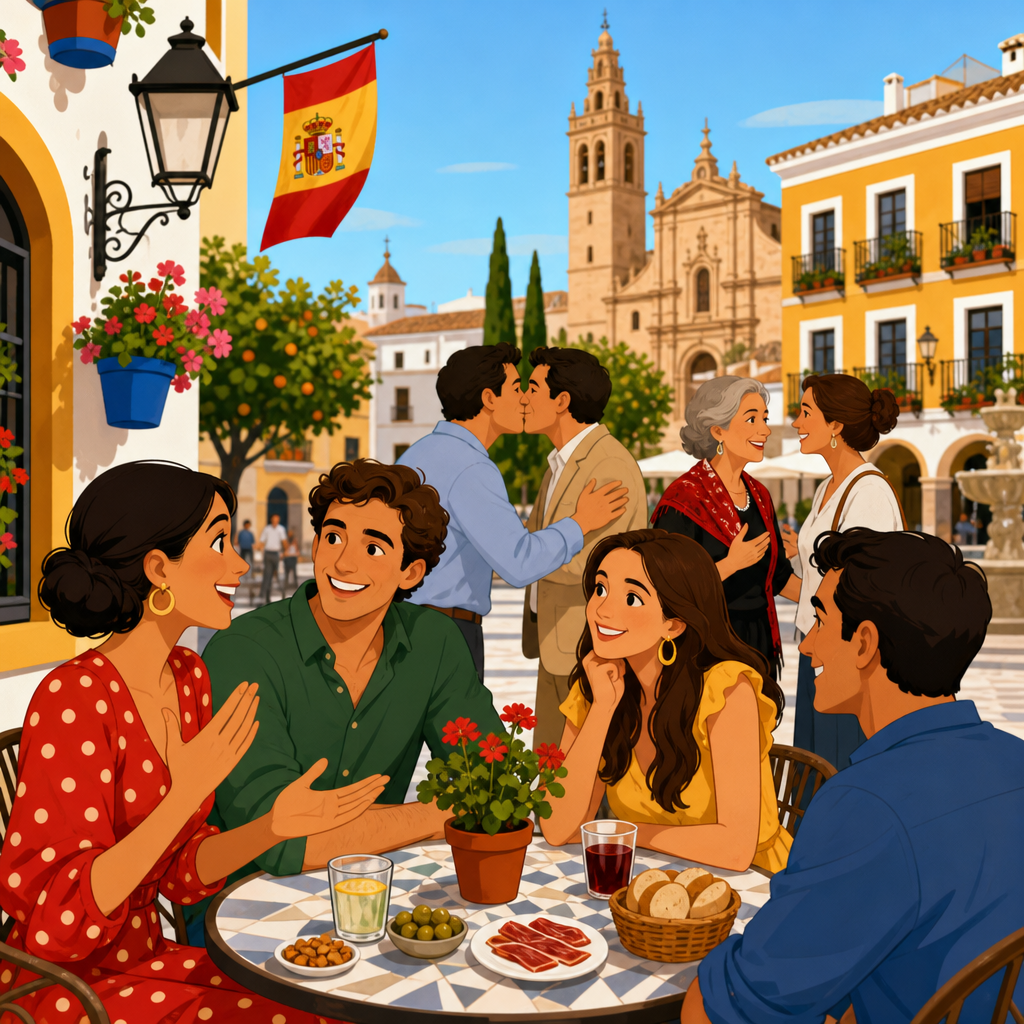
First impressions in Spain are usually warm rather than distant. In informal social settings, two kisses on the cheeks are common between women and between men and women, usually starting on the person’s right side. Among men, a handshake is still standard in many situations, although friends may hug. In professional settings, especially at first meeting, begin with a handshake unless the other person clearly initiates something more familiar. I recommend letting the Spanish person set the level of physical warmth; that removes uncertainty and is rarely seen as cold.
Names and titles matter more in some environments than outsiders expect. Use señor, señora, or señorita less rigidly than in the past, but polite address still matters with older adults, officials, and formal contacts. The distinction between tú and usted remains relevant. In many workplaces, universities, and urban social circles, people shift to tú quickly. With doctors, older neighbors, clients, senior officials, or anyone in a clearly formal setting, starting with usted is safer. If the other person says “tutéame,” they are inviting the informal form.
When introducing yourself, a firm but not aggressive handshake, direct eye contact, and a friendly greeting such as “Encantado” or “Mucho gusto” work well. Spaniards often greet everyone in a small group individually, so entering a room and giving one general wave can feel too vague in closer social contexts. In shops or small offices, saying “hola,” “buenos días,” or “buenas” before asking for help is basic courtesy. That small verbal acknowledgment signals respect and usually improves the interaction immediately.
Conversation style, body language, and personal interaction
Spanish conversation tends to be expressive, layered, and interactive. People may interrupt more often than in northern European or North American settings, but interruption does not automatically mean disrespect. In many cases it signals interest, enthusiasm, or familiarity. Tone is also important. A lively exchange with strong opinions, overlapping speech, and hand gestures may still be friendly. I have seen foreigners misread this style as argument when everyone involved considered it a normal, enjoyable discussion.
Personal space can be smaller than what some visitors are used to. Standing close during conversation is common, especially in crowded cities and social settings. Pulling back repeatedly may make you seem reserved. At the same time, regional and generational differences exist, and younger urban professionals may keep more distance in formal contexts. Eye contact generally communicates sincerity and attention. Looking away too often can seem evasive or disengaged.
Certain topics are easy openings: food, travel, football, local festivals, neighborhoods, and family background. Politics can arise quickly, but that does not mean you need to jump in aggressively. Spain’s history, including the Civil War, dictatorship, regional nationalism, and current political polarization, gives some discussions emotional weight. Humor is common, irony is frequent, and teasing among friends can be affectionate. The safest rule is to listen first, match the group’s tone, and avoid assuming that one Spaniard speaks for all of Spain.
Time, punctuality, and everyday scheduling
One of the most discussed aspects of Spanish social norms is time. The reality is nuanced. Spain is not simply “late.” Different settings have different standards. Business meetings, medical appointments, train departures, and official procedures require punctuality. Social events are looser. If you are invited to a casual house party at 9:00 p.m., arriving at 9:00 sharp may be earlier than ideal. For a dinner at someone’s home, arriving around ten to fifteen minutes after the stated time is often acceptable unless the host has specified otherwise.
Daily schedules also differ from those in many countries. Lunch is often the main meal and may happen between 2:00 and 3:30 p.m. Dinner frequently starts after 9:00 p.m., and in some cities even later. This schedule affects invitations, restaurant reservations, and when people are available by phone. In smaller businesses, especially outside major city centers, some establishments still close midday. Although the traditional long siesta is overstated in international stereotypes, split schedules remain part of commercial life in some areas.
The practical lesson is simple: confirm plans, do not assume your usual timetable applies, and distinguish sharply between official punctuality and social flexibility. When in doubt, ask directly: “¿A qué hora llego?” or “¿Es una cena formal?” Spaniards generally appreciate clear coordination, especially because many schedules are compressed into late afternoons and evenings.
Dining etiquette, hospitality, and being a guest
Meals are central to Spanish social life, and table behavior communicates more than many newcomers realize. If you are invited to someone’s home, bringing a small gift is a good idea. Wine, pastries, quality chocolates, or flowers are common, although flowers may be less practical if the host is managing a large meal. Do not expect the host to open your wine immediately; many hosts have already planned the menu and pairings. Complimenting the food is expected, and refusing everything repeatedly can seem impolite unless you explain clearly.
At restaurants, Spaniards often linger after eating. The table is a social space, not just a place to consume food efficiently. Asking for the check requires initiative because staff usually avoid rushing diners. Eye contact with the server and “la cuenta, por favor” is standard. Tipping is moderate compared with the United States. Service charges are usually included, and rounding up or leaving a small amount for good service is common. Large percentage tips are not required in most everyday situations.
Sharing is also common. At informal meals, dishes may be placed in the center, especially with tapas or raciones. Wait until others begin, use serving utensils where provided, and do not claim the last piece without offering it around first. Bread often stays on the table throughout the meal. In bars, fast social rituals matter: greet the staff, know your order when the place is busy, and understand that standing at the bar is normal. The rhythm may look chaotic, but regulars understand it well.
Public behavior, dress, and respect for shared spaces
Spanish public life is highly social. Streets, plazas, cafés, and promenades are places for conversation and community, especially in the evening. Noise levels that seem high to outsiders may be normal in festive or family settings. Even so, respect for shared spaces matters. Late-night noise near residential buildings can create real tension, and many municipalities enforce quiet-hour rules. On public transport, offering a seat to older adults, pregnant passengers, or people with mobility issues is expected. Basic greetings with neighbors, doormen, and local shopkeepers also carry social value.
Dress in Spain is generally more put-together than many visitors expect. Casual is acceptable, but “casual” often still means coordinated, clean, and intentional. Beachwear belongs at the beach. Entering city shops or cafés shirtless or in swimwear is widely frowned upon and can violate local regulations. For religious sites, modest dress remains important. In professional settings, appearance still influences credibility, especially in law, finance, hospitality, and client-facing roles.
| Situation | What is usually expected | What to avoid |
|---|---|---|
| Meeting someone socially | Greet each person, friendly tone, follow their lead on handshake or cheek kisses | Ignoring part of the group or rushing straight into business |
| Invited to a home | Bring a small gift, arrive slightly after time if casual, compliment the meal | Arriving very early or criticizing food and household routines |
| Restaurant meal | Expect a long meal, ask for the bill when ready, tip modestly | Pressuring staff to hurry or expecting constant check-ins |
| Religious or historic site | Dress respectfully, lower your voice, follow posted rules | Loud behavior, flash photography where banned, beachwear |
| Neighborhood interaction | Say hello, respect quiet hours, be courteous in shared buildings | Acting anonymously or making repeated late-night noise |
Family, invitations, celebrations, and social obligations
Family remains a defining force in Spanish social structure. Even highly independent adults may have strong weekly contact with parents, siblings, and extended relatives. Sundays, holidays, birthdays, baptisms, weddings, and local patron-saint festivals often revolve around family networks. If you are dating a Spaniard, meeting relatives may happen earlier and more casually than you expect, but the social meaning can still be serious. Showing warmth toward family members counts heavily in how you are perceived.
Invitations should be taken seriously, but not every invitation is equally formal. “Tienes que venir un día” can be genuine friendliness rather than a fixed plan. Confirm specifics before assuming anything is scheduled. For birthdays and named celebrations, punctuality depends on the format. A children’s party, restaurant reservation, or formal lunch requires more precision than drinks at a bar. If you cannot attend, declining promptly is respectful. Last-minute cancellation without a strong reason can be read as inconsiderate.
Celebrations often run late and include multiple phases: drinks, meal, sobremesa, and sometimes moving elsewhere afterward. Sobremesa is the conversation that continues after the meal ends, and it is culturally significant. Leaving immediately after dessert can seem abrupt unless you have warned people in advance. In my experience, some of the most meaningful relationship-building in Spain happens during this unhurried post-meal period rather than during the formal invitation itself.
Regional differences, modern change, and practical adaptation
No guide to Spanish etiquette is complete without a warning against overgeneralization. Spain includes strong regional cultures with distinct languages, histories, and social expectations. In Catalonia, the Basque Country, Galicia, Andalusia, Valencia, the Balearic Islands, the Canary Islands, and Castile, communication style, attitudes toward formality, meal patterns, and local identity can vary noticeably. In Barcelona, for example, using a few words of Catalan is often appreciated, just as recognizing Basque or Galician identity matters in other areas. Respect starts with not treating the country as culturally flat.
Generational change also matters. Younger Spaniards often have more international habits, greater comfort with direct scheduling by messaging apps, and less formality around titles and protocol. Workplaces influenced by multinational companies may operate very differently from family-run firms, public institutions, or small-town businesses. Gender expectations have changed significantly as well, although older etiquette scripts can still appear in some families and regions. Good judgment means reading the room instead of relying on a single national stereotype.
The most reliable strategy is adaptive politeness. Start slightly more formal, observe how others interact, and then mirror the level of warmth, punctuality, and directness that the context supports. If you make a mistake, a brief apology and a willingness to learn usually repair it quickly. Spaniards are often forgiving when they see genuine respect. For deeper guidance on language choices, local festivals, dining customs, and professional communication, use this hub as your starting point and continue through the related articles in the Spanish Community and Interaction section.
Spanish etiquette and social norms are easiest to understand when you stop treating them as a rigid list of rules and see them as a system built around respect, warmth, and social awareness. The essentials are consistent: greet people properly, acknowledge everyone in the group, use the right level of formality, expect expressive conversation, distinguish business punctuality from social flexibility, and treat meals as relationship time rather than a rushed task. If you remember those principles, many smaller customs make sense on their own.
The biggest benefit of learning these norms is practical confidence. You order more smoothly in bars, avoid arriving at the wrong time, make better impressions in homes and workplaces, and recognize when animated discussion is actually a sign of connection. You also become more sensitive to regional identity and less likely to rely on clichés about late dinners, siestas, or “Mediterranean” behavior. That awareness matters whether you are visiting for a week, relocating for work, studying abroad, or building long-term personal relationships in Spain.
Use this article as your hub for the miscellaneous side of Spanish community and interaction, then deepen your understanding through focused guides on greetings, dining, family life, regional customs, and professional etiquette. The more deliberately you observe, ask, and adapt, the more naturally Spain opens up to you. Start with one simple habit today: greet warmly, listen carefully, and let the local context teach you the rest.
Frequently Asked Questions
What are the most important Spanish etiquette rules visitors should know first?
If you are new to Spain, the most useful starting point is to understand that politeness is often expressed through warmth, attentiveness, and situational awareness rather than through constant formality alone. Greetings matter a great deal. It is normal to say hello when entering a small shop, café, waiting room, or office, and leaving without a brief goodbye can feel abrupt. In social settings, people may greet with two cheek kisses, especially between women and between women and men, although a handshake is also common in more formal or professional situations. Watching what others do is the safest guide.
Conversation style in Spain can also feel more direct, animated, and overlapping than in some other cultures. This does not automatically signal rudeness. Interruptions may simply reflect engagement and enthusiasm. Meals are social occasions, so rushing through them can seem odd, especially at lunch or dinner with others. Punctuality depends heavily on context: professional meetings usually call for being on time, while private gatherings may begin later than stated. Dress tends to be neat and intentional, particularly in cities, so appearing overly casual in certain restaurants, offices, or evening settings may stand out. Overall, the key is to be respectful, observant, and relaxed. In Spain, good manners often come from showing genuine interest in people and adapting to the rhythm of the situation.
How do greetings and personal space typically work in Spain?
Greetings in Spain are one of the clearest areas where etiquette and social norms become visible right away. In professional settings, a handshake is still standard, especially during first meetings, formal introductions, or business interactions. In social settings, however, two cheek kisses are common, usually beginning on the same side used locally. This greeting is more symbolic than intimate, and in many cases cheeks barely touch. Men who know each other well may greet with a hug, a pat on the shoulder, or a handshake, depending on the relationship and region. Because Spain is not culturally identical everywhere, local habits can vary, so paying attention to what the other person initiates is often the best approach.
Personal space in Spain may feel closer than in cultures that value larger physical distance during conversation. People often stand nearer, use expressive gestures, and touch an arm or shoulder casually while speaking. This is usually a sign of openness, not intrusion. At the same time, boundaries still matter. Being too physically familiar too quickly, especially in professional situations, can feel inappropriate. A useful rule is to match the other person’s level of formality and comfort. Eye contact is generally expected, and avoiding it too much can appear disinterested or insecure. If you are unsure whether to offer a handshake, cheek kisses, or simply a verbal greeting, let the host or the other person lead. In Spain, social ease often comes from reading the room rather than rigidly applying one fixed rule.
What should I know about dining etiquette and meal customs in Spain?
Dining etiquette in Spain reflects the country’s strong emphasis on social connection, conversation, and enjoying time together. Meals are often later than many international visitors expect. Lunch may begin around 2:00 p.m. or later, and dinner is often served from 9:00 p.m. onward, especially in larger cities. If you are invited to eat with Spanish friends, arriving exactly on time for a casual home gathering may not always be necessary, though being significantly late without notice is still discourteous. In restaurants, meals are typically not rushed. Lingering at the table is normal, and the server may not bring the bill until you ask for it. This is not neglect; it is part of a dining culture that values unhurried enjoyment.
Table manners are generally straightforward but important. Keep your hands visible above the table rather than in your lap, and wait for everyone to be served before starting if the occasion is formal or family-oriented. Bread is commonly placed directly on the table or beside the plate, and shared dishes such as tapas are meant for group enjoyment. If sharing, take portions neatly and avoid reaching carelessly across others. In some settings, offering to pay is appreciated, though who pays depends on the relationship and occasion. Tipping in Spain is more modest than in countries where it is expected as a major part of service income; leaving a small amount for good service is common, but large tips are not always necessary. If you are invited to someone’s home, bringing a small gift such as pastries, wine, or flowers is usually a thoughtful gesture. Above all, participating in the meal with interest and conversation is as important as following technical table rules.
How formal are Spanish conversations, and what behavior is considered rude?
Spanish conversation can seem both more expressive and more nuanced than many newcomers expect. People often speak energetically, interrupt one another, and use humor, strong opinions, or lively debate as part of normal interaction. This style usually signals involvement, not hostility. At the same time, respect remains essential. Using polite forms such as “usted” may be appropriate with older adults, authority figures, or in formal business contexts, though in many everyday situations people shift to the informal “tú” fairly quickly. The change from formal to informal language often reflects comfort and social closeness, so listening carefully to how others address you can help you respond appropriately.
Behavior considered rude in Spain often involves indifference, coldness, or failing to acknowledge others rather than simply being quiet. Not greeting people when entering a shared space, speaking in an excessively blunt or dismissive way, or acting impatient during social interactions can create a negative impression. Public behavior also matters. Speaking loudly in the wrong context, causing disruption late at night in residential areas, or ignoring queue etiquette where it clearly exists may be poorly received. In conversation, repeatedly comparing Spain unfavorably to your home country, making sweeping stereotypes, or assuming everyone follows identical customs can also come across as disrespectful. Spaniards often appreciate sincerity and openness, but they usually expect that to be balanced with humility and cultural sensitivity. A good rule is to be friendly, attentive, and adaptable rather than overly stiff or overly casual.
How should expats, students, and professionals adapt to Spanish social norms over time?
The most effective way to adapt to Spanish social norms is to understand that integration usually happens through observation, consistency, and participation rather than through memorizing a short list of rules. For expats and students, daily habits matter: greeting neighbors, learning the rhythm of local meal times, understanding store and office hours, and adjusting expectations around social planning all help build cultural fluency. Plans may sometimes feel more flexible than in highly schedule-driven cultures, and relationships often develop gradually through repeated informal contact. Accepting invitations, joining shared meals, and showing interest in local traditions can do far more for social integration than trying to appear instantly fluent in every custom.
For professionals, adaptation requires balancing warmth with professionalism. Business culture in Spain can combine personal rapport with formal structure, so small talk before meetings is often valuable rather than wasted time. Titles and hierarchy may still matter in some sectors, but trust and relationship-building are also important. Dressing appropriately, greeting everyone present, and following up politely can strengthen credibility. For anyone living in Spain long term, one of the smartest approaches is to stay curious without being overly self-conscious. You do not need to perform perfect Spanish etiquette from day one. Most people respond positively when they see that you are making an effort to be respectful, punctual when necessary, socially aware, and open to learning. Over time, understanding Spanish social norms becomes less about avoiding mistakes and more about recognizing the underlying values of warmth, respect, community, and context.