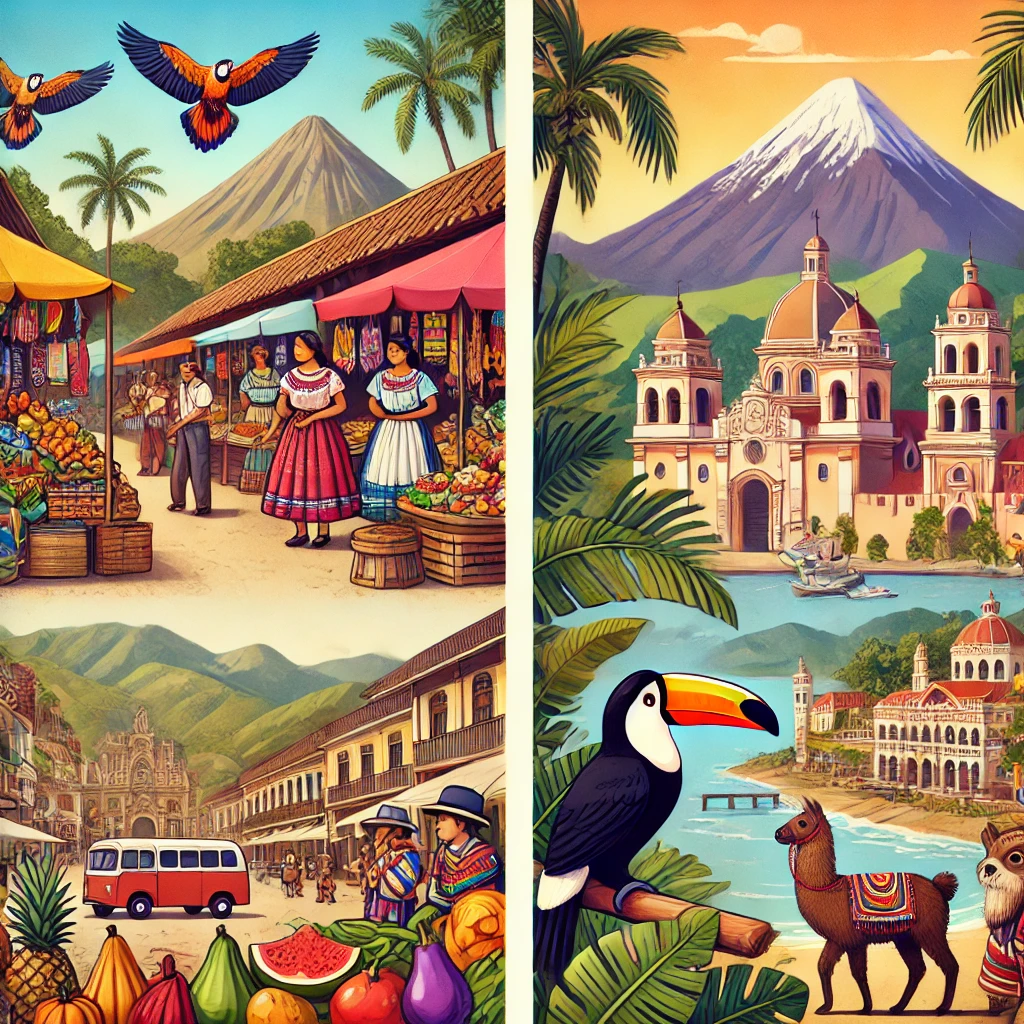
Spanish is a richly diverse language spoken by millions of people across multiple continents. While the fundamental structure of Spanish remains consistent, the vocabulary can vary significantly from one region to another. This is particularly true when comparing Central American and South American Spanish. Whether you are a language learner or a seasoned speaker, understanding these differences can enhance your communication skills and cultural knowledge.
Central America includes countries like Mexico, Guatemala, Honduras, El Salvador, Nicaragua, Costa Rica, and Panama. South America, on the other hand, consists of countries such as Colombia, Venezuela, Ecuador, Peru, Bolivia, Chile, Argentina, Paraguay, and Uruguay. Each of these nations has its unique linguistic characteristics influenced by indigenous languages, historical events, and cultural interactions.
In this article, we’ll explore some of the key vocabulary differences between Central and South American Spanish. We’ll look at everyday words, expressions, and slang that set these regions apart. By the end of this read, you’ll have a deeper appreciation of the linguistic diversity within the Spanish-speaking world.
Everyday Vocabulary
One of the most noticeable differences between Central and South American Spanish is the use of everyday vocabulary. For instance, the word “car” varies greatly. In Central America, particularly in Mexico and Guatemala, people commonly use “coche.” However, in South American countries like Argentina and Uruguay, the word “auto” is more prevalent. In other parts of South America, such as Colombia and Venezuela, “carro” is frequently used.
Another example is the word for “bathroom.” In Central America, especially in Mexico, the term “baño” is almost universally used. However, in South American countries like Argentina, people often refer to it as “servicio.” It’s small differences like these that can sometimes lead to misunderstandings if you’re not familiar with the regional vocabulary.
Food is another area where vocabulary differences are evident. In Central America, “frijoles” is the standard term for beans. In South America, particularly in countries like Argentina and Uruguay, they use the word “porotos.” Similarly, in Central America, the word for “popcorn” is “palomitas,” whereas in South America, particularly in Argentina, it’s referred to as “pochoclo.”
Slang and Colloquialisms
Slang and colloquialisms can be particularly tricky for Spanish learners because they often don’t translate well from one region to another. In Central America, especially in Mexico, the word “chido” is slang for “cool” or “great.” In contrast, in South American countries like Argentina, people might use “chévere” or “copado” to convey the same meaning.
In South America, particularly in Argentina and Uruguay, you might hear the word “che” quite often. It’s a slang term used to get someone’s attention, similar to saying “hey” in English. This word is virtually nonexistent in Central American Spanish.
Another interesting example is the word for “boy” or “girl.” In Central America, “chico” and “chica” are commonly used. However, in South America, particularly in Argentina and Uruguay, “pibe” and “piba” are the go-to terms. Recognizing and understanding these slang terms can significantly improve your comprehension and communication when traveling or interacting with natives from these regions.

Regional Expressions
Expressions and idioms also vary greatly from one Spanish-speaking region to another. In Central America, you might hear the phrase “¡Qué chilero!” in Guatemala, which means “How cool!” In South America, particularly in Colombia, a similar expression might be “¡Qué bacano!”
In Argentina, an expression like “estar en pedo” translates to “to be drunk.” In Central America, especially in Mexico, the more common phrase would be “estar borracho.” These regional expressions make the language more colorful and provide insight into the local culture and customs.
Other expressions include ways of saying goodbye. In Mexico, you might say “¡Adiós!” or “¡Nos vemos!” In Argentina, it’s common to hear “¡Chau!” instead. Understanding these expressions can make your interactions more natural and contextually appropriate.
Influence of Indigenous Languages
One of the primary reasons for the vocabulary differences between Central and South American Spanish is the influence of indigenous languages. In Mexico and Central America, languages like Nahuatl and Mayan have left a significant imprint on the local Spanish dialect. Words like “chocolate” (from Nahuatl “xocolatl”) and “quilt” (from Nahuatl “cuitl”) are examples of this influence.
In South America, particularly in countries like Peru and Bolivia, Quechua and Aymara have strongly influenced the Spanish spoken there. For instance, the word “chompa” (sweater) comes from Quechua. Similarly, in the Andean regions, you might hear the word “guagua” for baby, which is derived from Quechua and Aymara origins.
These indigenous languages have not only enriched the vocabulary but also contributed to the cultural identity of the respective regions. By understanding the roots and meanings of these words, language learners can gain a deeper appreciation of the diverse heritage of the Spanish-speaking world.
Business and Formal Language
When it comes to business and formal language, the differences between Central and South American Spanish can be quite pronounced. In Mexico and Central America, formal business language tends to be more similar to that of Spain, using terms like “usted” and “ustedes” for respectful address. In South America, particularly in countries like Argentina and Uruguay, there’s a tendency to use “vos” (a less formal but still respectful form of “you”) even in formal settings.
Furthermore, business terminology can differ. In Mexico, the word for “company” is usually “empresa.” However, in South American countries like Argentina, the term “compañía” might be more commonly used. Similarly, the word for “manager” in Central America might be “gerente,” whereas in South America, you could hear “jefe” used more frequently.
Understanding these nuances is crucial for professionals who engage in cross-regional interactions. It ensures that communication is effective and culturally appropriate, which is essential for maintaining good business relationships and professional etiquette.
Conclusion
The richness and diversity of the Spanish language are evident in the various vocabularies used across Central and South America. Whether it’s everyday words, slang, regional expressions, or business terminology, each region has its unique linguistic flair. This diversity is a testament to the cultural heritage and historical influences that shape the language in each area.
For language learners and enthusiasts, recognizing and understanding these vocabulary differences is key to effective communication and cultural immersion. It enables speakers to navigate different Spanish-speaking environments with confidence and respect for local customs.
As the Spanish language continues to evolve, the interplay between these regional varieties will undoubtedly contribute to its richness and dynamism. Embracing these differences not only enhances our linguistic skills but also deepens our appreciation for the diverse cultures that make up the Spanish-speaking world.
Next time you find yourself conversing with a Spanish speaker from a different region, take a moment to enjoy the linguistic uniqueness they bring to the conversation. After all, it’s these differences that make the Spanish language so vibrant and fascinating.