

Learning to describe the weather is an essential skill for anyone delving into a new language, and Spanish learners are no exception. Whether you’re planning a trip to a Spanish-speaking country, dreaming of a conversation with locals, or you simply want to expand your language skills, understanding weather-related vocabulary is useful. It can turn everyday conversations into seamless exchanges and enable you to navigate various situations, from packing for a trip to engaging in small talk.
The weather affects everyone daily. Hence, it’s a common topic of conversation across the globe. In this comprehensive guide, we will delve into basic Spanish vocabulary that you can use to describe different weather conditions. Whether it’s sunny, rainy, or snowy, you’ll be equipped with the words and phrases needed for describing the weather like a native Spanish speaker.
This guide is divided into several sections, each focusing on different weather conditions – from vocabulary for sunny and rainy weather to more extreme conditions like thunderstorms and snowstorms. By the end of this article, you will have a solid foundation of Spanish weather terminology. Let’s get started with some foundational words and expressions regarding one of the most universally relatable subjects: the weather.
Sunny Weather
Spain and many Latin American countries enjoy plenty of sunny days. Thus, it’s important to know how to describe sunny weather in Spanish. Here are some essential words and phrases:
- Soleado: Sunny
- El sol: The sun
- Hace sol: It’s sunny
- Día despejado: Clear day
- Rayo de sol: Sunbeam
Example sentences:
- “Hoy está soleado.” – Today is sunny.
- “Hace mucho sol en agosto.” – It’s very sunny in August.
- “Nos encanta cuando hay un día despejado.” – We love when there is a clear day.
Sunny weather terms are especially useful in day-to-day conversations or when planning activities that rely on good weather. Knowing these words can also enhance your ability to participate in small talk, especially in countries where sunny days are common.
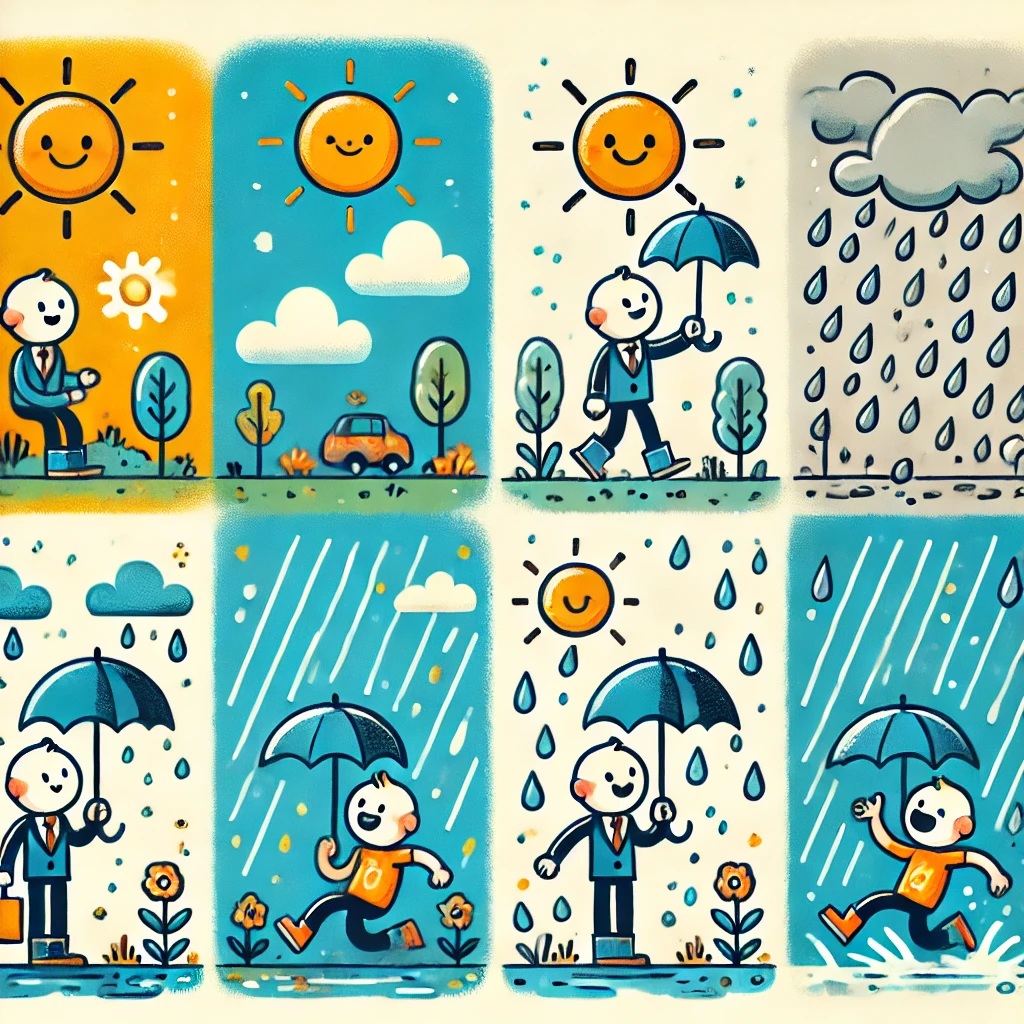
Rainy Weather
Just as important as sunny days are the rainy ones. Understanding how to talk about rainy weather can be very useful. Below are common terms used to describe rainy weather in Spanish:
- La lluvia: The rain
- Está lloviendo: It’s raining
- Chubasco: Shower
- Tormenta: Storm
- Llovizna: Drizzle
Example sentences:
- “El pronóstico dice que va a llover todo el día.” – The forecast says it will rain all day.
- “Hay una tormenta fuerte.” – There’s a strong storm.
- “Solo está lloviznando, podemos salir.” – It’s only drizzling, we can go out.
Being able to describe rainy weather helps in planning outdoor activities and ensuring you’re prepared, whether it’s carrying an umbrella or changing plans. Additionally, it’s a great way to engage in casual conversations with locals, as weather is always a popular topic.
Windy Weather
Windy weather vocabulary is another key aspect of weather-related discussions. Below are some useful terms to talk about windy weather in Spanish:
- Viento: Wind
- Hace viento: It’s windy
- Rafaga: Gust
- Brisa: Breeze
- Vendaval: Gale
Example sentences:
- “Hace mucho viento hoy.” – It’s very windy today.
- “Hay una brisa fresca del mar.” – There’s a fresh sea breeze.
- “Cuidado con el vendaval.” – Be careful with the gale.
Knowledge of windy weather terms can be especially useful for travelers and residents in coastal or mountainous regions where wind conditions can strongly affect activities and daily life. Using these words appropriately ensures clear communication and helps in understanding weather forecasts.
Cold Weather
Describing cold weather is crucial, especially if you are heading to or residing in regions with colder climates. Here are some relevant Spanish terms:
- Frío: Cold
- Hace frío: It’s cold
- Nieve: Snow
- Helado: Icy
- Nevada: Snowfall
Example sentences:
- “Hace mucho frío en invierno.” – It’s very cold in winter.
- “Hay nieve en las montañas.” – There’s snow in the mountains.
- “Las calles están heladas.” – The streets are icy.
Accurate use of cold weather terminology can be vital for safety and convenience. Knowing these words allows you to discuss winter activities, understand weather-related advisories, and engage more naturally with local speakers about seasonal changes.
Hot Weather
Conversely, being able to describe hot weather is equally important for those living in or traveling to warmer climates. Here are some useful terms:
- Calor: Heat
- Hace calor: It’s hot
- Ardiente: Scorching
- Sofocante: Sweltering
- Canícula: Dog days
Example sentences:
- “Hace mucho calor hoy.” – It’s very hot today.
- “El verano es sofocante aquí.” – The summer is sweltering here.
- “Las canículas son difíciles de soportar.” – The dog days are hard to bear.
Discussing hot weather is common in places with tropical or desert climates. Knowing these terms can help in preparing for extreme temperatures, planning daily activities, and engaging in relevant conversations with other Spanish speakers.
Extreme Weather Conditions
Finally, understanding terms for extreme weather conditions is important for anyone living in areas prone to such events or for those interested in global weather patterns. Here are some key terms:
- Huracán: Hurricane
- Tornado: Tornado
- Inundación: Flood
- Deslizamiento de tierra: Landslide
- Terremoto: Earthquake
Example sentences:
- “El huracán causó muchos daños.” – The hurricane caused a lot of damage.
- “Hubo una inundación en la ciudad.” – There was a flood in the city.
- “El tornado destruyó varias casas.” – The tornado destroyed several houses.
Knowing how to describe extreme weather conditions is essential in emergency situations and can be critical for safety and communication. It helps in understanding news reports, giving accurate descriptions, and receiving necessary instructions during emergencies.
Conclusion
Weather is a universally significant topic, and being able to describe it accurately is one of the most practical skills you can acquire when learning a new language. This guide has provided a comprehensive overview of basic Spanish vocabulary for describing various weather conditions, ranging from sunny and rainy weather to extreme weather events.
To master these new terms, try to use them in daily conversations, weather forecasts, and even when you’re thinking about the weather. Practice makes perfect, and the more you incorporate these words into your daily language use, the more natural they will become. Engage with native speakers, watch Spanish weather reports, and don’t shy away from making mistakes. Learning a language is a gradual process, and every effort you put in brings you closer to fluency.
Weather affects our daily lives and is a recurrent subject in conversations. Being equipped with the right vocabulary not only helps in practical communication but also enriches your linguistic and cultural understanding. Armed with these words and phrases, you’re now prepared to talk about the weather in any Spanish-speaking context with clarity and confidence.


