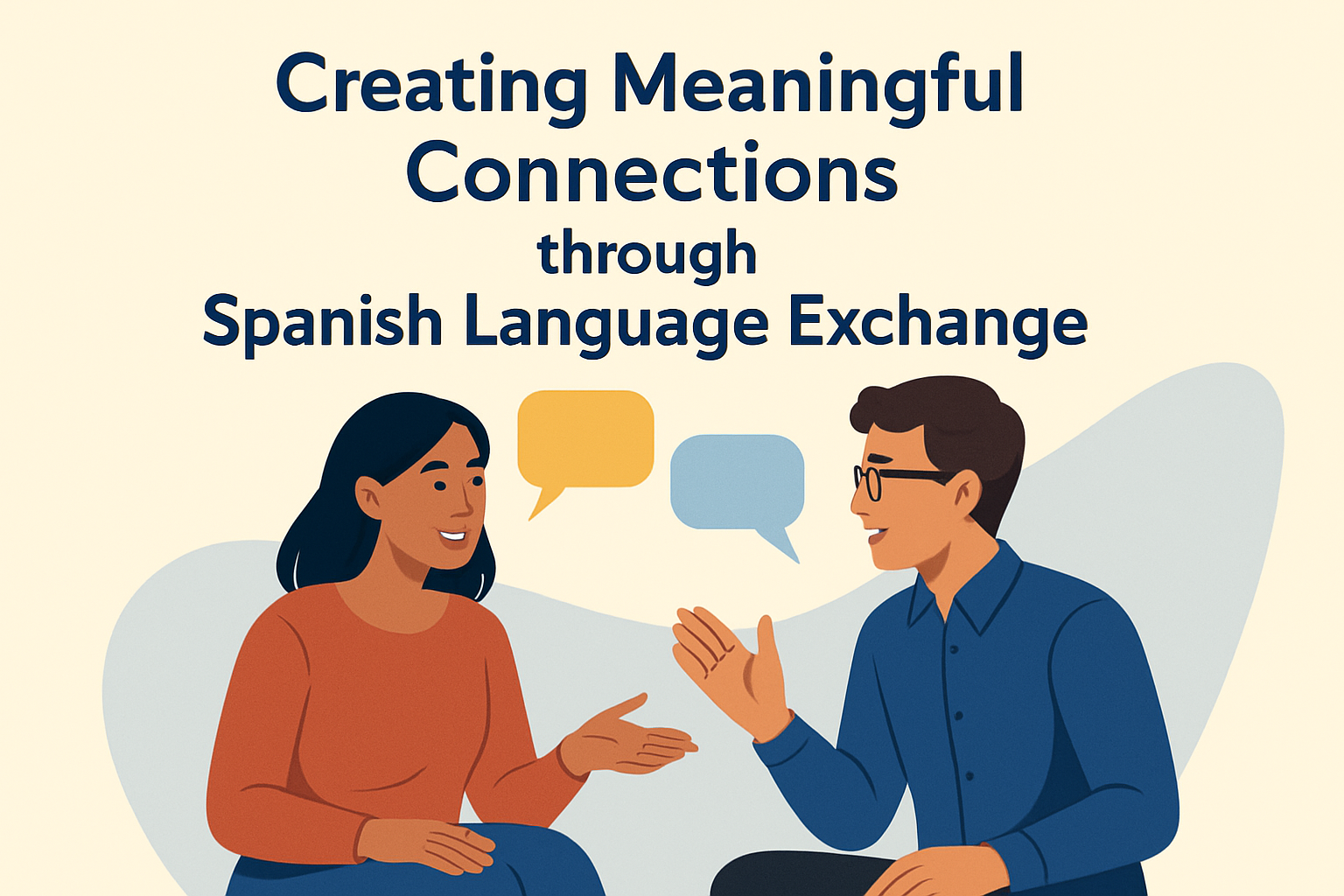
Creating meaningful connections through Spanish language exchange starts with a simple truth: people learn languages faster and remember them longer when real conversations matter. A Spanish language exchange is a structured or informal arrangement in which two or more people help each other practice speaking, listening, reading, or writing, usually by alternating between Spanish and another language. In the broader Spanish Community and Interaction space, language exchange opportunities sit at the center because they turn study into participation. Instead of treating Spanish as a school subject, learners use it to build friendships, solve misunderstandings, share culture, and navigate real situations.
I have worked with conversation circles, online tutoring communities, and local meetup programs, and the same pattern appears again and again: learners who engage in regular exchange become more confident than learners who rely only on apps or grammar drills. That does not mean formal study is unnecessary. It means interaction gives study a purpose. Vocabulary stops feeling abstract when a partner from Madrid explains local slang, or when a learner in Chicago helps a Colombian partner understand idiomatic English for work. Those exchanges create accountability, emotional investment, and cultural fluency that textbooks alone rarely provide.
This matters for beginners, intermediate learners, heritage speakers, and advanced professionals. Beginners gain courage by practicing introductions, dates, directions, and everyday verbs in low-pressure settings. Intermediate learners develop flow, repair strategies, and listening stamina. Heritage speakers often use exchange to strengthen literacy or reconnect with regional identity. Advanced speakers benefit by testing register, pronunciation, and nuance in authentic dialogue. For all groups, language exchange opportunities support practical skills: asking follow-up questions, paraphrasing when words fail, noticing patterns in grammar, and responding in real time rather than translating silently.
Meaningful connection is the real advantage. In a strong exchange, both people feel seen as more than language resources. They share music, routines, food, migration stories, humor, and professional goals. That human element improves retention because memory attaches to emotion and context. It also improves accuracy, because partners correct each other at moments that feel relevant. When someone says, “In Spanish we would phrase that this way,” the lesson sticks. As a hub topic, language exchange opportunities deserve comprehensive attention because choosing the right format, setting expectations, and maintaining quality determine whether an exchange becomes transformative or fizzles out after two chats.
What Spanish language exchange looks like in practice
Spanish language exchange can happen in person, online, one-to-one, or in groups. The defining feature is reciprocity. Each participant receives practice and provides value. In the simplest format, two partners split a session into equal halves, such as 30 minutes in Spanish and 30 minutes in English. More structured versions add themes, correction rules, written follow-up, or rotating prompts. Community centers may host conversation tables with one facilitator. Universities often pair international students with local learners. Digital platforms match users by language goals, time zone, and proficiency. Social networks and messaging apps also support ongoing voice-note exchanges that fit busy schedules.
Different formats solve different problems. One-to-one exchange is best for personalized feedback, relationship building, and consistent progress tracking. Group exchange reduces pressure and exposes learners to varied accents, but speaking time may be limited. In-person meetings provide stronger social chemistry and nonverbal cues, yet they depend on geography. Online exchange offers global reach and scheduling flexibility, which is why it has become the most scalable option for Spanish learners seeking regular contact with speakers from Mexico, Spain, Argentina, Colombia, and beyond. The best choice depends on goals, availability, and comfort level.
Successful exchanges usually include a clear plan. I recommend agreeing on the session length, language split, correction style, and communication channel before the first meeting. For example, one pair may prefer immediate correction for pronunciation but delayed correction for grammar. Another pair may dedicate each session to a practical topic such as job interviews, travel, healthcare, or university life. Without this clarity, exchanges often drift into one language, become socially pleasant but educationally thin, or collapse under mismatched expectations. Structure does not make the interaction less natural; it makes the time useful.
Where to find high-quality language exchange opportunities
Reliable Spanish language exchange opportunities come from several channels. Universities frequently run tandem programs through language departments or international student offices. Public libraries and cultural centers host bilingual conversation groups, especially in cities with large Spanish-speaking communities. Meetup-style communities attract learners seeking face-to-face practice around coffee shops, parks, and coworking spaces. Online platforms such as Tandem, HelloTalk, ConversationExchange, and Speaky remain common entry points because they make partner discovery easy. Professional communities on LinkedIn, Discord servers for language learners, and subreddit communities can also produce strong matches when users state clear goals and boundaries.
Quality matters more than volume. A profile with thousands of possible partners means little if conversations never become consistent. When evaluating an opportunity, look for indicators of seriousness: complete profiles, stated learning objectives, availability, and willingness to alternate languages fairly. Community-run exchanges with active moderation tend to be safer and more reliable than unstructured open chats. For in-person spaces, ask whether the host uses sign-in systems, conversation prompts, or facilitators. For online spaces, check whether the platform supports reporting, verification, scheduling, and message filters. Good systems reduce friction and increase the odds of sustained interaction.
Local Spanish-speaking communities are often underused resources. Restaurants, churches, neighborhood associations, immigrant support organizations, and bilingual business chambers can all become bridges to conversation opportunities when approached respectfully. The key is participation, not extraction. Show up for cultural events, volunteer, support local businesses, and engage as a community member. People respond better when they feel you are interested in relationships rather than hunting for free practice. In my experience, the strongest long-term exchanges often begin after repeated community contact, not from a cold message on an app.
How to choose the right exchange format for your goals
The best Spanish language exchange opportunity matches a specific objective. If your goal is conversational confidence, prioritize frequent speaking over exhaustive correction. If your goal is exam preparation, choose a partner comfortable with role-play, timed tasks, and formal vocabulary. If you need professional Spanish for healthcare, law, education, or customer service, find exchange partners familiar with that field and build sessions around realistic scenarios. Heritage speakers improving writing may benefit from a hybrid exchange that combines live conversation with document review. There is no universally perfect format; there is only fitness for purpose.
| Goal | Best Exchange Format | Why It Works |
|---|---|---|
| Speaking confidence | One-to-one weekly video calls | High speaking time, predictable routine, lower anxiety |
| Accent exposure | Group conversation circles | Multiple speakers reveal regional vocabulary and speed variation |
| Professional Spanish | Structured role-play with domain-specific partners | Builds terminology, register, and scenario-based fluency |
| Writing accuracy | Chat plus shared document review | Allows detailed corrections and pattern tracking |
| Busy schedule | Voice-note exchange | Flexible timing while preserving speaking and listening practice |
Time commitment is another deciding factor. A learner who cannot sustain hour-long calls twice a week should not force that model. Ten-minute voice messages three times weekly may produce better consistency. Personality matters too. Introverted learners often start more successfully with asynchronous chat or audio before moving to live video. Outgoing learners may thrive in group settings immediately. Choose a format you will keep using. Frequency and continuity beat ambitious plans that collapse after two weeks.
It is also wise to think about dialect and cultural interest. Spanish is a global language with major variation in pronunciation, vocabulary, and formality. A learner planning to work in Southern California may prioritize Mexican Spanish. Someone doing business in Spain may need familiarity with peninsular usage. Someone interested in Latin American media may seek broad exposure. Exchange partners are not interchangeable, and selecting with intention saves time.
Building conversations that create real connection
Meaningful Spanish language exchange depends on conversation quality, not only repetition. Many weak exchanges stall because both people recycle introductions, hobbies, and travel dreams without moving deeper. Strong exchanges use graduated topics. Start with daily routines and preferences, then move into family traditions, work challenges, neighborhood life, food memories, celebrations, music, and current issues. As trust grows, discuss values, goals, identity, migration, education, and social norms. These topics generate richer vocabulary and make the relationship more human. They also reveal how language changes with emotion, disagreement, humor, and storytelling.
Good partners ask open-ended questions and listen actively. Instead of asking, “Do you like Spanish music?” ask, “Which artists matter to you, and when do you listen to them?” Instead of “How was your weekend?” ask, “What was one thing that surprised you this weekend?” This style invites explanation, not one-word answers. Follow-up questions are where connection forms. When a partner mentions a grandmother’s recipe, a hometown festival, or a difficult work meeting, stay with the detail. That is how conversation shifts from practice exercise to mutual understanding.
Shared activities also help. Watch the same short video in Spanish and discuss it. Compare headlines from two countries. Cook the same dish and explain each step. Read a brief article and summarize the key point. Exchange photos from daily life and describe what is happening. These tasks reduce pressure because the discussion has a concrete anchor. They also mirror real communication, where language supports action and interpretation rather than existing in isolation.
Correction, boundaries, and common pitfalls
Correction is essential, but unmanaged correction can damage confidence or derail flow. The most effective method is negotiated feedback. Decide what gets corrected and when. Pronunciation errors that block understanding should usually be addressed quickly. Minor grammar slips may be better saved for the end of the session. Many pairs use a shared note document where partners collect recurring mistakes, better phrasing, and useful vocabulary. This creates a record of progress and keeps the conversation moving. I have seen retention improve significantly when learners review these notes before the next meeting and intentionally reuse corrected structures.
Boundaries matter just as much as pedagogy. A language exchange is not free tutoring, emotional labor on demand, or unlimited texting access. Set expectations about scheduling, cancellations, response time, and off-limits topics. Respect privacy and avoid pressuring anyone to discuss politics, religion, or personal history before trust exists. In online exchanges, move cautiously with external links, file sharing, or requests for personal contact information. Safety features and common sense should guide every interaction. Clear boundaries make exchange more sustainable because both sides know what respectful participation looks like.
Several pitfalls appear repeatedly. One is language imbalance, where stronger speakers dominate in the language they prefer. Another is overcorrection, which can make a session feel like an oral exam. A third is social pleasantness without progression: people enjoy chatting but never target weaknesses. There is also inconsistency, usually caused by vague scheduling. The fix is straightforward: agree on a recurring time, define the purpose of each session, and review what improved and what still needs work. Small systems prevent most breakdowns.
Turning exchange into long-term progress and community
The real power of Spanish language exchange opportunities is cumulative. One useful conversation helps; fifty conversations change identity. Learners begin to see themselves as participants in Spanish-speaking communities rather than outsiders memorizing phrases. That shift drives persistence. To create long-term progress, track outcomes beyond hours studied. Measure how long you can speak without switching languages, how many follow-up questions you can ask naturally, how well you understand different accents, and which grammar patterns still fail under pressure. These indicators reflect functional growth better than streak counts alone.
Community expands progress further. Join recurring circles, attend cultural events, and introduce exchange partners to wider networks when appropriate. A single partner may lead to invitations to book clubs, volunteer projects, alumni groups, or neighborhood gatherings where Spanish is used organically. Those environments sharpen listening, turn-taking, and sociolinguistic awareness. They also teach something formal courses often miss: when to be direct, when to soften a request, how humor travels across cultures, and how regional expressions signal belonging. Language becomes social knowledge, not just linguistic knowledge.
Creating meaningful connections through Spanish language exchange is therefore both practical and deeply human. The most effective exchanges are reciprocal, structured enough to produce growth, and flexible enough to feel natural. They combine clear goals, respectful boundaries, useful correction, and genuine curiosity about another person’s life. If you want stronger Spanish and stronger relationships, start with one well-chosen exchange opportunity, commit to a routine, and build from there. Consistent conversation will improve your fluency, but more importantly, it will connect you to the people and communities that give the language its real meaning.
Frequently Asked Questions
What is a Spanish language exchange, and how does it help build meaningful connections?
A Spanish language exchange is a shared learning arrangement where two or more people practice each other’s languages through conversation, messaging, voice notes, reading exercises, or informal cultural discussion. In most cases, one person is a Spanish speaker learning another language, and the other person is learning Spanish. They usually divide time so both people benefit equally. What makes this approach especially powerful is that it moves language learning out of a purely academic setting and into real human interaction. Instead of memorizing isolated vocabulary, learners connect words and expressions to emotions, stories, humor, opinions, and everyday experiences.
That is where meaningful connection begins. When people talk about family traditions, work routines, favorite foods, local customs, music, holidays, or personal goals, the language becomes attached to real life. This creates stronger memory, better listening skills, and greater confidence because the learner is no longer just “studying Spanish” but using it for genuine communication. Over time, regular exchanges often lead to trust, friendship, cultural understanding, and a more natural speaking rhythm. In the wider Spanish Community and Interaction space, language exchange stands out because it combines practical learning with authentic relationship-building. It helps learners not only speak Spanish more fluently, but also understand the people, perspectives, and social context behind the language.
How can I find the right Spanish language exchange partner?
Finding the right partner matters because compatibility influences consistency, comfort, and long-term progress. A strong language exchange partner does not need to be a perfect teacher, but they should be reliable, respectful, patient, and genuinely interested in mutual learning. The best place to start is by identifying your own goals. For example, are you trying to improve casual conversation, professional Spanish, pronunciation, grammar accuracy, or confidence in social situations? Once you know what you want, it becomes easier to look for someone whose interests and communication style align with yours.
You can often find exchange partners through language learning apps, online communities, university groups, local cultural centers, social media communities, or Spanish conversation clubs. When you first connect, it helps to ask practical questions: How often can you meet? Do you prefer video calls, voice messages, text chat, or in-person conversation? Do you want a structured format or a relaxed one? Are you comfortable correcting each other, and if so, how directly? These details may seem small, but they often determine whether the exchange feels productive or frustrating.
It is also wise to pay attention to balance. A successful exchange should feel reciprocal rather than one-sided. If one person dominates the conversation, rarely switches languages, constantly cancels, or treats the interaction as free tutoring instead of shared practice, the connection may not be sustainable. On the other hand, if both people show curiosity, prepare topics, and respect each other’s time and ability level, the exchange becomes much more rewarding. In many cases, the strongest partnerships grow from common interests such as travel, books, business, sports, film, or daily life topics, because shared interests make conversation easier and more engaging from the beginning.
What should we talk about during a Spanish language exchange to keep the conversation natural and useful?
The most effective conversations are both natural and intentional. Many learners assume they need complex topics to improve quickly, but everyday subjects are often the most valuable because they reflect how language is actually used in daily life. Talking about your morning routine, weekend plans, family, work, study habits, hobbies, favorite meals, local events, or childhood memories creates practical vocabulary you can reuse often. These familiar topics also reduce pressure, which helps learners speak more freely and with greater confidence.
At the same time, it is helpful to bring some structure to each exchange. You might choose one theme per session, such as travel, relationships, health, entertainment, or cultural traditions. Another useful method is to prepare a short list of open-ended questions in advance. Questions like “What is a holiday tradition in your country?” or “How is daily life different in your city compared to mine?” encourage longer responses and lead to deeper cultural insight. You can also use real materials such as a news article, short podcast, recipe, song lyrics, or a social media post to spark discussion and introduce more authentic vocabulary.
To make the exchange even more useful, try to create a rhythm within the conversation. For example, spend part of the session speaking freely, part reviewing corrections, and part practicing specific phrases or pronunciation challenges. If the conversation naturally expands into personal stories, opinions, and comparisons between cultures, that is often a sign the exchange is working well. Meaningful connections tend to grow when the conversation goes beyond textbook prompts and allows both people to express personality, curiosity, and lived experience. The goal is not just to “cover topics,” but to create communication that feels real, memorable, and enjoyable.
How do we balance correction and conversation without making the exchange uncomfortable?
This is one of the most important parts of a successful language exchange. Too little correction can slow progress because mistakes go unaddressed, but too much correction can interrupt the flow and make the conversation feel stressful or unnatural. The best approach is to discuss expectations early. Some learners want immediate correction on grammar and pronunciation, while others prefer to finish speaking first and receive feedback afterward. Neither approach is wrong, but both people should understand what the other finds helpful.
A practical strategy is to separate “conversation mode” from “feedback mode.” During conversation mode, the priority is fluency, confidence, and authentic interaction. In this phase, your partner might correct only major mistakes that block understanding. Then, near the end of the session, you can shift into feedback mode and review recurring grammar issues, pronunciation patterns, or more natural ways to phrase certain ideas. This allows the learner to communicate freely while still benefiting from meaningful corrections.
The tone of correction also matters. Supportive feedback should feel collaborative rather than critical. Instead of simply saying something is wrong, a helpful partner explains why a phrase sounds unnatural, offers a corrected example, and, when possible, gives a more conversational alternative. Writing corrections in the chat during a call can also be useful because it lets the speaker continue talking without constant interruption. Over time, this balance helps both people improve while preserving the comfort and trust that make genuine connection possible. When correction is handled respectfully, it strengthens the exchange rather than weakening it.
How can I make a Spanish language exchange consistent enough to improve fluency over time?
Consistency is what turns occasional practice into real progress. Even a great conversation once in a while will not have the same impact as regular, repeated interaction over weeks or months. The simplest way to build consistency is to treat the exchange like an appointment rather than a casual idea. Set a recurring schedule, decide how long each session will be, and agree on the format in advance. Many learners do well with one or two sessions per week, combined with short follow-up contact through text or voice messages between meetings.
It also helps to keep the exchange manageable. Long sessions can be tiring, especially for beginners or intermediate learners, so shorter but focused conversations often work better. For example, 30 to 45 minutes with clear language division can be more effective than a long, unstructured call. Setting mini-goals keeps motivation high as well. You might aim to describe your job more clearly, improve past tense usage, learn vocabulary for travel, or become more comfortable asking follow-up questions. Small goals make progress visible and give each session a sense of purpose.
Another important factor is relationship quality. People are more likely to stay committed when the exchange feels enjoyable, respectful, and personally meaningful. That means showing up on time, following through, remembering past conversations, and taking interest in your partner’s life and culture. If you treat the exchange as a genuine two-way connection rather than a transactional language exercise, consistency becomes much easier to maintain. Fluency develops through repeated exposure, active speaking, listening to natural responses, and building confidence over time. A steady Spanish language exchange creates exactly that environment, allowing both language skill and human connection to grow together.