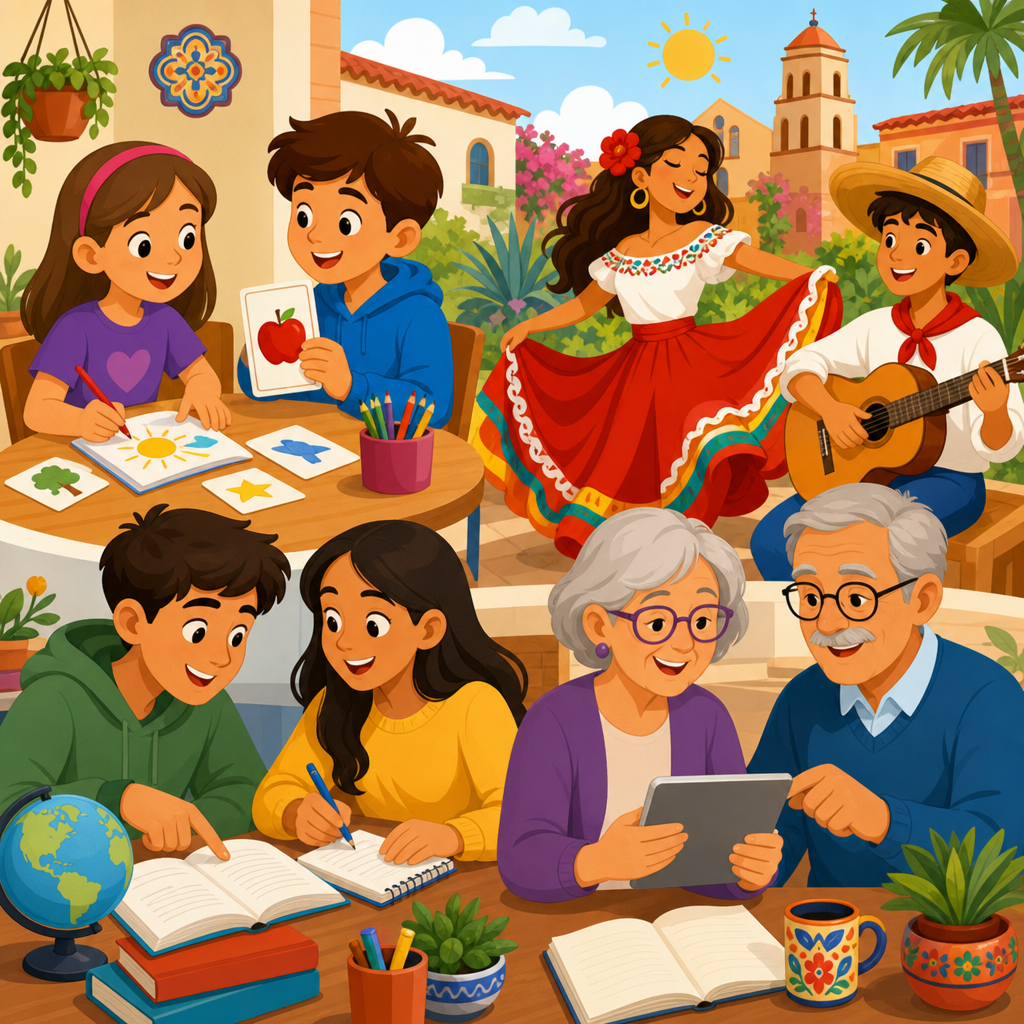
Fun and educational Spanish activities help learners turn vocabulary and grammar into real communication, which is why they are central to any strong Spanish community and interaction plan. In practical terms, Spanish activities are structured games, projects, conversations, media tasks, and cultural experiences that give people repeated, meaningful contact with the language. Educational means the activity supports clear learning outcomes such as improved listening, better pronunciation, stronger recall, or greater confidence speaking with others. Fun matters because attention, emotion, and repetition drive retention; when learners enjoy the process, they stay with it longer and practice more often.
I have seen this repeatedly in classrooms, tutoring groups, family learning nights, and adult conversation circles: the students who progress fastest are rarely the ones memorizing the longest word lists. They are the learners using Spanish in context through role-play, music, storytelling, community events, and shared challenges. That matters for children building foundational language awareness, teens needing social motivation, adults fitting study into busy schedules, and older learners who want mental stimulation and cultural connection. A hub page on miscellaneous Spanish activities is useful because many people do not need one rigid method. They need a menu of options that can fit age, budget, schedule, proficiency level, and learning goals while still keeping Spanish social, practical, and rewarding.
This guide covers the most effective categories of Spanish activities for all ages and explains how to use them well. It also functions as a hub within Spanish community and interaction, pointing readers toward the kinds of experiences that support conversation practice, cultural participation, collaborative learning, and independent engagement. Whether you are a parent, teacher, tutor, club organizer, or self-directed learner, the best activities share the same features: they are easy to repeat, grounded in authentic language, adaptable to different levels, and connected to real human interaction.
What makes a Spanish activity both fun and educational
A good Spanish activity does more than fill time. It creates comprehensible input, prompts output, and gives immediate feedback through context. In plain terms, learners need to understand most of what they hear or read, try to say or write something themselves, and notice what works. That pattern appears in strong activities across every age group. A scavenger hunt using color and location words, for example, gives beginners repeated exposure to terms like rojo, debajo, and cerca de while keeping attention high. A cooking session in Spanish adds sequencing language, imperative verbs, food vocabulary, and cultural context in a naturally memorable format.
The strongest activities also balance challenge and accessibility. If a task is too easy, learners disengage. If it is too difficult, they switch back to English or stop participating. I usually recommend setting one main language target per activity: asking for directions, describing feelings, narrating a story in the past tense, or ordering food politely. That keeps the task focused. Well-designed activities also include repetition without feeling repetitive. Songs repeat structures. Games repeat key questions. Book clubs revisit themes and useful phrases. Conversation rounds allow the same grammar to appear with different partners and topics.
Another marker of quality is built-in social purpose. Language grows faster when people need it to complete a shared goal. Teams guessing clues, partners solving a mystery, families planning a pretend trip to Madrid, or retirees discussing a Spanish-language film all create a reason to communicate. This is why passive exposure alone is not enough. Watching a show can help listening, but discussing it afterward transforms exposure into learning. The social element is especially important in a community and interaction framework because it builds consistency, accountability, and confidence.
Spanish activities for kids, teens, adults, and seniors
Different age groups respond to different activity styles, but the core principle stays the same: match the task to the learner’s interests and cognitive stage. For young children, movement and visual cues matter most. Total Physical Response activities work especially well because children can connect commands such as salta, toca la puerta, or levanta el libro to actions before they are expected to produce full sentences. Picture bingo, memory cards, puppet dialogues, and simple songs are effective because they combine rhythm, repetition, and low-pressure participation. In family settings, labeling household objects in Spanish and using mini routines like ¿Dónde está el perro? can create daily exposure without formal lessons.
For teens, the challenge is maintaining relevance. They usually respond best to activities with creativity, competition, identity, and peer interaction. Spanish debate prompts, lyric analysis, video creation, escape rooms, and social media caption challenges are useful because they feel current rather than childish. A strong classroom example is having students build a short travel reel in Spanish for a city such as Barcelona or Mexico City. They practice descriptive language, pronunciation, and presentation skills while working in a format they already understand. Another effective option is game-based review using Quizlet Live, Blooket, or Kahoot, provided the teacher follows with spoken practice so recognition becomes active language use.
Adults often need activities that are efficient and clearly practical. Conversation clubs, workplace role-play, restaurant ordering simulations, and guided discussion around news stories are ideal because they connect Spanish to immediate goals. I have had strong results using scenario cards for medical Spanish, customer service interactions, and travel problem-solving. Adults also benefit from structured flexibility. A ten-minute daily voice message exchange on WhatsApp can be more sustainable than a two-hour class once a week because it builds habit and mirrors real communication. For seniors, the best activities combine social engagement with manageable pacing. Reading circles, storytelling from personal memories, music-based recall, and cultural discussion groups work well because they support both language learning and cognitive activity. Clear audio, larger print, and slower turn-taking make a significant difference.
| Age group | Best activity types | Main learning benefit | Practical example |
|---|---|---|---|
| Children | Songs, movement games, picture matching | Vocabulary retention through repetition and action | Act out classroom commands in Spanish |
| Teens | Debates, video projects, game-based review | Motivation and active speaking with peers | Create a Spanish travel video for Buenos Aires |
| Adults | Conversation clubs, role-play, audio exchanges | Immediate real-world communication skills | Practice ordering, directions, and problem-solving |
| Seniors | Reading circles, music sessions, storytelling | Confidence, recall, and social connection | Discuss a bolero song and related memories |
Games, media, and creative projects that build real Spanish skills
Games are most useful when they require language production, not just recognition. Charades works because learners connect verbs to action. Guess Who style games support physical descriptions and question formation. Taboo-type games push circumlocution, a critical speaking skill for intermediate learners who do not know every word they need. Board games can also be adapted with Spanish prompts. Even simple dice games become productive when each number matches a speaking task such as describe your weekend, name three foods, or ask a partner a question in the preterite.
Media-based activities are powerful because they expose learners to native pronunciation, speed, and cultural nuance. The key is to build tasks around the media. Watching a Spanish cartoon with no follow-up is limited. Watching a short clip, noting five useful phrases, and reenacting the scene is much more effective. Music is especially valuable for pronunciation, rhythm, and memorization. I often use artists like Juanes, Shakira, Natalia Lafourcade, or Morat depending on learner age and level, but the method matters more than the artist. Learners can identify repeated phrases, sort verbs by tense, fill in missing lyrics, or discuss the song’s story. Podcasts such as Coffee Break Spanish or Notes in Spanish can also anchor weekly discussion in clubs and study groups.
Creative projects deepen retention because learners make something with language. Poster presentations on Spanish-speaking countries, simple comic strips, recipe books, mini podcasts, and collaborative story chains all produce stronger recall than isolated drills. One reliable project for mixed-level groups is the community interview assignment. Learners prepare basic questions in Spanish, interview a classmate or local Spanish speaker if appropriate, then present what they learned. This activity develops listening, polite question forms, note-taking, and summary skills while reinforcing community connection. The best projects end with sharing, because an audience increases care and accountability.
How to organize Spanish activities in classrooms, clubs, and community spaces
Successful Spanish activities depend as much on structure as on creativity. In schools and tutoring settings, I recommend a simple sequence: preview key language, model the task, run the activity, then debrief in Spanish as much as possible. That prevents confusion and keeps the language target visible. For example, before a market role-play, introduce price questions, numbers, and courtesy phrases. During the activity, assign clear roles such as buyer, vendor, and observer. Afterward, ask what expressions were useful and where communication broke down. Reflection consolidates learning.
In community spaces such as libraries, cultural centers, churches, and neighborhood associations, accessibility is the main factor. Not everyone arrives with the same level, so activities should allow layered participation. A bilingual story hour works because beginners can follow visuals while stronger learners answer comprehension questions. A Spanish game night can include beginner tables and intermediate tables using the same theme. Public events also benefit from visible supports: printed phrase banks, conversation cards, name tags with pronouns and proficiency levels, and QR codes linking to follow-up resources. These details increase participation, especially for hesitant learners.
For clubs and informal meetups, consistency beats complexity. A monthly Spanish film night, weekly lunch table, or Saturday walking group can produce excellent results if the format repeats. People return when they know what to expect. Strong organizers usually build in warm-up questions, paired interaction, and one shared focal activity. They also set practical norms, such as staying in Spanish when possible, welcoming mistakes, and making turn-taking inclusive. That culture matters. Many learners quit community practice not because the language is too hard, but because the social environment feels intimidating or unstructured.
Choosing the right activity by level, goal, and available resources
The best Spanish activity is the one that fits the learner’s current stage and immediate objective. Beginners need high-frequency vocabulary, clear models, and predictable interactions. Activities like labeled picture hunts, guided dialogues, and repetition-based games are more effective than open debate. Intermediate learners benefit from tasks that require description, comparison, narration, and follow-up questions. Advanced learners need ambiguity, nuance, and authentic materials such as editorials, interviews, or community discussions. Matching level correctly prevents frustration and keeps progress measurable.
Goals matter just as much as proficiency. If the aim is conversational confidence, choose discussion circles, partner interviews, and role-play. If the aim is literacy, use reading clubs, annotation tasks, and collaborative writing. If the aim is cultural engagement, prioritize cooking, dance instruction, festival participation, and guest speakers from different Spanish-speaking communities. If the aim is pronunciation, use shadowing exercises, read-aloud practice, and lyric work with focused listening. In my experience, problems arise when people choose activities because they look entertaining rather than because they train the needed skill.
Resources also shape what is realistic. A teacher with a projector and internet can use short video clips and interactive slides. A family with no special materials can still do treasure hunts, meal-time conversation themes, and storytelling rounds. Libraries can host bilingual book displays and conversation hours with volunteer facilitators. Digital tools help, but they are not essential. What matters most is frequency, clear language targets, and opportunities to interact. Even a notebook, a timer, and a list of prompts can support excellent Spanish practice when the activity design is sound.
Building a sustainable Spanish routine that keeps learners engaged
Fun and educational Spanish activities work best when they are part of a repeatable routine rather than occasional extras. Learners of every age improve faster when Spanish appears in small, regular doses across the week. A practical routine might include one conversation session, one media activity, one game or project, and one cultural touchpoint such as a recipe or event. This mix develops multiple skills without becoming monotonous. It also reflects how language is used in real life: listening, speaking, reading, writing, and cultural interpretation happen together, not in isolation.
The central lesson is simple. Choose activities that create real interaction, fit the learner’s age and level, and connect Spanish to meaningful goals. Children need movement and play. Teens need relevance and collaboration. Adults need practical use and flexibility. Seniors need clear pacing and social connection. Across all groups, the best results come from authentic language, repeated practice, and supportive communities where mistakes are normal. That is why miscellaneous Spanish activities deserve a hub of their own within Spanish community and interaction: they provide the adaptable bridge between formal study and everyday use.
If you want better results from Spanish learning, start by selecting two activities you can repeat this week and one community-based activity you can join or host this month. Build from there. Consistent, enjoyable interaction is what turns Spanish from a subject into a shared language.
Frequently Asked Questions
What are the best Spanish activities for beginners, children, and adults?
The best Spanish activities are the ones that match a learner’s age, comfort level, and goals while still making the language feel useful in real life. For beginners, simple and structured activities usually work best because they reduce pressure and build confidence quickly. These can include picture-word matching, flashcard games, short listening clips, repetition exercises, labeling objects around the house, and guided conversation prompts focused on greetings, numbers, colors, food, and everyday routines. Children often respond especially well to movement-based games, songs, storytelling, scavenger hunts, role-play, and art projects because these activities connect language to action, memory, and play. Adults often benefit from practical tasks such as conversation circles, vocabulary challenges, short reading discussions, cooking in Spanish, watching clips with subtitles, journaling, and real-world role-play for travel, work, or social situations.
What makes an activity effective is not just that it is fun, but that it creates repeated, meaningful contact with vocabulary and grammar in context. A simple game can teach a great deal if it encourages listening, speaking, reading, or writing with a clear purpose. For example, a memory game can strengthen vocabulary recall, while a role-play at a restaurant can improve sentence structure, pronunciation, and confidence in spontaneous speaking. Across all ages, the most successful Spanish activities are interactive, easy to repeat, and slightly challenging without being overwhelming. They should help learners notice patterns, use new words multiple times, and feel that they are communicating rather than just memorizing rules.
How do fun Spanish activities actually improve language skills?
Fun Spanish activities improve language skills by turning passive knowledge into active use. Many learners can recognize words on a worksheet but struggle to understand speech or respond naturally in conversation. Activities close that gap because they require learners to process Spanish in real time. A game, discussion, song, or project asks the learner to listen carefully, recall vocabulary, interpret meaning, and react using the language. That repeated cycle strengthens comprehension, memory, and fluency far more effectively than isolated drills alone. Activities also make grammar more practical. Instead of only studying verb forms, learners use them to describe daily routines, ask questions, tell stories, or solve a task.
Another reason activities work so well is that they create emotional engagement, and engagement improves retention. When learners laugh during a guessing game, feel curious during a cultural activity, or feel proud after completing a conversation challenge, the language becomes more memorable. Educational Spanish activities also support multiple skills at once. A song can improve listening and pronunciation. A role-play can build speaking confidence and sentence formation. A collaborative project can develop reading, writing, and interpersonal communication. Over time, this kind of meaningful practice helps learners become more accurate, more flexible, and more comfortable using Spanish in authentic situations rather than only in controlled classroom exercises.
How can I make Spanish activities educational instead of just entertaining?
To make Spanish activities educational, start by giving each activity a clear learning goal. Entertainment helps motivation, but the strongest activities are designed to improve a specific skill such as listening for key details, practicing a verb tense, expanding theme-based vocabulary, improving pronunciation, or increasing speaking confidence. For example, if learners play a board game, decide whether the goal is asking questions, describing pictures, or using past-tense verbs. If they watch a video, focus the task on identifying main ideas, noting new expressions, or imitating pronunciation patterns. This simple step turns a fun experience into purposeful language practice.
It also helps to include structure before, during, and after the activity. Before starting, introduce key words or phrases so learners are prepared. During the activity, provide prompts, sentence starters, visuals, or examples to keep the language target in focus. Afterward, follow up with a quick reflection, short writing task, mini discussion, or review game to reinforce what was learned. Repetition is important as well. Learners should meet the same words or grammar patterns more than once and in different contexts. An educational activity is not defined by how serious it looks; it is defined by whether it creates measurable language growth. The most effective Spanish activities feel enjoyable while still giving learners guided practice, useful feedback, and opportunities to apply what they have learned.
What are some good Spanish group activities for classrooms, clubs, and community settings?
Group Spanish activities work especially well because language is social by nature. In classrooms, clubs, and community settings, activities that encourage interaction can help learners build confidence and develop real communication habits. Popular options include conversation circles, information-gap tasks, team trivia, role-play stations, charades, storytelling chains, cultural presentations, song lyric activities, collaborative poster projects, and themed game nights. These formats give learners a reason to speak, listen, ask for clarification, and negotiate meaning with others. They also create a sense of community, which is an important part of long-term language success. When learners feel comfortable participating, they are more willing to take risks and use new vocabulary out loud.
The best group activities usually balance structure and spontaneity. Too little structure can leave quieter learners behind, while too much structure can make the activity feel mechanical. A strong approach is to give each participant a role, a prompt, or a task to complete. For example, in a market role-play, one learner can be the seller, another the customer, and others can keep score for target phrases used correctly. In a cultural discussion, each small group can analyze a different topic such as food, holidays, music, or regional expressions and then report back in Spanish. Community-based activities become even more powerful when they connect language with real cultural experience, such as cooking demonstrations, dance workshops, book clubs, or guest speakers from Spanish-speaking backgrounds. These experiences move Spanish beyond textbook practice and help learners see it as a living language used for connection, creativity, and shared understanding.
How often should learners use Spanish activities to see real progress?
Learners usually make the best progress when Spanish activities are used consistently rather than occasionally. Frequent short practice sessions are often more effective than long, infrequent study blocks because regular exposure helps the brain retain vocabulary, recognize grammar patterns, and become more comfortable with pronunciation and listening speed. Even 15 to 30 minutes of focused activity several times a week can make a meaningful difference, especially if the learner is actively speaking, listening, reading, or writing instead of only reviewing notes. Daily contact with Spanish, even in small amounts, builds momentum and reduces the feeling of starting over each time.
The ideal routine depends on the learner’s schedule and goals, but consistency is the key principle. A beginner might alternate between vocabulary games, short listening tasks, and simple conversation practice throughout the week. An intermediate learner might add journaling, discussion groups, media analysis, and more open-ended speaking challenges. To see real progress, activities should gradually increase in complexity while still recycling familiar language. It is also important to include variety so that learners stay engaged and develop all major skills. A well-rounded Spanish learning plan often combines playful review, meaningful conversation, cultural exposure, and task-based practice. Over time, this steady pattern of educational activity leads to stronger recall, better comprehension, improved pronunciation, and far greater confidence using Spanish in everyday situations.