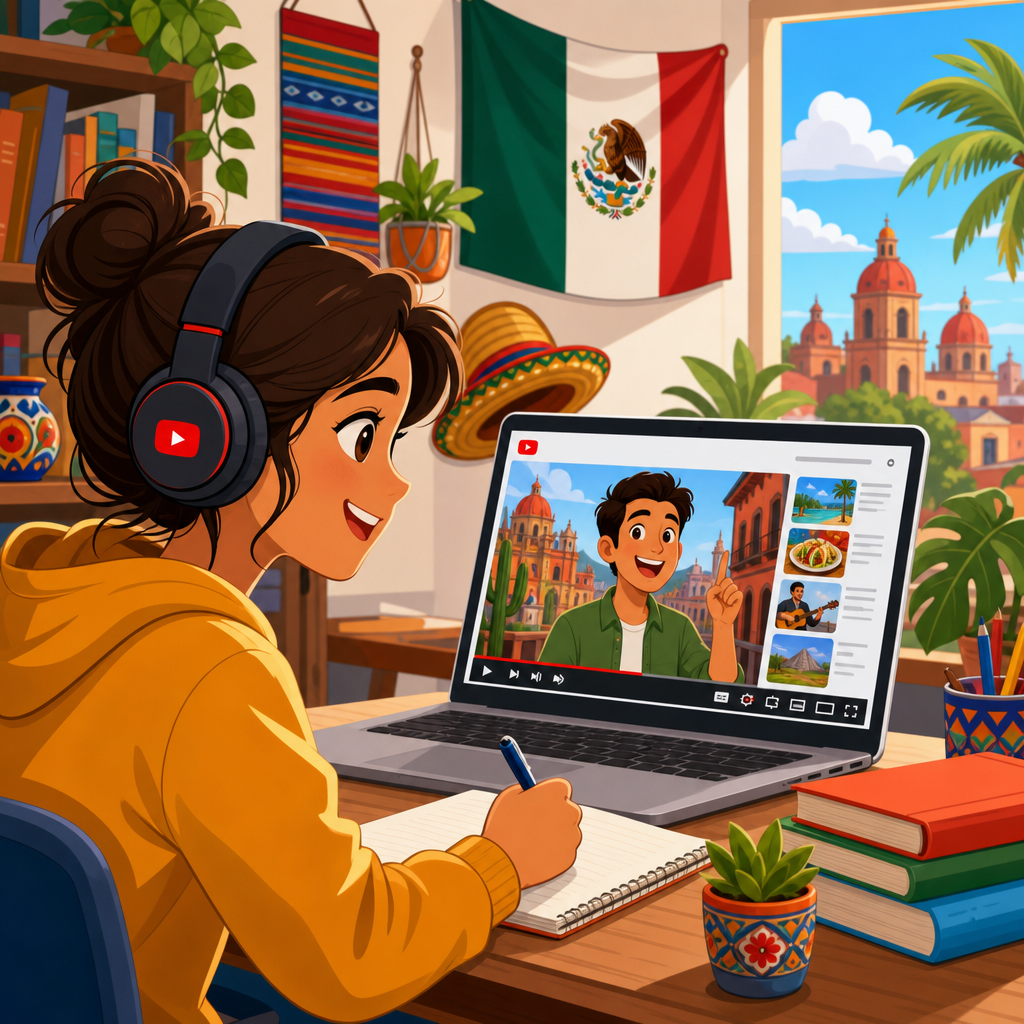
YouTube has become one of the most practical tools for Spanish language acquisition because it combines authentic speech, visual context, community interaction, and unlimited repetition in one place. For learners who want to improve listening, pronunciation, vocabulary, cultural knowledge, and confidence, the platform offers a depth that textbooks alone rarely match. In my work helping adult learners build Spanish study systems, YouTube consistently delivers the best results when it is used with structure rather than as passive entertainment.
Spanish language acquisition refers to the process of developing usable comprehension and communication skills in Spanish over time. That includes recognizing common words, understanding sentence patterns, noticing pronunciation features, and eventually responding with accuracy and fluency. YouTube supports this process because it exposes learners to comprehensible input, real accents, body language, subtitles, and repeated high-frequency phrases. A beginner can watch a cooking demonstration and learn verbs like cortar, mezclar, and cocinar, while an advanced learner can follow political commentary, interviews, or regional comedy and absorb nuance that classroom dialogues often miss.
This matters because Spanish is spoken by more than 480 million native speakers across more than 20 countries, and no single course can represent that diversity. Learners need contact with different accents, registers, and cultural references. YouTube provides access to Mexican vloggers, Spanish news channels, Colombian teachers, Argentine podcasters, and bilingual creators explaining grammar in plain terms. It also lowers the cost barrier. A learner with a phone, an internet connection, and a clear study plan can build a rich immersion environment without paying for private lessons every day.
Used well, YouTube also fits naturally into a broader Spanish community and interaction strategy. Comment sections, live chats, creator communities, and linked resources can lead learners toward conversation practice, Discord groups, newsletters, podcasts, and local meetups. As a miscellaneous hub under Spanish Community and Interaction, this article connects the many ways YouTube can support learning, from choosing channels and understanding subtitles to turning videos into speaking practice and avoiding common mistakes.
Why YouTube Works for Spanish Learning
YouTube works because it delivers multimodal input. Learners hear spoken Spanish, see gestures and objects, read on-screen text, and often get captions at the same time. That combination reduces cognitive load. When someone says pon la cebolla en la sartén while physically placing onion in a pan, meaning becomes obvious even if every word is not yet familiar. This is one reason video often accelerates comprehension faster than audio alone for early and intermediate learners.
The platform also supports repetition better than almost any other medium. You can slow playback to 0.75 speed, replay difficult sections, save clips to playlists, and compare several explanations of the same grammar point. In practice, I have seen learners make significant progress by replaying five-minute segments daily instead of constantly chasing new content. Repeated exposure to phrases like me di cuenta, no pasa nada, and o sea builds automatic recognition. That type of phrase acquisition is crucial because fluent speech depends less on isolated vocabulary than on repeated chunks.
Another advantage is range. Formal educational channels explain the subjunctive, object pronouns, and verb conjugations. Lifestyle channels expose learners to fast casual speech. News segments sharpen comprehension of standard pronunciation and current events. Travel videos reveal regional vocabulary. Music analysis channels improve listening for rhyme, stress, and colloquial language. In other words, YouTube supports both structured learning and natural acquisition, which is why it deserves a central place in any Spanish learning hub.
Choosing the Right Spanish YouTube Content
The best YouTube content is not simply content made for learners. It is content that matches your current level while remaining interesting enough to revisit. Beginners usually benefit from channels with slower delivery, clear enunciation, visual support, and either Spanish or bilingual captions. Intermediate learners should mix learner-focused channels with native content on familiar topics such as football, beauty, gaming, cooking, travel, or productivity. Advanced learners should spend most of their time with native content, using teacher channels only to clarify recurring problems.
A useful filtering method is the seventy-percent rule. If you understand about seventy percent of a video without constant pausing, it is challenging but workable. If comprehension falls below fifty percent, frustration rises and retention drops. If you understand nearly everything, the material may be too easy to drive noticeable gains. Topic familiarity matters as much as language level. A beginner who loves makeup tutorials may understand more Spanish in that category than in a generic grammar lecture because the visuals and routine language patterns create strong context.
Creators also vary by accent and style. Mexican Spanish channels often provide globally familiar pronunciation and vocabulary. Peninsular Spanish channels expose learners to vosotros and the distinctive c and z sound used in much of Spain. Argentine creators introduce voseo and intonation patterns that differ sharply from many textbooks. None is more correct; they are regional standards. The smart approach is to start with one primary accent for stability, then add others gradually so listening skills become flexible rather than fragile.
Building a Study System Around Videos
Random watching produces entertainment, but a simple system produces acquisition. The most reliable workflow I use has five steps: preview, watch for gist, watch for detail, capture language, and respond. Preview means checking the topic and predicting vocabulary. Watching for gist means understanding the main idea without stopping every few seconds. Watching for detail means replaying important sections and noticing exact phrasing. Capturing language means writing down useful chunks rather than long word lists. Responding means speaking or writing something based on the video.
For example, after watching a six-minute travel video about Barcelona, a learner might record phrases such as vale la pena, queda cerca de, and la vista desde arriba. Then the learner uses those chunks in original sentences: Vale la pena visitar el barrio por la noche. El museo queda cerca de la playa. La vista desde arriba es impresionante. This turns passive viewing into active retrieval, which is essential for retention. Cognitive science consistently shows that retrieval practice strengthens memory more effectively than rereading notes.
Consistency matters more than marathon sessions. Twenty to thirty focused minutes a day usually beats two unfocused hours on weekends. A sustainable weekly pattern might include three days of learner-friendly videos, two days of native content, one day of review, and one day of speaking or writing based on what you watched. The goal is not to finish YouTube. The goal is to repeatedly process useful Spanish until comprehension and production become more automatic.
Using Captions, Transcripts, and Playback Controls Effectively
Captions can either accelerate learning or become a crutch, depending on how they are used. Beginners often need support, but it is usually better to start with Spanish captions before relying on English subtitles. Spanish captions reinforce sound-to-text mapping, help learners notice word boundaries, and reduce the false impression that spoken Spanish is an uninterrupted blur. Auto-generated captions are imperfect, especially with regional accents or background music, but they are often good enough for review. For higher accuracy, many educational channels provide manual subtitles or full transcripts.
Playback controls are underrated. Slowing a video to 0.75 can reveal reduced vowels, linked words, and consonants that disappear at full speed. Once a segment is clear, move back to normal speed so your ear adapts to authentic rhythm. I also recommend looping short sections of ten to twenty seconds. This is especially effective for shadowing, a technique where the learner repeats along with the speaker to imitate timing, stress, and intonation. Shadowing improves pronunciation because it trains the motor patterns of speech, not just knowledge about pronunciation rules.
The balance should change over time. At first, captions may be on for most of a video. Later, learners can watch once without captions, then rewatch with captions to confirm what they heard. Eventually, captions become a diagnostic tool rather than a permanent support. That progression mirrors the broader goal of Spanish language acquisition: moving from supported comprehension to independent understanding.
Turning YouTube into Speaking and Interaction Practice
YouTube is often seen as a listening platform, but it can directly support speaking if learners build response activities around it. One simple method is pause-and-paraphrase. After thirty to sixty seconds of video, pause and explain in Spanish what the speaker just said. Another is opinion response: watch a creator discuss a habit, product, or news event, then record your own agreement or disagreement in one minute. A third is imitation: repeat a short section with the same cadence, then say a similar sentence using your own information.
Community features also matter. Thoughtful comments in Spanish can become low-pressure writing practice. Live streams and premieres allow real-time interaction, which pushes faster processing than polished comments do. Many channels link to Instagram, Discord, Patreon communities, newsletters, or language exchange spaces where followers continue discussions. Those pathways matter because acquisition improves when input connects to output and social use. Watching ten videos about street food helps, but asking someone in Spanish which dish they would try forces you to use the language actively.
For learners who feel shy, private speaking still counts. Use your phone to summarize a video, describe what you learned, or react to a controversial point. Compare your recording weekly. Improvement becomes measurable when you hear longer pauses shrinking, filler words decreasing, and pronunciation becoming steadier. This kind of self-recording is one of the fastest ways to convert YouTube from a passive content feed into a practical communication tool.
Best Practices by Level
Different stages require different methods. The table below shows what typically works best.
| Level | Best Video Types | Main Goal | Recommended Method |
|---|---|---|---|
| Beginner | Slow teacher-led lessons, visual vlogs, kids’ content, cooking demos | Build core vocabulary and basic listening confidence | Use Spanish captions, short clips, frequent replay, simple summaries |
| Lower intermediate | Daily routines, travel videos, interviews with clear speech, graded stories | Increase comprehension of common phrases and sentence patterns | Watch for gist first, then note useful chunks and shadow key lines |
| Upper intermediate | Native lifestyle content, explainers, podcasts with video, news analysis | Handle normal-speed speech and regional variation | Reduce captions, paraphrase sections, discuss themes in speaking practice |
| Advanced | Debates, documentaries, comedy, long-form interviews, specialist channels | Refine nuance, register, and cultural literacy | Watch mostly without captions, track idioms, respond with detailed opinions |
These are not rigid categories. A motivated beginner can sample native content if the topic is concrete and visual. An advanced learner may still need a focused grammar explainer now and then. The point is to match difficulty with purpose. When learners fail with YouTube, the issue is rarely the platform itself. More often, they choose material that is too hard, watch without a task, or confuse exposure with progress.
Common Mistakes and How to Avoid Them
The most common mistake is passive binge-watching. Learners watch hours of Spanish content and assume time alone will create fluency. Exposure matters, but acquisition improves dramatically when viewing includes attention, repetition, and response. Another mistake is obsessing over every unknown word. In real language use, comprehension depends on tolerating ambiguity and extracting meaning from context. If you stop every ten seconds to open a dictionary, you break the flow that helps your brain notice patterns.
A third mistake is relying too heavily on English subtitles. They make videos feel easy, but they direct attention away from Spanish sound and structure. There is also the accent trap: some learners avoid unfamiliar regional speech because it feels uncomfortable. That may protect short-term confidence, but it weakens long-term listening flexibility. Finally, many learners never organize what they watch. A few topic-based playlists such as grammar, daily Spanish, interviews, and pronunciation create useful internal links in your study process and make review far easier.
Tool choice can help. Language Reactor, YouTube playlists, spaced repetition apps like Anki, and note systems such as Notion or Obsidian can turn scattered viewing into a trackable program. Still, tools are secondary. The core habit is deliberate engagement with understandable Spanish.
How YouTube Fits Into a Broader Spanish Community Strategy
YouTube is strongest when it serves as a gateway rather than a silo. A single creator can introduce slang, pronunciation, history, food, or current events, but real growth accelerates when that input feeds interaction elsewhere. Use a video topic as the basis for a language exchange conversation. Join a creator’s live session and ask a question. Follow linked podcasts for audio-only practice during commutes. Read comments to see how native speakers disagree, joke, soften criticism, or show enthusiasm. These community signals teach pragmatic Spanish that formal lessons often ignore.
As a hub within Spanish Community and Interaction, this miscellaneous page points to many connected subtopics: finding Spanish-speaking creators, using comments as writing practice, joining live chats, building playlists by dialect, shadowing for pronunciation, and linking video study with conversation exchanges. The central lesson is straightforward. YouTube is not just a place to consume Spanish. It is a practical entry point into the living language as people actually speak, react, explain, and connect.
To get the most from it, choose level-appropriate channels, study in short focused sessions, use captions strategically, respond out loud, and let videos lead you toward real interaction. If you want better listening, clearer pronunciation, stronger vocabulary, and more cultural awareness, start with one playlist, one notebook, and one daily routine. Then build from there.
Frequently Asked Questions
Why is YouTube so effective for Spanish language acquisition compared to traditional study methods?
YouTube is especially effective for Spanish language acquisition because it brings together several elements that are difficult to replicate in a textbook or static course. Learners hear real spoken Spanish in authentic contexts, see facial expressions and body language that support meaning, and can replay difficult sections as many times as needed. That combination helps develop listening comprehension far more naturally than memorizing isolated vocabulary lists. Instead of studying Spanish as an abstract system, learners experience how it is actually used by native speakers in everyday conversations, interviews, tutorials, vlogs, news clips, and storytelling.
Another major advantage is variety. A learner can move from beginner-friendly instructional videos to native-level content without leaving the platform. That creates a practical progression path. At first, students may rely on slower speech, subtitles, and teacher-led explanations. Over time, they can transition to travel channels, cooking videos, podcasts, comedy, documentaries, and street interviews. This variety prevents boredom and exposes learners to different accents, registers, and speaking speeds, which is essential for building real-world comprehension.
YouTube also supports active learning when it is used intentionally. Learners can pause to repeat phrases, write down new expressions, shadow pronunciation, and review the same video across multiple sessions. In addition, the comment sections and community features often expose learners to informal language, common questions, and cultural reactions. When combined with a clear study routine, YouTube becomes much more than entertainment. It becomes a flexible immersion environment that supports listening, pronunciation, vocabulary growth, cultural familiarity, and confidence all at once.
How should beginners use YouTube to learn Spanish without feeling overwhelmed?
Beginners should approach YouTube with structure, not endless browsing. One of the most common mistakes is watching random Spanish videos that are far above their level and assuming exposure alone will lead to progress. While exposure matters, beginners need content that is understandable enough to be useful. A better strategy is to start with channels designed for learners or native content that is highly visual and easy to follow. Videos with clear speech, strong context, and predictable topics help beginners connect words with meaning without becoming discouraged.
A simple routine works best. For example, choose one short video, ideally between three and ten minutes, and work with it in stages. First, watch once for general meaning without stopping. Then watch again and pause to note key words or phrases. On a third pass, repeat sentences aloud to build pronunciation and rhythm. If subtitles are available, use them strategically rather than depending on them from the beginning. Spanish subtitles can be especially helpful because they reinforce spelling, word boundaries, and recognition of familiar vocabulary in connected speech.
Beginners should also narrow their focus. It is more productive to follow a small number of reliable channels than to jump between dozens of creators. Repetition is powerful in language learning, and hearing the same voices, vocabulary patterns, and speaking styles helps the brain process Spanish more efficiently. Consistency matters more than intensity. Even fifteen to twenty focused minutes per day can produce strong results if the learner listens actively, repeats what they hear, and revisits content regularly. The goal at the beginner stage is not to understand everything. It is to gradually become comfortable hearing Spanish and recognizing more each week.
What is the best way to use YouTube videos to improve Spanish listening and pronunciation?
To improve listening and pronunciation, learners should use YouTube actively rather than passively. Passive watching can be enjoyable, but it usually does not create rapid language gains on its own. Active use means working with the audio in a deliberate way. One effective method is to choose a short clip and listen for specific sounds, sentence patterns, or repeated expressions. Instead of trying to decode every word, focus on understanding the message and identifying how native speakers connect words, reduce sounds, and use intonation. This builds the kind of listening ability needed for real conversation.
For pronunciation, shadowing is one of the best techniques. Shadowing means listening to a sentence and repeating it immediately, trying to imitate the speaker’s rhythm, stress, melody, and pace as closely as possible. YouTube is ideal for this because learners can pause, replay, and slow down difficult sections. Start with one or two sentences at a time. Listen carefully, repeat several times, and compare your speech to the original. This trains your mouth and ear together, which is far more effective than reading Spanish aloud without a model.
Another strong strategy is repeated listening across several days. The first time you watch a video, your goal is general comprehension. The second time, notice vocabulary and pronunciation details. The third time, repeat key sections aloud. By the fourth or fifth exposure, phrases that once sounded too fast often become much clearer. This repetition develops both decoding skills and confidence. Over time, learners begin to recognize sound patterns automatically, which is exactly what strong listening requires. The key is to work deeply with a manageable amount of content instead of constantly searching for something new.
Can YouTube help with Spanish vocabulary and cultural understanding, or is it mainly useful for listening practice?
YouTube is extremely valuable for both vocabulary development and cultural understanding, not just listening practice. In fact, one of its biggest strengths is that new words are introduced in meaningful, memorable contexts. When learners encounter vocabulary through cooking demonstrations, travel videos, interviews, routines, reactions, or storytelling, they see how words function in real life. That context makes vocabulary easier to understand and retain. Instead of learning isolated translations, students learn how expressions are used, what tone they carry, and what situations they belong to.
Cultural knowledge develops in the same way. Language and culture are inseparable, and YouTube gives learners direct access to customs, humor, social norms, regional differences, and everyday perspectives from across the Spanish-speaking world. A learner might notice differences in greetings, food habits, politeness, slang, or attitudes depending on whether the content comes from Mexico, Spain, Colombia, Argentina, or another region. This kind of exposure helps learners avoid treating Spanish as a single uniform language. It also prepares them to communicate more naturally and respectfully with a wide range of speakers.
To make vocabulary growth more effective, learners should collect useful phrases rather than single words whenever possible. Write down expressions exactly as they appear in the video, along with a brief note about the situation. For example, instead of only learning a verb, note the full phrase and who said it. This approach supports both fluency and cultural awareness because it teaches language as people actually use it. When learners consistently choose videos that interest them, the vocabulary also becomes more relevant to their lives, which increases motivation and long-term retention.
How can adult learners build a consistent Spanish study system around YouTube and actually make progress?
Adult learners make the most progress with YouTube when they stop treating it as casual exposure and start using it as part of a repeatable study system. The platform works best when it fits into a broader routine with clear goals. For example, one learner may use YouTube primarily to improve listening comprehension, while another may focus on pronunciation, vocabulary building, or preparing for conversation. Once the purpose is clear, it becomes easier to choose the right channels, the right video length, and the right activities for each session.
A practical weekly system might include three to five short sessions built around the same process. First, choose one or two videos that match your level and interests. Next, watch for general understanding. Then rewatch and extract useful words, phrases, and pronunciation patterns. After that, spend time repeating key lines aloud or summarizing the video in simple Spanish. Finally, revisit the same content later in the week to reinforce what you learned. This structure turns YouTube from endless consumption into targeted skill building. It also makes progress visible, which is important for adults balancing language study with work, family, and other commitments.
It is also important to measure improvement realistically. Progress with YouTube often shows up in subtle but meaningful ways: understanding more without subtitles, recognizing familiar expressions faster, feeling less intimidated by native speech, or being able to repeat phrases with better rhythm and accuracy. These are real indicators of growth. Adult learners should not expect instant fluency from watching videos alone, but when YouTube is used consistently with attention, repetition, and reflection, it becomes one of the most effective tools available for building practical Spanish ability over time.