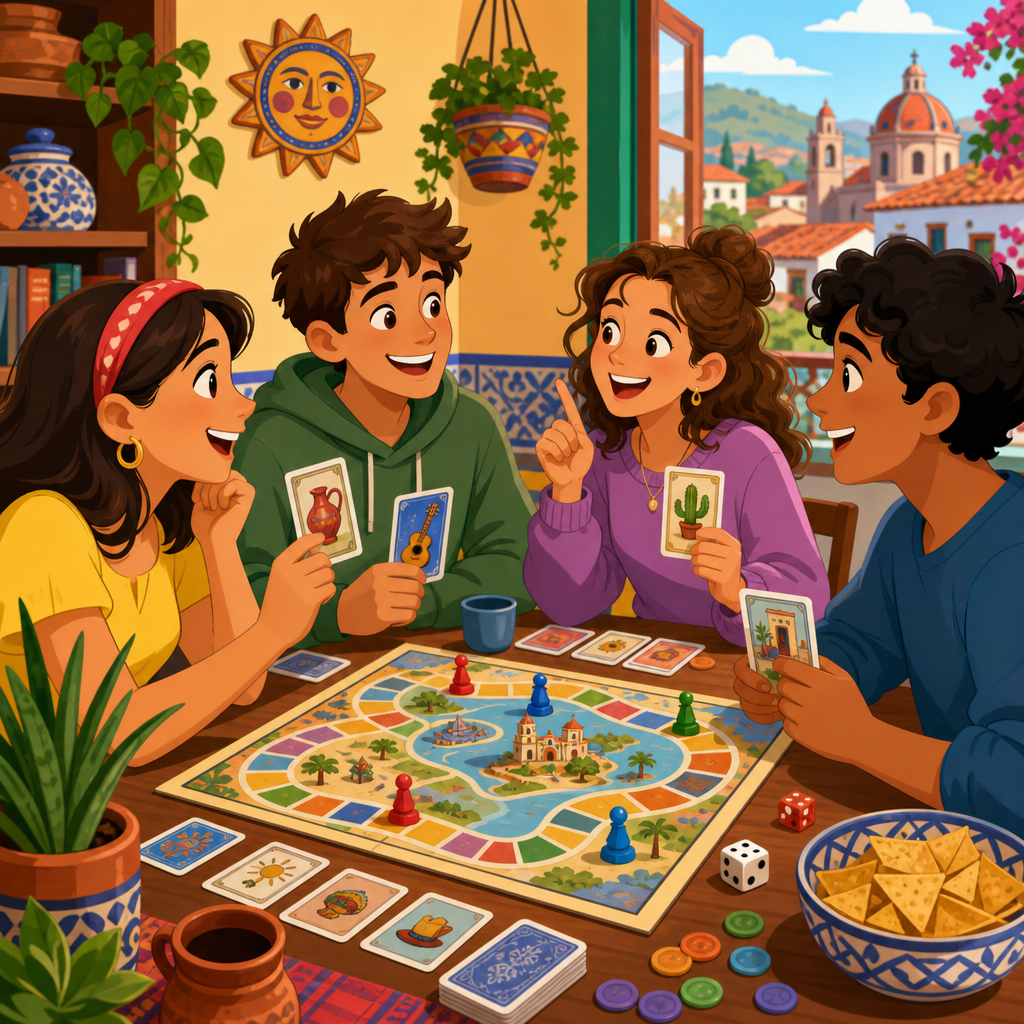
Board games can help improve your Spanish because they turn vocabulary, listening, speaking, and fast comprehension into repeatable, social practice. In language learning, repetition matters, but repetition without engagement usually fails. A well-chosen game solves that problem by giving every word a purpose: you need it to explain a clue, negotiate a trade, answer a question, or react before another player. I have used board games in tutoring sessions, conversation clubs, and family study nights, and the pattern is consistent. Learners speak more, self-correct faster, and remember phrases longer when a game creates mild pressure and genuine interaction.
For this topic, “board games” includes classic tabletop games, modern strategy games, card-driven party games, and language-specific games that can be played around a table. “Improve your Spanish” does not just mean memorizing isolated nouns. It includes pronunciation, turn-taking, listening accuracy, reading speed, grammar retrieval, pragmatic skills such as interrupting politely, and cultural familiarity with how native speakers joke, persuade, and explain. This matters because many learners get stuck between app-based study and real conversation. Games provide the missing bridge. They offer low-stakes speaking opportunities, built-in repetition, and enough structure that even shy learners know when to talk and what kind of language to use.
As a hub page in the broader Spanish Community and Interaction area, this article covers the main categories of games, how to match them to your level, what skills each type develops, and how to adapt rules so play remains fun without turning into a classroom drill. It also points toward related subtopics you should explore next, including conversation games, classroom activities, online Spanish game nights, vocabulary-building card games, and family-friendly options for mixed-level groups.
Why board games work for Spanish learners
Board games work because they combine comprehensible input with forced output. You hear repeated words from other players, see printed text on cards or boards, and then must respond quickly enough to stay in the game. That sequence mirrors effective language acquisition principles. In practice, I see four specific benefits. First, games increase retrieval speed. A learner who knows colors on paper may hesitate in conversation, but after several rounds of a game requiring instant matching, those words become easier to access. Second, games lower anxiety. Speaking in a lesson can feel evaluative; speaking to win a round feels purposeful. Third, games provide contextual repetition. Instead of repeating “quiero,” “puedo,” or “me toca” in isolation, players use them naturally every few minutes. Fourth, games encourage negotiation of meaning, which is one of the strongest drivers of progress in interactive learning.
The best game sessions also produce useful conversational routines. Players ask for clarification with “¿Qué significa?”, stall with “Espera,” confirm understanding with “Entonces…,” and disagree with “No estoy de acuerdo.” Those phrases are not glamorous, but they are essential to real communication. If your goal is participating in Spanish-speaking communities, not just passing quizzes, routine interactional language matters as much as theme vocabulary.
Best types of board games for different Spanish skills
Different games train different parts of the language system. Word association games strengthen semantic networks. Guessing games improve circumlocution, the ability to explain an unknown word using words you already know. Tile and card games often support number practice, color recognition, and turn-taking phrases. Storytelling games build narrative control in past tenses. Trivia games expand cultural knowledge while reinforcing reading comprehension. Strategy games are slower, but they create space for planning language, persuasion, and conditional forms such as “si haces eso, yo puedo…”.
A common mistake is assuming any game in Spanish will automatically help. Some games are text-heavy and frustrating for beginners. Others are so abstract that they generate little actual talk. Match the game to the skill. If you want speaking fluency, choose games that require explanation and reaction. If you want reading stamina, choose card-based games with short repeated text. If your goal is family learning, choose games with transparent rules and visual support so children and adults can participate together.
| Game type | Spanish skills improved | Best for | Example titles |
|---|---|---|---|
| Word and clue games | Vocabulary retrieval, paraphrasing, listening | Lower-intermediate to advanced | Codenames, Taboo-style games, Dixit |
| Question and trivia games | Reading, cultural knowledge, quick answers | Intermediate and up | Trivial Pursuit Spanish editions, timeline quizzes |
| Family card games | Numbers, colors, turn-taking phrases | Beginners and mixed ages | UNO, Dobble, Lotería |
| Storytelling games | Narration, connectors, past tenses | Intermediate learners | Once Upon a Time, Rory’s Story Cubes |
| Strategy and negotiation games | Persuasion, conditional language, longer speaking turns | Upper-intermediate to advanced | Catan, Carcassonne, cooperative mystery games |
Recommended board games that can help improve your Spanish
Codenames is one of the strongest options for vocabulary and semantic precision. A clue-giver must connect several words with one clue while avoiding dangerous associations. In Spanish, that pushes players to think about gender, false cognates, and category relationships. For example, linking “banco,” “río,” and “pez” with one clue requires stronger lexical control than simple translation drills. Taboo-style games are equally effective because they force circumlocution. If a learner cannot say the target word, they must define it, compare it, or give an example. That is exactly what happens in real conversation when vocabulary fails.
Dixit works especially well for descriptive language and interpretation. The surreal artwork encourages adjectives, opinions, and metaphor: “parece misterioso,” “me recuerda a un sueño,” “diría que representa la soledad.” Because there is no single correct answer, even cautious learners contribute more. Rory’s Story Cubes or similar storytelling prompts help intermediate students practice sequencing with “primero,” “después,” and “al final,” while naturally bringing in preterite and imperfect forms.
UNO remains useful for beginners because it supports high-frequency classroom language: “me toca,” “rojo,” “cambia,” “roba dos,” “no tengo.” Dobble, also sold as Spot It!, is excellent for rapid noun recognition and pronunciation because players must spot and name matching symbols under time pressure. Lotería, the classic image-based game popular across Mexico and beyond, is ideal for novice learners and heritage families. The visual format lowers the barrier to entry, and traditional caller-style play can introduce culturally rich vocabulary in a memorable way.
For learners ready for longer turns, Catan is a strong choice. Trading resources generates practical phrases such as “te cambio trigo por madera,” “necesito ladrillo,” and “si me ayudas ahora, luego te doy…” I have seen quiet intermediate students speak far more during Catan than in standard conversation circles because negotiation creates a reason to speak. Cooperative games can be even better. When players work together to solve a mystery or stop a threat, they ask more questions, summarize clues, and check understanding constantly.
How to choose the right game for your level and group
Beginners need visual support, repeated structures, and short turns. Games with icons, colors, pictures, or predictable sentence frames are best. A beginner can succeed in Lotería, UNO, or a picture-based guessing game even with limited grammar. Early success matters. If rules are confusing or turns are too long, beginners stop listening and revert to English. For A1 and A2 learners, choose games where the same phrases come up repeatedly and where another player can model them naturally.
Intermediate learners benefit most from games that require explanation, inference, and quick choices. This is the sweet spot for Codenames, Dixit, simple trivia, and storytelling games. At B1 and B2, learners usually know enough vocabulary to paraphrase around gaps, which is why clue games are so productive. Advanced learners should not assume they have outgrown games. Complex strategy, social deduction, and negotiation games surface nuance: hedging, persuasion, humor, register, and region-specific vocabulary. Those are precisely the skills that separate textbook fluency from community fluency.
Group composition matters as much as level. Mixed-level families should choose games with easy mechanics but open-ended language so stronger speakers can expand without excluding weaker ones. In community meetups, avoid games that eliminate players early, because eliminated learners lose speaking time. In tutoring, choose games that let the instructor control pace and recycle target structures. If the goal is confidence, prioritize fun and tempo. If the goal is targeted practice, pick a game you can lightly modify without destroying the original experience.
Simple ways to adapt board games for better Spanish practice
The most effective adaptations are small. Do not turn game night into a grammar lecture. Instead, set one or two language rules. For example, require all requests and reactions in Spanish, but allow rule clarification in English if needed. Add visible support with a mini phrase sheet: “me toca,” “no entiendo,” “repítelo,” “quiero cambiar,” “creo que es…”. This keeps play moving while reinforcing useful interactional language. Another reliable tactic is pre-teaching ten to fifteen key words before starting. That brief setup dramatically improves confidence.
You can also adjust pacing. In word games, give beginners extra response time or allow them to point first and say the word second. In storytelling games, provide connectors on cards so learners build fuller sentences. In strategy games, ask each player to explain one decision per round in Spanish rather than requiring nonstop target-language use. I use this often because it preserves enjoyment and still produces meaningful output. Recording recurring errors after the session, not during it, is also important. Constant correction interrupts flow. A short recap afterward leads to better retention and less frustration.
For clubs or classrooms, assign rotating roles such as clue reader, scorekeeper, or rules explainer. Roles increase participation and distribute language functions. One player practices reading aloud, another summarizes, another negotiates. Over time, this creates balanced development rather than rewarding only the fastest speakers.
Building a Spanish game night that leads to real interaction
A successful Spanish game night starts with clear expectations. Tell players whether the goal is full Spanish immersion, mostly Spanish with support, or relaxed bilingual play. Most community groups do best with mostly Spanish and strategic support. That standard keeps anxiety manageable and prevents stronger speakers from dominating. Begin with an easy warm-up game that gets everyone talking within two minutes. Then move to one main game matched to the group’s energy and level. End with a short reflection: favorite phrase learned, funniest moment, or one expression to reuse next time.
Environment matters too. Seat players so they can hear each other, keep background music low, and place useful vocabulary where everyone can see it. If you host regularly, rotate game categories across sessions: one week fast vocabulary play, one week storytelling, one week negotiation. This prevents the group from plateauing. It also supports the broader Spanish Community and Interaction pathway by connecting game nights with conversation exchanges, cultural events, book clubs, and online speaking groups. Board games are not an isolated trick. They are one of the easiest ways to create recurring, low-pressure Spanish interaction in real life.
Conclusion
Board games that can help improve your Spanish do more than entertain. They create repeated exposure, purposeful speaking, faster recall, and social confidence in a format people actually want to repeat. The best choices depend on your level and goal. Beginners usually benefit from visual family games like UNO, Dobble, and Lotería. Intermediate learners often progress fastest with clue, storytelling, and trivia games such as Codenames, Dixit, and Rory’s Story Cubes. Advanced speakers gain from strategy and negotiation games that demand explanation, persuasion, and subtle listening. Across all levels, the most useful adaptations are simple: phrase support, light pre-teaching, and post-game feedback instead of constant interruption.
If you want stronger Spanish interaction outside formal study, start with one game, one group, and one consistent schedule. Then branch into the related topics in this Miscellaneous hub: Spanish conversation games, classroom-friendly activities, online game nights, vocabulary card games, and family play ideas. The key benefit is practical and immediate: more speaking, more listening, and more real connection in Spanish. Choose a game for your level, invite other learners or native speakers, and make your next study session a table full of useful talk.
Frequently Asked Questions
How do board games actually help improve Spanish?
Board games improve Spanish by turning language into action. Instead of memorizing isolated vocabulary lists or reviewing grammar rules without context, players have to use Spanish for a clear purpose. They may need to describe a word without saying it directly, ask another player a question, negotiate, give instructions, react quickly, or explain why they made a certain choice. That kind of meaningful repetition is one of the strongest ways to build language ability because the brain remembers words and structures more effectively when they are tied to emotion, competition, humor, and social interaction.
Another major benefit is that board games combine multiple language skills at once. A single round can involve listening carefully, speaking under time pressure, reading cards or prompts, and processing responses in real time. This mirrors real communication far better than drills alone. Games also lower the fear of making mistakes. In a relaxed, playful setting, learners are usually more willing to try new vocabulary, experiment with sentence structure, and keep talking even when they are not perfect. Over time, that repeated use builds fluency, confidence, and faster comprehension in a way that feels natural rather than forced.
What types of board games are best for learning Spanish?
The best board games for learning Spanish are the ones that require regular communication and can be adjusted to the learner’s level. Word-guessing games, storytelling games, trivia games, card-based conversation games, and fast-reaction games tend to work especially well. Games such as Taboo-style clue games are excellent for circumlocution, which is the ability to explain an idea using different words when you do not know the exact term. Storytelling or image-based games help learners practice narration, descriptive language, and connectors. Trivia games can strengthen reading comprehension and general vocabulary, while social deduction or negotiation games push players to persuade, question, and defend their opinions.
That said, the “best” game depends on the specific skill you want to build. If your goal is speaking confidence, choose games that require discussion and explanation. If you want faster listening and response time, choose games with timed rounds or quick prompts. If you are working with beginners, simpler games with visual support and predictable structures are often more useful than complex strategy games with dense rules. The ideal choice is a game that creates frequent turns, keeps players engaged, and gives them many chances to hear and produce useful Spanish without feeling overwhelmed.
Can beginners use board games to learn Spanish, or are they better for intermediate learners?
Beginners can absolutely use board games to learn Spanish, but success depends on choosing the right games and setting appropriate expectations. A beginner may not be ready for a fully Spanish-speaking session built around complicated strategy rules, but they can still benefit greatly from games with pictures, categories, matching, simple questions, and repetitive sentence patterns. For example, a beginner can practice colors, numbers, food, animals, actions, or common classroom phrases through lightweight games that provide constant exposure without too much cognitive overload. In fact, beginners often gain confidence more quickly when they associate Spanish with play rather than pressure.
Intermediate learners usually get even more out of board games because they can handle longer explanations, spontaneous reactions, and more open-ended communication. However, that does not mean beginners should wait. The key is scaffolding. A teacher, tutor, conversation partner, or family member can pre-teach essential vocabulary, simplify the rules, allow mixed language support when needed, and gradually increase the amount of Spanish used during play. This step-by-step approach makes games practical for every stage of learning. With the right setup, beginners can build vocabulary and listening skills, while intermediate and advanced learners can refine fluency, precision, and speed.
How can I use board games to practice Spanish effectively at home?
To use board games effectively at home, start by being intentional about the language focus. Before playing, choose a goal such as practicing question formation, reviewing food vocabulary, improving past-tense narration, or increasing conversational speed. That goal helps you select the right game and keeps the activity from becoming entertainment only. It also helps to prepare a small list of useful phrases players will need, such as “It’s your turn,” “I agree,” “Can you repeat that?” “I don’t understand,” or “My clue is…” These repeated expressions become highly practical Spanish that learners remember because they use them naturally during the game.
It is also smart to adapt the rules when necessary. You can require players to speak only in Spanish during certain rounds, answer every question with a complete sentence, or explain their moves out loud. Keep a notebook nearby for new words that come up during play, then review them afterward while the context is still fresh. If possible, replay the same game more than once. Repetition is where much of the learning happens, and familiar rules free up more mental energy for language. Whether you are playing with family, friends, a tutor, or a conversation group, the most effective home practice comes from making Spanish an active part of the game rather than something separate from it.
Are board games enough on their own to become fluent in Spanish?
Board games are a powerful tool, but they are not a complete language-learning system by themselves. They are especially effective for reinforcing vocabulary, building speaking confidence, improving listening under real-time conditions, and making repetition enjoyable. They can also train learners to think more quickly in Spanish because games often require immediate comprehension and response. For many people, that kind of active practice fills an important gap left by textbooks and apps. It transforms passive knowledge into usable language.
However, fluency requires a broader range of exposure and practice. Learners also need consistent input from reading and listening, some direct attention to grammar and sentence patterns, and opportunities to communicate in different contexts beyond game play. Board games work best as part of a balanced routine that may include conversation practice, podcasts, short reading passages, writing, and targeted study. When used this way, they become much more than a fun extra. They serve as a reliable bridge between studying Spanish and actually using it, which is why they can play such an important role in long-term progress.