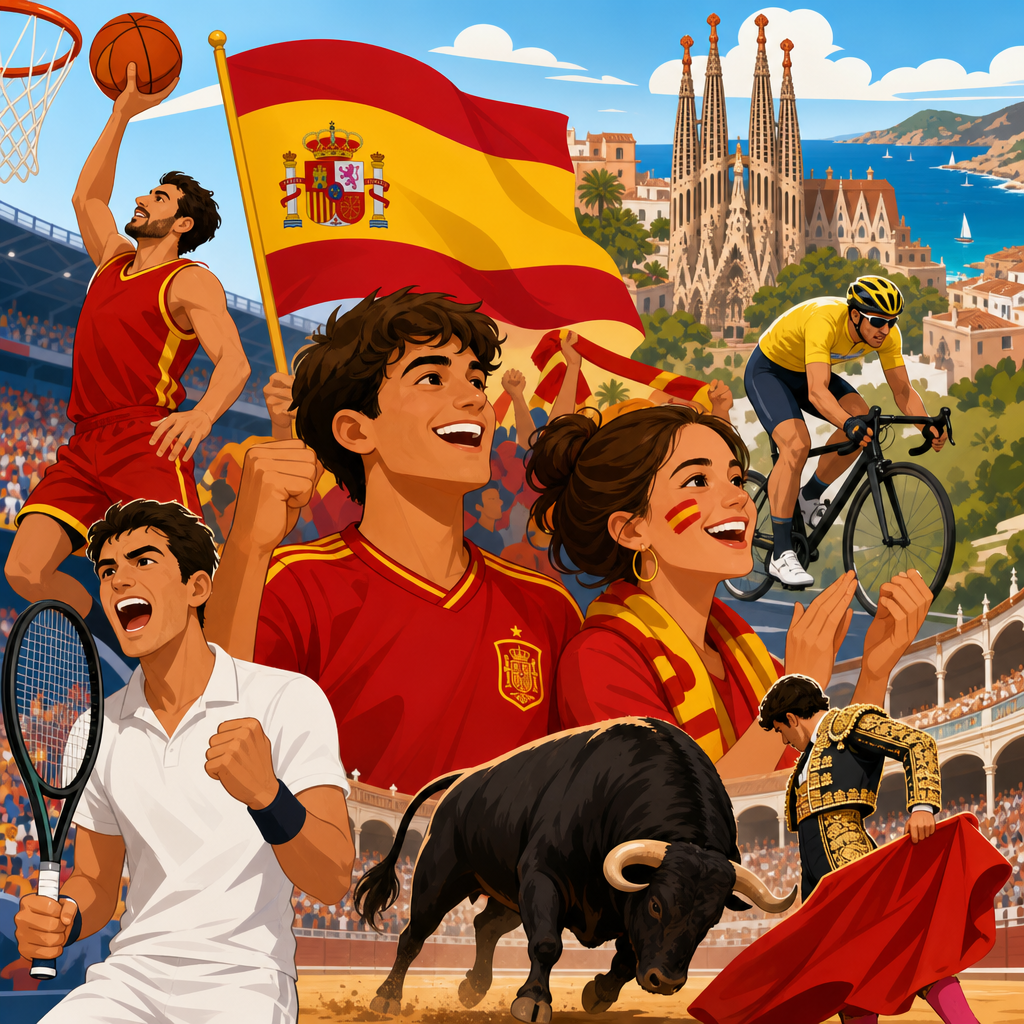
Celebrating Spanish sporting culture starts with understanding the words people use in stadiums, schoolyards, neighborhood clubs, and late-night debates, because language is the quickest way into how sport is lived, remembered, and shared across the Spanish-speaking world. In this hub article, “Spanish sporting culture” means the customs, values, vocabulary, chants, rituals, and everyday expressions tied to watching, playing, and discussing sport in Spain and across Latin America. “Key terms and phrases” refers not only to basic nouns like partido or equipo, but also to social language such as encouragement, rivalry, fair play, celebration, disappointment, and community belonging. I have worked with Spanish learners preparing for travel, family visits, and local club participation, and the same pattern appears every time: grammar helps, but sport-specific language creates instant connection. A visitor who can say ¿Quién juega hoy?, Buen partido, or Vamos al estadio moves from observer to participant quickly. That matters because sport in Spanish-speaking communities is rarely isolated from identity. It links generations, neighborhoods, regional pride, migration stories, school life, media habits, and even politics. This article serves as the central guide for the miscellaneous side of the topic, bringing together broad concepts that support deeper articles on football, basketball, baseball, tennis, cycling, fan culture, and conversational Spanish. If you want one practical reference point for how Spanish sporting culture sounds in real life, this is it.
Why Sporting Language Matters in Spanish Community Life
Sporting language matters because it appears far beyond the field. In Spain, a casual greeting after the weekend may begin with ¿Viste el partido? In Mexico, the phrase echar la cascarita can refer to an informal pickup game, especially football. In Argentina, discussing a club is often tied to family loyalty, neighborhood identity, and lifelong routine. In the Caribbean, baseball vocabulary enters daily metaphor, while in many countries football expressions are used in business, politics, and friendship. When learners recognize this, they stop treating sports words as niche vocabulary and start seeing them as social vocabulary. That shift improves comprehension fast.
Several core terms appear almost everywhere. Deporte means sport in the general sense. Partido is a match or game, though baseball may also use juego. Equipo means team. Jugador and jugadora mean player. Afición refers to the fan base or collective support, while aficionado or hincha describes a fan, with regional variation. In Spain, afición is especially common in media and stadium context. In much of South America, hinchada can refer to the organized body of supporters. These distinctions matter because they signal local belonging. Choosing hincha in Buenos Aires sounds natural; using aficionado there is correct but less culturally specific.
Another reason this language matters is register. Broadcasters, coaches, friends, and families do not speak the same way. A commentator may say el conjunto local domina la posesión, while a fan says están jugando mejor. A coach might shout marquen, cierren espacios, or suban la línea. Young players may simply say pasa, tira, or dale. If you learn only dictionary forms, you miss how sport actually sounds in conversation. Good cultural fluency comes from knowing the formal term, the everyday alternative, and the regional preference.
Core Terms You Will Hear in Any Sporting Conversation
The foundation of sporting Spanish begins with words that cross disciplines. Entrenamiento means training or practice. Entrenador and entrenadora mean coach. Competición is competition; torneo is tournament; liga is league; temporada is season. Victoria, derrota, and empate mean win, loss, and draw. Marcador or resultado refers to the score. Cancha, campo, pista, and estadio all mean playing venue, but the right choice depends on the sport and country. Basketball often uses cancha; football in Spain often uses campo; tennis uses pista; large spectator venues are estadios.
Action words are equally important. Ganar is to win, perder to lose, empatar to draw, competir to compete, and animar to cheer on. In fan settings, apoyar al equipo and alentar al equipo both mean to support the team, though alentar is very common in Latin America. In Spain, ánimo is a frequent expression of encouragement, while in many Latin American settings dale, vamos, or vamos, equipo may sound more natural. Learners who know these verbs can already handle most casual conversations before needing sport-specific technical vocabulary.
Emotion words carry just as much weight as game words. Nervios means nerves, ilusión means hopeful excitement, orgullo is pride, decepción is disappointment, and pasión is passion. Spanish sports culture is highly emotional in expression, but the tone varies by context. A family watching a final may say qué tensión or estoy sufriendo, which literally means “I am suffering” but often just means the game feels intense. This kind of phrase is common in football-heavy cultures and should not be interpreted too literally. It signals investment, not actual distress.
| Spanish term | Plain English meaning | Typical context | Useful example |
|---|---|---|---|
| partido | match, game | football, basketball, general sport talk | Hoy hay un partido importante. |
| afición | fan base, supporters | media, stadium culture in Spain | La afición apoyó hasta el final. |
| hincha | fan, supporter | Latin America, especially South America | Es hincha de Boca desde niño. |
| entrenamiento | training, practice | all sports | El entrenamiento empieza a las seis. |
| marcador | scoreboard, score | commentary and post-game talk | El marcador terminó dos a uno. |
| ánimo | come on, keep going, courage | encouragement | ¡Ánimo, todavía se puede! |
Regional Variation Across Spain and Latin America
No single list captures every Spanish-speaking sporting community, because vocabulary changes by country, city, and sport. That variation is not a problem; it is part of the culture. In Spain, football commentary often includes terms such as alineación for lineup, prórroga for extra time, and grada for the stands. In Mexico, you may hear portería for goal, cancha for the field or court, and colloquial football phrases shaped by street play and school tournaments. In Argentina and Uruguay, cancha is deeply embedded in football culture, and fan language around clubs, derbies, and loyalty is especially rich. In the Dominican Republic, Cuba, Puerto Rico, and Venezuela, baseball terminology has a wider social footprint than in most of Europe.
Some differences are subtle but important. The word for jersey may be camiseta, playera, or remera depending on region. Supporters may be aficionados, hinchas, or simply fans. A sports center may be polideportivo in Spain and described more generically elsewhere. Even pronunciation changes the listening challenge. Andalusian speech, River Plate Spanish, Caribbean Spanish, and Mexican Spanish all shape how sporting words sound in fast conversation. If you are learning for real interaction, it helps to choose one primary regional model first, then expand.
Media also spreads and blends vocabulary. International broadcasts on ESPN Deportes, DAZN, Movistar Plus+, TUDN, TyC Sports, and national public channels expose audiences to terms from multiple countries. Younger fans pick up expressions from social media clips, gaming streams, fantasy leagues, and athlete interviews. As a result, many speakers understand a wide range of terms even if they do not use all of them naturally. That is why receptive vocabulary can grow faster than productive vocabulary. I usually advise learners to recognize ten variants but actively use the two or three that fit their target community.
Fan Expressions, Chants, and Matchday Conversation
The social heart of sporting culture is fan language. Before the game, people say ¿A qué hora empieza?, ¿Dónde lo van a pasar?, or ¿Vamos a verlo juntos? During the match, common reactions include ¡Vamos!, ¡Qué jugada!, ¡No puede ser!, ¡Fue falta!, and ¡Buenísimo! Afterward, you hear jugaron bien, faltó definición, merecíamos ganar, or el árbitro estuvo mal. These are practical phrases because they fit television viewing, live attendance, text messaging, and group chat discussion.
Chants are harder to universalize because they are hyperlocal, tied to club history and rhythm. Still, certain themes recur: loyalty through defeat, pressure on rivals, praise for effort, and collective identity. In Spain, coordinated clapping and repeated refrains are common in football grounds and basketball arenas. In Argentina, supporter songs can run continuously and may reference neighborhood pride or historical rivalries. In Mexico, call-and-response patterns are common in stadium atmosphere. The essential point for learners is not memorizing every chant, but recognizing repeated verbs such as ganar, luchar, sentir, and volver, along with the emotional language of belonging.
There is also etiquette. Passion is normal, but context matters. In family or mixed-company settings, overusing insulting rival language can sound forced or disrespectful, especially if you are not part of the local fan culture. A safer route is positive support: Qué ambiente, se nota la pasión de la afición, or qué partido tan intenso. When learners adopt this approach, they participate credibly without pretending insider status they have not earned.
Everyday Phrases for Playing, Coaching, and Joining In
Sporting culture is not only spectating. Community interaction often happens through participation, and that requires practical language. To join a casual game, useful phrases include ¿Puedo jugar?, ¿Les falta uno?, ¿En qué posición juego?, and ¿Cómo se organizan los equipos? In training settings, you may hear calienta for warm up, estira for stretch, haz una ronda for do a circuit, and cambia for switch. In youth sports, coaches often use short imperatives because they must be understood instantly.
For respectful integration, courtesy phrases matter. Say gracias por invitarme, buen entrenamiento, estuvo divertido, or avísenme para la próxima. If your level is limited, honesty helps: Entiendo un poco, pero si hablas más despacio, mejor. In my experience, local players respond warmly when learners make the effort and show humility. Sport creates low-pressure repetition, which is why it is one of the most effective settings for natural language acquisition.
This hub connects naturally to deeper articles on football terminology, baseball vocabulary, basketball court language, tennis scoring, cycling events, martial arts etiquette, and sports idioms used outside athletics. Use it as your central reference, then build outward by sport, region, and social setting. The main benefit is simple: once you understand key terms and phrases, Spanish sporting culture becomes easier to follow, enjoy, and join. Start with the expressions in this guide, listen for regional variation, and practice them in real conversations this week.
Frequently Asked Questions
1. What does “Spanish sporting culture” actually include beyond just vocabulary?
Spanish sporting culture goes far beyond memorizing the names of sports or learning how to say “goal,” “match,” or “team.” It includes the full social world built around sport: the chants heard in stadiums, the nicknames fans use for clubs and players, the phrases commentators repeat during big moments, and the everyday expressions families and friends use when discussing results, rivalries, and controversies. In Spain and across Latin America, sport is often tied to identity, neighborhood pride, regional history, school traditions, and even political or social memory. That means the language of sport reflects emotion, belonging, humor, loyalty, and debate as much as it reflects the game itself.
It also includes rituals and customs that shape how sport is experienced. People gather at bars to watch matches, celebrate victories in public squares, argue over referee decisions on radio call-in shows, and use sporting phrases in ordinary conversation. Terms such as afición (fan base or supporters), cantera (youth academy), clásico (major rivalry match), and hinchada (supporters’ section or crowd, especially in Latin America) carry cultural weight because they point to traditions, institutions, and communities. Understanding Spanish sporting culture therefore means understanding how language connects the field of play to everyday life.
2. Which key Spanish sports terms and phrases are most useful to learn first?
If you want a strong foundation, start with terms that appear constantly in conversation, commentary, and fan culture. Words like partido (match or game), equipo (team), jugador (player), entrenador (coach), afición (supporters), and victoria or derrota (victory or defeat) are essential because they help you follow even basic sports discussions. In football contexts, which dominate much of the Spanish-speaking sporting world, you will also hear gol, penalti or penal, faltas (fouls), prórroga (extra time), and empate (draw). These are the building blocks for understanding what is happening in real time.
From there, it helps to learn phrases that reveal how fans actually talk. Ir a por todas means to go all out; dar la talla means to perform up to expectations; tener la camiseta bien puesta suggests deep loyalty and commitment to the team; and meter presión means to apply pressure, whether physically in the game or emotionally in a big atmosphere. In Spain, words like cantera are especially important because youth development is a major part of club identity. In Latin America, terms like hincha, barras, or tribuna may come up more often depending on the country. The most useful approach is to combine core vocabulary with high-frequency expressions so you can understand both the official language of sport and the emotional language surrounding it.
3. Are sports terms the same in Spain and Latin America, or do they change by country?
They definitely change by country, and that variation is one of the most interesting parts of Spanish sporting culture. While many core words are widely understood across the Spanish-speaking world, regional preferences are very common. For example, a football field may be called a campo in one place and a cancha in another. A fan might be an aficionado, hincha, or supporter depending on context and region. Even the way a commentator describes an exciting moment can differ in rhythm, vocabulary, and emotion from Spain to Argentina, Mexico, Colombia, or Uruguay.
These differences are not mistakes; they are part of how sporting culture reflects local identity. Spain may emphasize terms linked to club structures, media traditions, and long-established league language, while many Latin American countries have developed highly expressive fan vocabularies shaped by neighborhood clubs, radio commentary, street play, and intense supporter culture. That means learners should aim for recognition rather than rigid uniformity. If you understand that the same idea may be expressed through different words, you will navigate sports conversations much more naturally. Paying attention to regional variation also helps you appreciate that Spanish sporting culture is not a single monolithic system, but a shared tradition with strong local voices.
4. Why are chants, nicknames, and fan expressions so important in understanding sporting culture?
Chants, nicknames, and fan expressions matter because they reveal the emotional heart of sport. Official vocabulary tells you what happened in a match, but fan language tells you what it meant. A chant can express pride, defiance, historical memory, rivalry, humor, or collective identity in just a few repeated lines. Nicknames for clubs and players often carry generations of meaning, linking teams to cities, colors, founders, neighborhood reputations, or legendary moments. These forms of language turn sport from a simple contest into a lived cultural tradition.
They are also important because they show how communities participate in sport as creators, not just spectators. Fans do not simply consume the game; they interpret it, dramatize it, and pass down its language. Expressions shouted from the stands or repeated in family conversations often become part of everyday speech. A dramatic comeback may inspire phrases about resilience, while a disappointing loss may produce sarcasm, jokes, or familiar sayings about bad luck and missed chances. For anyone trying to understand Spanish sporting culture in a meaningful way, learning the emotional and communal language of supporters is just as valuable as learning technical terms. It helps you hear the culture from the inside.
5. How can I learn and use Spanish sports language in a way that sounds natural and culturally aware?
The best method is to learn sports language in context rather than as an isolated vocabulary list. Watch matches in Spanish, listen to postgame analysis, follow sports radio clips, and read match reports from different countries. Notice not only the repeated nouns and verbs, but also the tone: when speakers become formal, when they become emotional, and how they shift between technical analysis and fan-style commentary. This helps you understand which expressions belong to journalism, which belong to everyday conversation, and which are tied to specific regions or supporter cultures.
It is also wise to use culturally loaded terms with some care until you know their local meaning. Some expressions are affectionate in one place and unusual or overly intense in another. Start with broadly understood words such as partido, equipo, afición, gol, and cancha or campo depending on your audience. Then gradually add idiomatic phrases you hear repeatedly from reliable sources. If you are speaking with native speakers, ask which terms they use in their country and which expressions feel most natural to them. That curiosity itself is part of cultural fluency. The goal is not just to translate sports words into Spanish, but to understand how sport is discussed, felt, and remembered across Spanish-speaking communities.