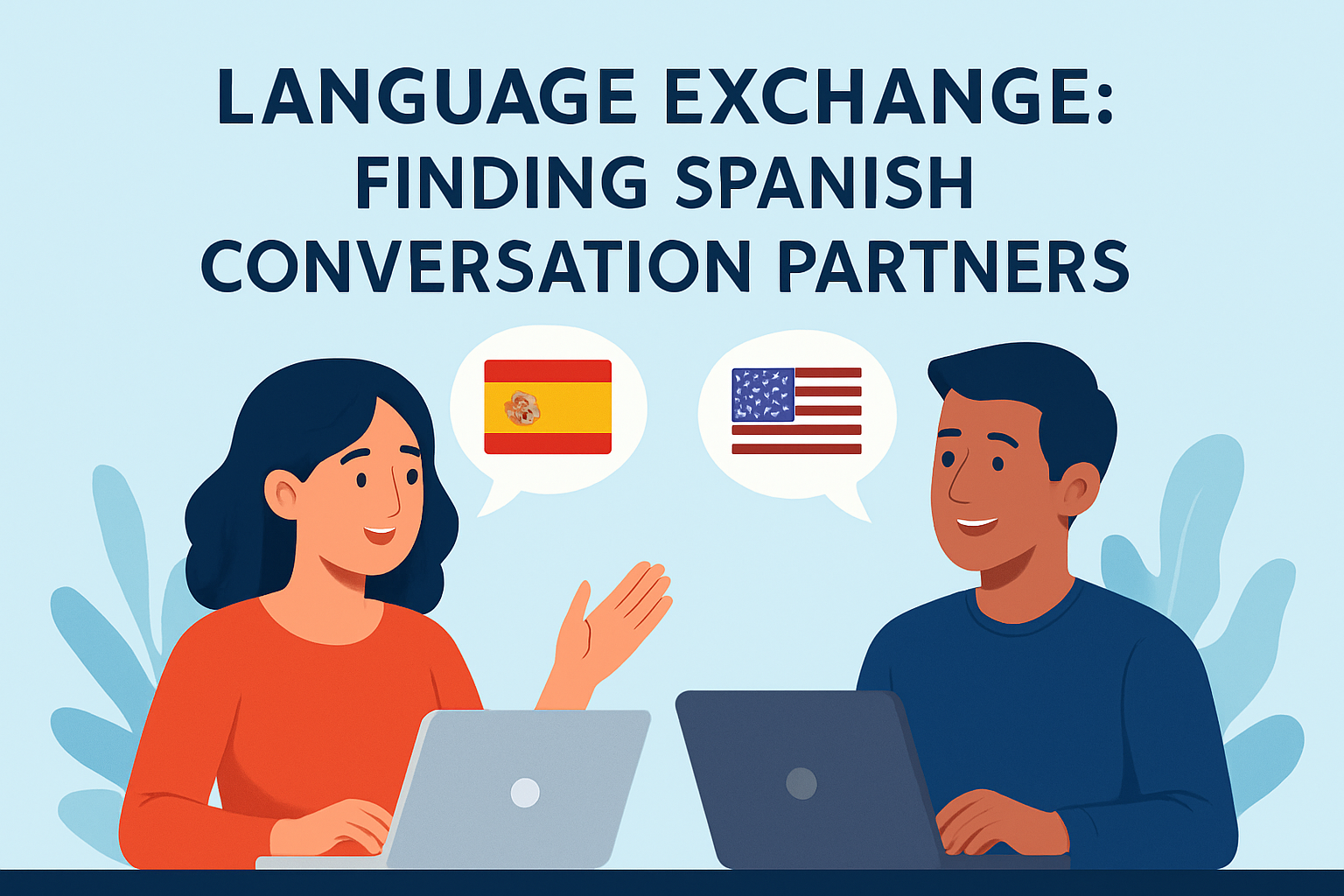
Language exchange is one of the fastest, most practical ways to improve spoken Spanish because it turns study into interaction, and interaction is where vocabulary, listening, pronunciation, and confidence finally connect. In this context, a Spanish conversation partner is a person who regularly speaks with you so both sides can practice, usually by dividing time between Spanish and another language. Language exchange opportunities include in-person meetups, online communities, tutoring platforms with exchange features, university groups, workplace networks, and informal friendships built around consistent conversation. I have worked with learners who spent months on apps memorizing verb charts yet only began speaking fluidly after weekly exchanges with native speakers and advanced learners. That pattern is common: grammar study builds structure, but conversation builds access.
This topic matters because many learners stall at the intermediate level. They can read short articles, understand classroom exercises, and perhaps write messages, yet they freeze during live conversation. The gap is rarely intelligence or effort. More often, it is lack of repetition under realistic conditions. A well-matched language exchange creates that repetition at low cost, often free, while adding cultural context that textbooks cannot replicate. You hear regional accents, filler words, politeness formulas, humor, and the speed of actual speech. You also learn when not to translate literally, which is crucial in Spanish because meaning often depends on register, tone, and local usage.
For a hub article on language exchange opportunities, the goal is not simply to list websites. The real task is helping you identify the right kind of partner, use reliable channels, set up productive sessions, avoid common mistakes, and convert casual chats into long-term speaking progress. A strong exchange should be mutually beneficial, safe, structured enough to create improvement, and flexible enough to feel natural. If you understand those principles, you can find useful Spanish conversation partners in almost any environment, from a community college event to a video call with someone in Bogotá, Madrid, Mexico City, or your own neighborhood.
What makes a good Spanish conversation partner
A good Spanish conversation partner is not simply a native speaker. The best partner is someone whose goals, availability, patience, and communication style fit yours. I have seen learners make fast progress with nonnative advanced speakers because the conversations were consistent and balanced, while other learners gained little from sporadic chats with native speakers who dominated the discussion or constantly switched to English. Compatibility matters more than prestige.
Start with level alignment. If you are an early beginner, a partner who speaks rapidly and uses slang-heavy speech from the start may overwhelm you. If you are upper intermediate, a partner who wants only basic introductions will not stretch your skills. A useful match lives slightly above your current level. That creates comprehensible challenge: enough difficulty to force growth, but not so much that every minute becomes translation rescue.
Reliability is equally important. One thirty-minute conversation every week for six months is worth more than five exciting chats followed by silence. Look for people who answer messages clearly, agree on schedules, and show up on time. Mutuality also matters. A real exchange is not free tutoring disguised as friendship. If one person corrects constantly while the other never helps in return, the relationship usually fades. The healthiest partnerships have clear turn-taking, shared curiosity, and respect for each language.
Finally, consider accent, region, and purpose. Spanish varies across countries in vocabulary, pronunciation, and formality. If you need Spanish for travel in Mexico, customer service in the United States, or business with Spain, choose partners who reflect that context. There is no single correct accent to target, but there is value in hearing the variety most relevant to your goals. Purpose should guide selection from the beginning.
Where to find language exchange opportunities online and offline
Most learners should combine digital and local options because each solves different problems. Online exchange expands your pool dramatically. Apps such as Tandem and HelloTalk are built for language partnerships and allow filtering by native language, target language, region, age range, and interests. Conversation communities on Discord, Reddit, Meetup, and Facebook groups can also produce excellent matches, especially when you participate consistently rather than posting a one-time request. On tutoring platforms like italki or Preply, some users start with paid lessons to build confidence, then move into lower-cost or free conversation arrangements with peers they meet through community channels.
Offline exchange is often underrated. Universities host international student programs, conversation tables, and language clubs. Public libraries, cultural institutes, churches, immigrant support centers, and local meetup groups frequently organize bilingual gatherings. In cities with large Spanish-speaking populations, volunteering can become a natural exchange environment because repeated task-based interaction creates real conversational need. I have seen learners improve quickly while helping at food distributions, youth programs, and community events because the language had immediate social function.
Different channels fit different personalities. Introverted learners often do better beginning with one-on-one video calls, where structure is easier to maintain. Extroverted learners may thrive in rotating group exchanges where they hear multiple accents. Safety and efficiency matter, so use established platforms for first contact, keep early conversations inside the app when possible, and move off-platform only after basic trust is established.
| Channel | Best for | Main advantage | Main limitation |
|---|---|---|---|
| Tandem or HelloTalk | Beginners to advanced learners | Large international user base and language filters | Inconsistent replies and occasional dating misuse |
| Meetup or local clubs | Learners who want in-person practice | Natural group interaction and community ties | Less control over partner quality and level |
| University conversation tables | Students and nearby residents | Regular schedule and multilingual environment | Academic calendar limits continuity |
| Volunteer organizations | Goal-driven learners | Task-based communication builds practical fluency | Requires time, local access, and sensitivity |
| Discord or Reddit communities | Independent learners | Niche interest groups and flexible timing | Harder to verify commitment and identity |
How to choose the right exchange format for your level
The best format depends on what you can currently do in Spanish, not what you wish you could do. Beginners benefit from short, predictable sessions. Twenty to thirty minutes with themes such as introductions, daily routine, food, or weekend plans usually works better than open-ended conversation. Use visual prompts, shared documents, or sentence starters so you do not waste half the session searching for words. At this stage, a patient partner who can slow down, rephrase, and tolerate pauses is essential.
Lower intermediate learners need guided spontaneity. You know enough to talk, but breakdowns are still frequent. A balanced exchange might include ten minutes of warm-up, a focused topic, and five minutes of feedback at the end. This is where role plays help: ordering in a restaurant, asking for directions, discussing hobbies, comparing cities, or describing a past trip. Repetition across several sessions turns weak structures into automatic speech.
Upper intermediate and advanced learners should push beyond survival Spanish. Debate, storytelling, news discussion, professional scenarios, and cultural analysis produce far more growth than repeated beginner themes. If your goal is workplace fluency, practice meetings, interviews, presentations, and disagreement politely expressed in Spanish. If your goal is social integration, work on humor, follow-up questions, and reacting naturally without mentally translating every phrase.
Group exchanges can supplement any level, but they should not replace one-on-one speaking if fluency is the goal. In groups, speaking time shrinks and stronger personalities dominate. However, groups expose you to multiple accents and force turn-taking under less controlled conditions. The ideal setup for many learners is one consistent partner plus one broader community event each month.
How to start conversations and set expectations early
The first message should be clear, brief, and specific. State your level, your goals, your availability, and how you would like to divide the exchange. For example: “Hi, I’m an English speaker at A2-B1 level learning Spanish for travel and work. I’m looking for a weekly 45-minute exchange, half Spanish and half English, ideally on Tuesdays or Thursdays.” That message does more than introduce you. It filters out people who are vague, unavailable, or looking for something other than language practice.
During the first call, agree on structure. Decide how much time each language gets, whether corrections happen in real time or at the end, what topics are useful, and what platform you will use. This removes friction. I generally recommend alternating languages by time block rather than switching sentence by sentence, because constant switching reduces flow and can make one language dominate.
Boundaries are important. Some platforms blur social networking and language learning, and many users report that exchanges derail into flirting, ghosting, or endless texting without actual speaking practice. You can avoid most of that by moving quickly toward scheduled conversation, keeping communication purposeful, and politely ending arrangements that do not serve your goals. “I’m focusing on regular speaking practice, so I’m looking for a partner who wants weekly calls” is a professional, respectful line that saves time.
Set small measurable goals from the start. In the next four sessions, for instance, you might aim to narrate a past event using preterite and imperfect, manage a five-minute conversation without switching to English, or learn fifteen phrases for agreeing and disagreeing. Clear goals help both partners notice progress and keep motivation high.
How to make every exchange session productive
Unstructured conversation feels natural, but it often produces slow improvement because learners repeat the same safe vocabulary. Productive exchanges mix free speaking with deliberate practice. Before each session, choose one topic, one grammar focus, and one communication goal. A topic could be housing or travel. A grammar focus might be the difference between por and para. A communication goal could be asking follow-up questions naturally.
Use correction strategically. If your partner corrects every mistake immediately, fluency collapses. If they never correct you, fossilized errors remain. The best approach depends on the task. During storytelling or opinion sharing, ask for light correction and note patterns afterward. During pronunciation drills or targeted grammar practice, invite more direct interruption. Shared notes in Google Docs or Notion can make this easy. Many successful pairs keep a running vocabulary list, common error log, and future topic bank.
Record key phrases after the call, not just isolated words. Learners remember chunks better than single items. Instead of writing only “quedar,” save “¿Te queda bien el jueves?” or “quedamos en vernos a las seis.” Those phrases are immediately reusable. Also review audio. With permission, short recordings of selected segments can reveal pronunciation habits, filler overuse, and moments where comprehension breaks down. That kind of feedback is hard to get from textbook study alone.
Consistency beats intensity. Two focused sessions per week are better than one marathon conversation followed by ten silent days. If schedules are difficult, exchange voice notes between calls. Asynchronous speaking still develops listening and production, especially for learners building confidence before live conversation.
Common problems in language exchange and how to solve them
The biggest problem is imbalance. One person may treat the exchange as free tutoring, monopolize the stronger language, or avoid the target language entirely. Solve this by setting time blocks and using a timer. Another common problem is level mismatch. If conversations feel either exhausting or trivial, be honest and adjust format before abandoning the partnership. Sometimes a mismatch can be fixed by shortening sessions, choosing narrower topics, or adding written support.
Ghosting is normal in open communities, so do not interpret it as a verdict on your ability. Expect to contact several people before finding a stable partner. Safety is another issue, especially on social apps. Protect your privacy, keep first meetings in public or on-platform, and trust your instincts. For younger learners, school-supported programs and moderated communities are far safer than random direct messages.
Language drift also hurts progress. Many exchanges begin in Spanish, then slide into English because it is easier. Prevent this with structure, topic prompts, and clear goals. If your partner repeatedly refuses to sustain Spanish, move on. The purpose of a Spanish conversation partner is not simply social contact; it is sustained, meaningful use of Spanish.
Finally, understand the limitation of exchange itself. A partner can improve fluency, listening, and pragmatic competence, but exchange alone may not systematically teach grammar, writing accuracy, or exam strategy. Many learners need a mixed plan: conversation practice plus targeted study, occasional professional instruction, and regular review.
Building a long-term speaking system around exchange
The learners who make the strongest gains treat language exchange as one part of a system. They connect conversation sessions to vocabulary review, listening practice, and personal goals. After each exchange, note what you could not say, then study exactly that. If you struggled to describe your job, build a job-related phrase list. If fast speech from a Mexican partner challenged you, add podcasts or YouTube channels from Mexico to your listening routine. This loop turns each conversation into diagnostic data.
It also helps to diversify partners over time. One regular partner gives continuity, but occasional conversations with speakers from different regions build resilience. Spanish from Argentina, Spain, Colombia, and the Caribbean differs in rhythm, vocabulary, and pronunciation. Exposure to variation makes your listening more durable and your speaking more adaptable.
Most important, protect momentum. Schedule the next conversation before ending the current one. Keep a simple tracker of hours spoken, topics covered, and recurring mistakes. Over months, the results become visible: faster recall, fewer long pauses, better listening tolerance, and more natural phrasing. If you want to improve your Spanish through community and interaction, start with one clear outreach message, one scheduled session, and one commitment to return next week.
Frequently Asked Questions
What is a Spanish conversation partner, and how does language exchange actually work?
A Spanish conversation partner is someone you speak with regularly so both of you can practice your target languages in a real, interactive way. In most language exchange setups, one person is learning Spanish and the other is learning that person’s native language, and the conversation time is divided so each person gets equal practice. For example, you might spend 30 minutes speaking only in Spanish and 30 minutes speaking only in English. This structure keeps the exchange fair and gives both partners a clear purpose.
What makes language exchange so effective is that it moves learning beyond memorization and into actual communication. Instead of reviewing isolated vocabulary lists or grammar rules, you begin using Spanish to ask questions, tell stories, clarify meaning, react naturally, and listen to how a real speaker responds. That process strengthens listening comprehension, speaking fluency, pronunciation, recall speed, and confidence all at once. It also helps you notice the gap between what you know passively and what you can actively say in conversation.
Language exchange can happen in person through local meetups, community events, university groups, or cultural organizations, and it can also happen online through language communities, conversation apps, video calls, or tutoring platforms that connect learners and speakers. The best format depends on your goals, schedule, and comfort level, but the central idea stays the same: regular, balanced conversation with someone who helps turn study into meaningful practice.
Where can I find reliable Spanish conversation partners online or in person?
You can find Spanish conversation partners in several strong places, and the best option often depends on whether you want casual practice, structured exchange, or something closer to guided conversation. In person, look for local language meetups, library events, university language clubs, community centers, coworking spaces, and cultural organizations connected to Spanish-speaking communities. These environments are especially useful if you want face-to-face interaction, spontaneous conversation, and a stronger local connection.
Online, language exchange communities are often the fastest starting point. Many platforms allow you to search by native language, learning goals, time zone, availability, and conversation format. Some are designed for informal chat and voice messages, while others support scheduled video conversations. Tutoring platforms can also be useful, even if your main goal is exchange rather than formal lessons. They often provide access to native speakers, scheduling tools, and more reliable consistency, which is ideal if you want regular practice without the uncertainty that sometimes comes with casual exchange apps.
When choosing a platform or meetup, focus on quality over quantity. It is better to have one or two dependable partners who match your goals than dozens of inactive contacts. A reliable conversation partner responds consistently, respects time limits, shares speaking time fairly, and understands that both people are there to improve. Before committing, send a short message explaining your level, your goals, how often you want to practice, and how you prefer to divide the conversation. That simple step filters out poor matches and leads to much better long-term exchanges.
How do I choose the right Spanish conversation partner for my level and goals?
The right Spanish conversation partner is not necessarily the most advanced speaker or the most outgoing person. The best partner is someone whose communication style, availability, and expectations align with your needs. If you are a beginner, you will usually benefit from someone patient, clear, and willing to speak at a manageable pace. If you are intermediate or advanced, you may want a partner who can challenge you with more natural conversation, nuanced vocabulary, and corrections that help you sound more accurate and fluent.
Start by identifying your main goal. If you want to improve confidence, look for someone encouraging and easy to talk to. If your priority is pronunciation, find a partner who is willing to repeat phrases, model sounds clearly, and point out mistakes tactfully. If you need Spanish for travel, work, or professional settings, try to find someone familiar with those contexts. Regional preference can matter too. Spanish varies across countries in accent, vocabulary, and expressions, so if you are especially interested in Mexican Spanish, Spain Spanish, Argentine Spanish, or another variety, it helps to find a partner from that background.
It is also important to test compatibility early. A short trial conversation can reveal whether the exchange feels balanced and useful. Ask yourself practical questions: Does this person let me speak? Do they explain things in a way I understand? Are they consistent about scheduling? Do they seem genuinely interested in exchange rather than only practicing their own target language? Good chemistry matters because conversation practice works best when both people feel comfortable, respected, and motivated to return regularly.
What should I talk about during a language exchange to improve my spoken Spanish faster?
The most productive conversations are structured enough to keep you progressing but natural enough to feel like real communication. If you sit down without a topic, the exchange can become repetitive and shallow very quickly. A better approach is to prepare a small list of themes before each session. Good topics include daily routines, hobbies, work, study, travel, food, family, current events, cultural differences, goals, and recent experiences. These subjects generate useful vocabulary and encourage you to speak in complete thoughts rather than isolated sentences.
To improve faster, build each session around a specific speaking objective. One day you might focus on past tense storytelling by describing your weekend. Another day you might practice giving opinions, comparing options, or asking follow-up questions. You can also use photos, short articles, videos, or prompts to create more dynamic discussions. This adds variety and makes it easier to practice vocabulary in context. If you are lower level, prepare key phrases in advance so you are not starting from zero. If you are more advanced, challenge yourself to explain complex ideas, defend an opinion, or summarize something you read or watched.
It also helps to agree on how corrections will work. Some learners prefer immediate correction for serious mistakes, while others want uninterrupted speaking first and feedback afterward. Neither method is wrong, but being clear prevents frustration. Keep a notebook or document for new words, recurring errors, and expressions you want to reuse. Over time, these notes turn every conversation into a personalized study resource. The combination of preparation, real interaction, and review is what makes language exchange one of the fastest ways to improve spoken Spanish.
How can I make a language exchange successful, safe, and consistent over time?
Success in language exchange comes from consistency, clear expectations, and mutual respect. The biggest mistake many learners make is treating exchange as random conversation rather than a regular practice system. Set a schedule from the beginning, whether that means two 30-minute calls per week or one longer session every weekend. Consistency matters more than intensity. Frequent practice with a familiar partner helps you build comfort, track progress, and notice improvement in fluency and listening much faster than occasional, unpredictable chats.
Set simple ground rules early. Decide how long each language will be used, whether corrections should happen during or after speaking, what kinds of topics you want to cover, and which tools you will use for notes or scheduling. If one person keeps dominating the conversation or canceling repeatedly, address it directly and politely. A healthy exchange should feel balanced, useful, and sustainable for both people. It is also wise to have backup partners in case someone becomes unavailable, since even strong exchanges sometimes fade because of schedule changes.
For safety, especially when meeting someone new, use common-sense precautions. If you are connecting online, begin on established platforms and avoid sharing unnecessary personal details too early. If you plan to meet in person, choose a public place such as a cafe, library, or community event. Let someone know where you are going if needed. Trust your judgment. A good language partner will respect boundaries, communicate clearly, and focus on the exchange itself. When you combine safety, structure, and regular practice, language exchange becomes one of the most practical and rewarding ways to build real spoken Spanish ability.