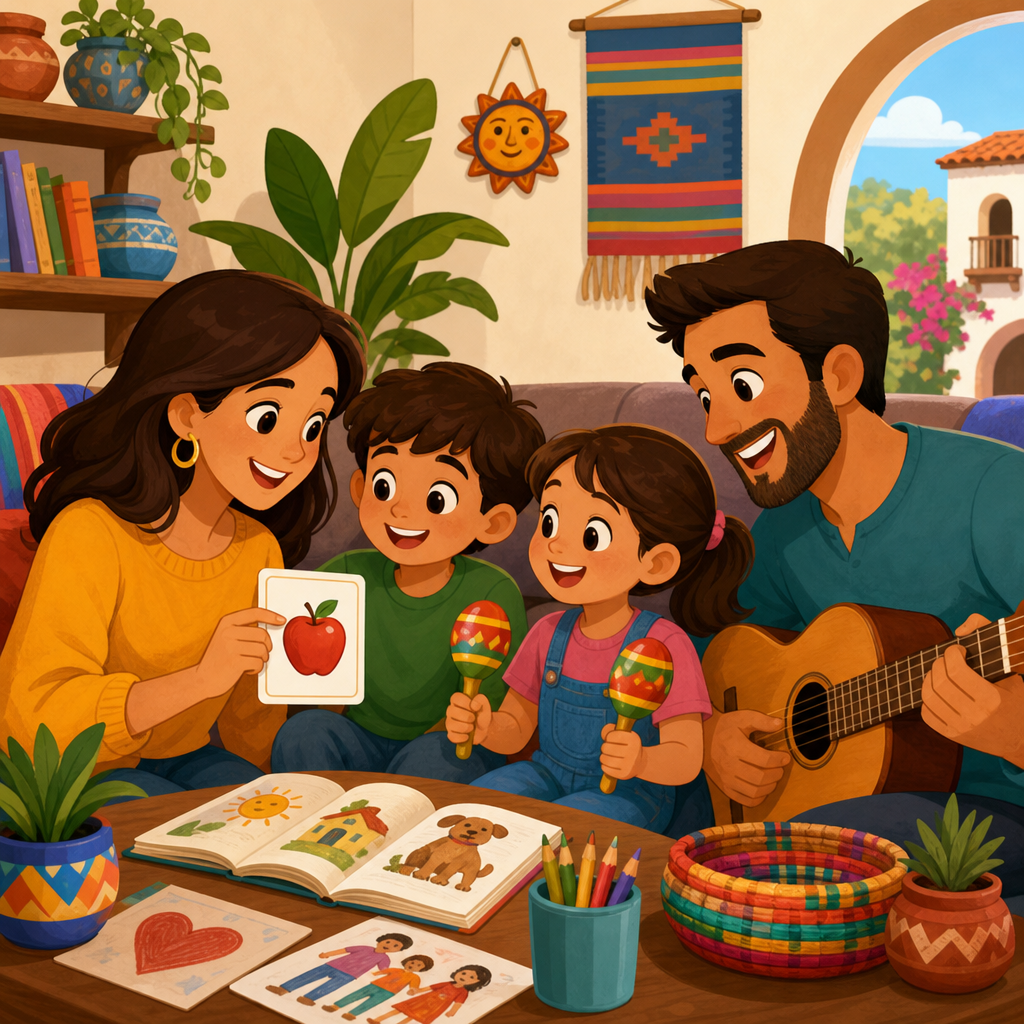
Spanish at home works best when a family treats the language as part of daily life rather than a school subject. Family language learning means building routines, spaces, and conversations that let children and adults hear, use, and remember Spanish in real situations. In practice, that includes everything from labeling household items and setting bedtime reading habits to joining local conversation groups, calling relatives abroad, and choosing media that exposes everyone to natural speech. I have helped families set up home Spanish plans, and the ones who progress fastest are rarely the ones buying the most materials. They are the ones creating steady, low-pressure contact with the language every day.
This matters because home is where language becomes useful. A class may teach vocabulary, grammar, and pronunciation, but fluency grows when people need words for breakfast, chores, emotions, games, and family jokes. Children especially learn faster when Spanish is tied to meaningful interaction. Adults benefit too, because regular use improves recall, listening speed, and confidence. For bilingual families, using Spanish at home can preserve heritage identity and strengthen intergenerational relationships. For beginners, it can open the door to a wider Spanish-speaking community in neighborhoods, schools, churches, sports clubs, and online spaces.
Key terms help frame the topic. Input is the Spanish your family hears through speech, books, music, and media. Output is what family members say or write. Comprehensible input means language that is understandable with context, gestures, visuals, or prior knowledge. Language routines are repeated activities, such as greeting each other in Spanish every morning or using Spanish during dinner. Code-switching is moving between languages in the same conversation; it is normal in bilingual homes and not a sign of failure. The goal is not perfection. The goal is consistent, meaningful exposure that turns Spanish into a living part of family interaction.
As a hub for miscellaneous family language learning strategies within Spanish community and interaction, this guide covers the practical decisions families actually face: how to start, how to choose a home approach, how to use books and screens well, how to bring in community support, how to handle mixed levels, and how to stay consistent when motivation drops. If you want Spanish at home to feel natural, sustainable, and socially connected, these are the methods that matter most.
Build a realistic family Spanish plan
The strongest home language plans are simple enough to survive busy weeks. Families often fail because they begin with ambitious rules such as Spanish only at home, then abandon the effort when life gets hectic. A better approach is to define specific, repeatable moments for Spanish use. Start by choosing three anchors: a time, an activity, and a purpose. For example, breakfast can be for greetings and food words, the school pickup can be for daily recap questions, and bedtime can be for reading one short Spanish picture book. This structure creates predictable input and output without making every interaction feel like a lesson.
Set goals by function, not by textbook chapter. Instead of saying, “We will learn the present tense,” say, “We want everyone to ask for help, describe feelings, and talk about what happened today in Spanish.” Functional goals align with how language is used socially. In homes I have worked with, a family that mastered requests, routines, and emotional vocabulary usually became more conversational than a family memorizing long vocabulary lists. Useful starter categories include meals, clothing, weather, chores, family relationships, play, and polite expressions such as por favor, gracias, perdón, and necesito ayuda.
Physical environment matters more than many parents expect. Place Spanish where life happens. Label common objects, keep children’s books visible, post a weekly phrase chart on the refrigerator, and create a basket with flashcards, dry-erase boards, and a bilingual dictionary. Tools like SpanishDict, WordReference, and Forvo are practical because they support quick lookup and pronunciation checks. If your family uses smart speakers, program simple Spanish routines for timers, songs, and weather updates. The goal is not decoration. It is retrieval support. When words are easy to find, people use them more often.
Track consistency with a habit system, not a perfection system. A calendar where the family marks every day they read, listened, or spoke Spanish for ten minutes is more effective than a detailed grade sheet. Children respond especially well to visible streaks and small rewards tied to effort. Adults need the same principle. A sustainable plan assumes missed days will happen. What matters is returning quickly. When families tie Spanish to identity and connection rather than performance, they are more likely to keep going for months, which is what produces real gains.
Create rich input through books, audio, and media
Families need large amounts of understandable Spanish before speech feels easy. Reading aloud is one of the most effective ways to provide that input because it combines voice, rhythm, print, and shared attention. For young children, repetitive picture books with clear illustrations support comprehension. For older children, graphic novels, early chapter books, and short nonfiction work well because visuals and familiar topics reduce frustration. Adults learning alongside children should not avoid simple books. Repetition builds automatic recognition, which later supports faster listening and stronger grammar intuition.
Audio helps with pronunciation and listening stamina. Songs are useful for rhythm and memory, but they should not be the only source because lyrics can be poetic or regionally compressed. Podcasts designed for learners, audiobooks with print copies, and narrated children’s stories give cleaner language models. I often recommend that families replay the same short audio several times over a week rather than constantly chasing new material. Repetition is not boring when comprehension improves each time. It allows learners to notice word boundaries, common phrases, and verb patterns that were invisible on first listen.
Screen time can support Spanish at home if it is selected and used intentionally. The best media choices match a learner’s level and include strong visual context. Animated series with everyday plots are useful for children. Cooking videos, travel clips, sports commentary, and how-to channels work well for adults because familiar contexts narrow the meaning of new words. Subtitles are a tool, but they must be used carefully. Spanish audio with Spanish subtitles generally helps reading and listening alignment more than Spanish audio with English subtitles, which often turns the experience into translation instead of language processing.
Families should also diversify accents and varieties of Spanish over time. A child may begin with one familiar accent from a parent, teacher, or favorite show, but community interaction improves when learners can handle variation. Exposure to Mexican, Caribbean, Andean, River Plate, and Castilian speech broadens listening ability. That does not mean forcing advanced content too early. It means gradually adding examples so no one assumes there is only one “correct” Spanish. Home learning should prepare family members for real conversations with neighbors, classmates, shopkeepers, and relatives from different regions.
Turn daily routines into conversation opportunities
The fastest way to make Spanish stick is to attach it to routines that already happen. Morning prep, meals, car rides, shopping lists, chores, and bedtime all offer repeated situations with predictable vocabulary. In these moments, context does half the teaching. If a parent says ponte los zapatos while holding shoes, the meaning is immediately clear. If a child hears mezcla, corta, abre, and prueba while cooking, verbs become memorable because they are tied to action. This is why household Spanish often outperforms isolated drills: the language is embedded in experience.
Keep conversation patterns short and reusable. Instead of pushing long exchanges too early, teach mini scripts. At breakfast: ¿Qué quieres comer? Quiero fruta y pan. At cleanup: ¿Qué falta? Falta barrer. During homework: ¿Entiendes o necesitas ayuda? These patterns create confidence because family members know what usually comes next. Once a script is familiar, vary one part at a time by changing the object, time, or opinion. This is how real language grows: stable structures first, creative combinations second. Parents do not need native-level fluency to run these routines effectively.
Questions are especially powerful because they force retrieval and keep interaction social. Good home questions are concrete and answerable: ¿Qué ves?, ¿Qué buscas?, ¿Con quién jugaste?, ¿Qué fue difícil?, ¿Cuál te gusta más? Open-ended questions matter too, but beginners often need scaffolding. If a child freezes, offer two choices or a sentence starter. This keeps the conversation in Spanish instead of switching immediately to English. One useful technique is the pause-and-support method: wait a few seconds, gesture, then provide the first word rather than the full answer.
| Routine | Spanish focus | Example prompt | Why it works |
|---|---|---|---|
| Breakfast | Food, requests, preferences | ¿Qué quieres beber? | Daily repetition makes core verbs automatic |
| School pickup | Past events, feelings | ¿Qué hiciste hoy? | Links Spanish to personal storytelling |
| Chores | Commands, household vocabulary | Primero limpia la mesa | Action and language occur together |
| Bedtime | Narration, emotions, questions | ¿Cuál fue la mejor parte del día? | Creates calm, consistent speaking time |
Routine-based Spanish should still leave room for play. Board games, scavenger hunts, pretend restaurant nights, and cooking projects increase output because they add purpose and emotion. Laughter lowers pressure, and low pressure improves risk-taking. If your family wants more speaking practice, games such as Guess Who, charades, and picture bingo adapt easily to Spanish. The principle is simple: when Spanish helps people complete a task or enjoy each other, it becomes memorable.
Use community interaction to move beyond the house
Home practice becomes much stronger when families connect it to real Spanish-speaking communities. Children quickly notice the difference between language used only for practice and language used for relationships. That is why community interaction is not optional if the goal is confidence. Look for local libraries with bilingual story times, cultural centers, soccer clubs, church groups, playgroups, language exchanges, and neighborhood businesses where Spanish is naturally spoken. Even small, regular contact matters. A weekly conversation with a librarian, cashier, coach, or family friend can motivate more home practice than another workbook page.
For heritage-language families, community ties help maintain pride and relevance. Children are more willing to keep using Spanish when they see it connected to grandparents, celebrations, music, food traditions, and friendships rather than correction and obligation. For non-heritage learners, community contact prevents the language from becoming abstract. Ordering at a bakery, asking a vendor a question at a market, or attending a local festival gives vocabulary social weight. Families should prepare for these interactions with role-play at home so the first real exchange feels manageable.
Digital communities also count when local access is limited. Video calls with relatives, online tutors, moderated language clubs, and child-safe conversation sessions can provide authentic interaction. Quality matters more than quantity. A ten-minute weekly call where a grandparent asks familiar questions and waits patiently for answers is more valuable than passive scrolling through random content. If you use tutoring platforms, choose instructors who understand family goals, especially if parents want routines, confidence, or heritage support rather than test preparation alone.
One caution is important: community interaction should be respectful, not transactional. Spanish speakers are not practice tools. Families should participate with genuine interest, reciprocity, and cultural awareness. Support local businesses, attend events attentively, listen as much as you speak, and avoid treating every encounter as a lesson. When the relationship comes first, language learning improves naturally.
Handle mixed levels, mistakes, and motivation dips
Most families do not start at the same level. One parent may be conversational, another may be a beginner, and children may understand more than they can say. This unevenness is normal and manageable. The key is assigning roles that let everyone contribute. Stronger speakers can model phrases and keep routines moving. Beginners can lead songs, ask memorized questions, or read familiar books aloud. Children should not be forced into the role of family teacher, but they can enjoy demonstrating new words if it stays playful. Progress comes from participation, not matching levels.
Mistakes deserve calm handling. Overcorrection shuts down speaking, especially for children. In effective home settings, adults use gentle recasting instead of constant interruption. If a child says yo no sabo, a parent can respond, ah, no sé, está bien, te ayudo. The message is understood, the correct form is heard, and the conversation continues. Adults need the same grace. Accent, grammar, and vocabulary all improve with repeated exposure and use. Confidence rises when family members feel safe trying imperfect Spanish.
Motivation naturally drops after the novelty phase. This is where systems matter. Rotate materials every few weeks, celebrate milestones, and connect Spanish to personal interests. A child who loves dinosaurs can watch short science clips in Spanish. A teen interested in soccer can follow match commentary and player interviews. An adult who cooks can use Spanish recipes and kitchen channels. Interest-based content keeps the language meaningful. I have seen reluctant learners become consistent once Spanish stopped feeling generic and started serving a real hobby or relationship.
Families should also know when to adjust expectations. If Spanish time is causing tension, shorten it, simplify it, or shift it to a better moment in the day. Ten calm minutes beat forty frustrated ones. Sustainable family language learning is built on repetition, emotional safety, and relevance. Keep those three conditions strong, and progress usually follows.
Measure progress in practical, family-centered ways
Progress at home is easiest to see when you measure real communication. Can your child follow a two-step direction in Spanish? Can your family order food, describe a problem, retell a simple event, or read a short story with understanding? These markers matter more than memorizing isolated vocabulary lists. Keep occasional notes or short recordings every month so improvements in pronunciation, sentence length, and comprehension become visible.
This hub article should also guide your next steps across the broader Spanish community and interaction topic. From here, families can explore conversation practice, local cultural engagement, bilingual play ideas, heritage language support, online speaking partners, Spanish media choices, and community events. Those related areas all reinforce the same core principle: Spanish grows faster when it is social, repeated, and useful. Start with one routine this week, add one shared media habit, and create one real community touchpoint. That simple combination is how Spanish at home becomes lasting family language learning.
Frequently Asked Questions
1. How can families make Spanish feel like a natural part of daily life at home?
The most effective way to make Spanish feel natural is to tie it to routines your family already follows instead of treating it like a separate lesson. That means using Spanish during real moments such as getting dressed, preparing meals, cleaning up, driving to school, and winding down at bedtime. Short, repeated phrases are especially powerful because they become familiar quickly. For example, families can use simple expressions for everyday actions, ask predictable questions at the table, and repeat common household instructions in Spanish until they become part of the family’s rhythm. Children learn best when language is connected to meaning, so hearing Spanish while doing something concrete helps them remember and use it more confidently.
It also helps to create a home environment that supports Spanish visually and socially. Labeling household objects, keeping Spanish books within easy reach, posting a family calendar with Spanish words, or using a simple phrase board in the kitchen can all reinforce daily exposure. Just as important is consistency. A family does not need to speak Spanish all day to see progress, but it does need regular habits. Even ten to twenty minutes of meaningful Spanish use each day can be more valuable than a long study session once a week. The goal is not perfection. The goal is to make Spanish useful, familiar, and expected in the home so that children and adults begin to associate the language with connection, comfort, and everyday life.
2. What are the best routines for helping children and adults learn Spanish together as a family?
The strongest family language routines are predictable, manageable, and repeated often enough to become automatic. Bedtime reading is one of the best examples because it combines attention, repetition, and emotional closeness. Reading a short Spanish picture book, a bilingual story, or even the same familiar book night after night helps children absorb vocabulary, sentence patterns, and pronunciation in a low-pressure setting. Mealtime is another excellent routine because it naturally creates opportunities for naming foods, expressing preferences, asking questions, and practicing conversational turn-taking. Families can also build Spanish into morning routines by naming clothing, talking about the weather, or reviewing the plan for the day using simple phrases.
For adults learning alongside children, shared routines matter because they remove the pressure of “teaching” and replace it with participation. Singing songs in the car, doing a weekly Spanish movie night with subtitles, using a Spanish recipe while cooking together, or having a “Spanish Saturday breakfast” are all practical ways to learn as a unit. Repetition is what turns these activities into true language-building routines. If the same kinds of phrases and vocabulary appear in the same settings each week, everyone starts to retain them more naturally. The key is to choose a small number of routines your family can maintain consistently rather than trying to overhaul the whole household at once. Sustainable habits lead to long-term progress.
3. How much Spanish should families use at home if parents are not fluent?
Families do not need fluent parents to create a successful Spanish-rich home environment. In fact, many households make excellent progress by starting small and expanding over time. If parents are beginners or intermediate learners, it is completely appropriate to begin with set phrases, themed vocabulary, read-aloud time, songs, and structured activities. A parent can consistently use Spanish for greetings, snack time, clean-up, colors, numbers, or bedtime without needing to hold advanced conversations. What matters most is steady exposure and confident participation, not speaking perfectly from day one.
It is also important for parents to model a healthy attitude toward learning. When children see adults trying new words, checking pronunciation, and continuing even after mistakes, they learn that language growth is a process. Families can rely on support tools such as audiobooks, children’s programs, Spanish music, conversation groups, language apps, and bilingual books to increase the amount of natural input at home. If possible, adding contact with native or highly proficient speakers is especially valuable. Calling relatives abroad, joining a local Spanish-speaking playgroup, attending community events, or working with a tutor can strengthen pronunciation and listening skills for everyone. Rather than asking, “Are we fluent enough?” a better question is, “How can we increase meaningful Spanish use this week?” That mindset leads to steady and realistic progress.
4. Which activities and resources are most effective for building real-world Spanish skills at home?
The most effective activities are the ones that expose families to natural Spanish while also encouraging active use. Passive exposure has value, but the strongest learning happens when listening, speaking, reading, and interaction work together. Books, songs, and shows are excellent starting points because they provide rich input, especially for children. However, these resources become much more powerful when families discuss them afterward, act them out, retell the story, or connect the content to their own lives. For example, after watching a short Spanish cartoon, parents can ask simple questions, repeat new words, or describe what happened in the episode. That kind of follow-up moves learning from recognition toward actual use.
Hands-on activities are especially effective because they make language concrete. Cooking with Spanish recipes, playing board games in Spanish, doing scavenger hunts with household vocabulary, gardening while naming tools and actions, or creating simple family challenges in Spanish all help reinforce understanding. Community-based resources matter too. Local conversation groups, cultural events, story hours, library programs, and regular conversations with Spanish-speaking relatives expose families to accents, expressions, and rhythms that feel more authentic than isolated vocabulary drills. Media choices also deserve attention. Families should look for content with clear, natural speech rather than material that is either too advanced or overly simplified. The best resources are not necessarily the most complicated ones. They are the ones your family will use consistently, understand well enough to enjoy, and revisit often enough to make the language stick.
5. How can families stay motivated and measure progress in home-based Spanish learning?
Motivation tends to stay stronger when families focus on visible, practical progress rather than abstract goals like “becoming fluent.” It helps to set small milestones tied to real-life use, such as reading one Spanish book each week, holding a five-minute conversation at dinner, learning the language needed for a grocery trip, or using Spanish during one routine every day for a full month. These goals are clear, achievable, and easy to celebrate. Children especially respond well when progress feels concrete. Families can keep track of favorite new words, record short videos from time to time, make a reading chart, or notice which phrases now happen automatically without translation.
It is equally important to recognize that progress in language learning is not always linear. Some weeks will feel highly productive, while others may feel repetitive or slow. That is normal. Retention often depends on repeated exposure over time, not on dramatic breakthroughs. Families should look for signs of practical growth such as improved comprehension, faster responses, greater willingness to speak, and increased comfort with familiar topics. Celebrating these smaller wins keeps momentum strong. Many families also benefit from reviewing their routines every few months and making adjustments. If bedtime reading is working but conversation at dinner is not, keep the successful habit and simplify the harder one. A flexible approach helps the language remain a positive part of family life. When Spanish is associated with connection, curiosity, and consistency, motivation becomes much easier to sustain over the long term.