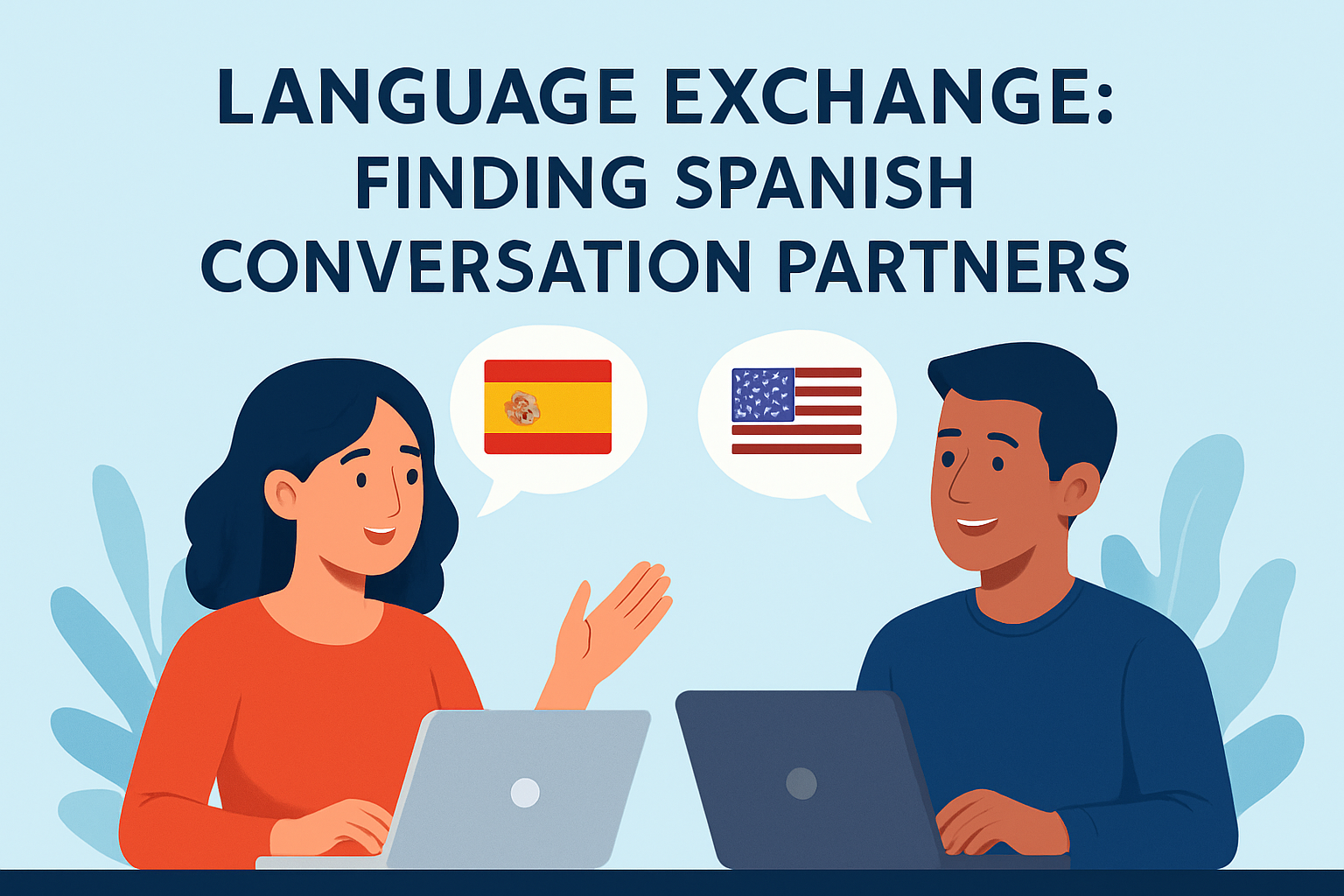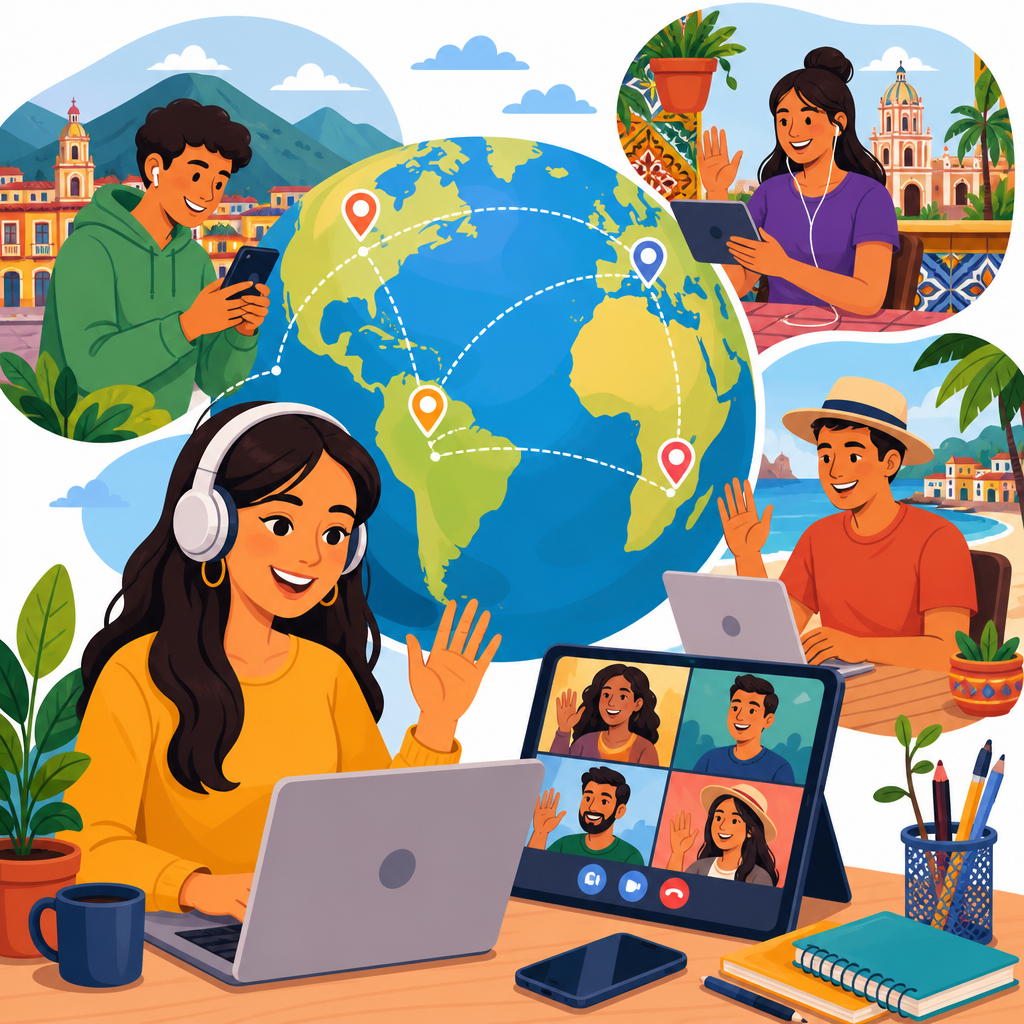
Using technology to connect with Spanish speakers globally is no longer a niche strategy for language learners or multinational brands; it is a practical necessity for educators, community leaders, customer support teams, creators, and anyone building relationships across borders. Spanish is one of the world’s most widely used languages, with hundreds of millions of native speakers spread across Latin America, Spain, the United States, and growing digital communities elsewhere. When people search for better ways to communicate with Spanish-speaking audiences, they usually mean a mix of tools, habits, and platforms that reduce distance, improve understanding, and make interaction feel natural rather than translated.
In practice, this topic covers much more than apps that swap words between languages. It includes messaging platforms, social networks, video conferencing, multilingual websites, AI-assisted translation, subtitling, customer relationship systems, online communities, and accessibility features that help people participate fully. I have seen organizations fail when they treated Spanish outreach as a simple translation task, and succeed when they treated it as an ongoing communication system. The difference usually comes down to choosing technology that supports clarity, speed, cultural relevance, and two-way interaction.
This matters because Spanish-speaking communities are digitally active, mobile-first in many markets, and highly responsive to communication that respects regional differences. A phrase that works in Madrid may sound unnatural in Mexico City; a support channel preferred in Miami may not be the first choice in Bogotá. Technology helps bridge those gaps, but only when it is implemented thoughtfully. The strongest approach combines the right platforms with clear writing, human review, and measurable workflows. As a hub for Spanish community and interaction, this guide explains the core technologies, how they are used in real settings, and what to prioritize when building global Spanish engagement.
Choose the right communication channels for Spanish-speaking audiences
The first decision is not translation software. It is channel selection. To connect with Spanish speakers globally, you need to meet people where they already communicate. In many regions, WhatsApp remains essential for direct messaging, customer updates, group coordination, and voice notes. Facebook still matters for community groups and local business visibility. Instagram and TikTok are powerful for short-form visual communication, especially among younger users. YouTube is one of the most effective platforms for tutorials, explainers, interviews, and live streams with Spanish subtitles or narration. Email remains useful for schools, nonprofits, and service organizations, but response rates often improve when it is paired with messaging apps.
In my experience, channel mismatch is one of the most common reasons outreach underperforms. A company may invest heavily in a polished bilingual website while its Spanish-speaking customers are actually asking questions through WhatsApp or Facebook Messenger. An educator may post resources in English-first learning portals while families prefer text messages and short videos. The practical fix is to map audience segments by region, age, and communication habit. If you serve users in the United States and Latin America, for example, offer at least two paths: a formal channel such as email or web support, and an immediate channel such as chat or messaging. That structure increases response rates and lowers friction.
Build multilingual content systems, not one-off translations
Technology works best when Spanish communication is built into the content workflow from the start. A multilingual content system includes a content management platform, translation memory, terminology control, editorial review, and publishing rules that keep both language versions aligned. Tools such as WordPress with multilingual plugins, Contentful, Drupal, and enterprise localization platforms can store Spanish and English variants in a structured way. Translation memory tools help teams reuse approved phrasing, which improves consistency for product names, legal language, onboarding instructions, and community guidelines.
One-off translation creates drift. The English page gets updated, the Spanish page does not, and trust drops fast. I have seen this happen with event schedules, pricing pages, and health resources, where outdated Spanish content caused confusion that a simple workflow could have prevented. The better model is content parity: whenever a key page changes, the Spanish version enters review automatically. Create a terminology glossary for terms that should stay fixed, such as membership labels, shipping language, academic program names, and support categories. This reduces ambiguity and speeds editing. It also improves discoverability because headings, metadata, and internal links stay consistently aligned across versions.
Use AI translation carefully, with human review where stakes are high
Machine translation has improved dramatically, and it now plays a real role in global Spanish communication. DeepL, Google Translate, Microsoft Translator, and AI writing assistants can accelerate drafts, summarize conversations, and localize large volumes of content quickly. For low-risk use cases, such as internal note-taking, rough comprehension, and first-pass social captions, these tools save time. For higher-risk content, including medical information, legal notices, contracts, school communications, and public policy guidance, human review is essential. Accuracy, register, and regional tone matter too much to rely on automation alone.
The strongest workflow is hybrid. Start with a machine-generated draft, then apply bilingual review for correctness, context, and cultural fit. Ask three questions during review: Is the meaning accurate? Does it sound natural in the target region? Could any phrase be misunderstood? For example, computer terms, financial labels, and customer support language often vary by country. Even simple verbs like “pick up,” “charge,” or “apply” can lead to unnatural or misleading translations if context is unclear. AI is excellent at speed and pattern recognition; humans remain better at nuance, liability judgment, and audience empathy. Used together, they scale communication without sacrificing credibility.
Make video, voice, and live interaction central to engagement
Text matters, but video and voice are often the fastest ways to build trust with Spanish-speaking communities across borders. Zoom, Google Meet, Microsoft Teams, and StreamYard support webinars, virtual classes, consultations, and live Q&A sessions. Voice notes on WhatsApp can feel more personal and accessible than long written replies, especially when literacy levels, time pressure, or typing preferences vary. Captioning tools, subtitle editors, and transcription platforms such as Otter, Descript, YouTube Studio, and VEED help make spoken content reusable across channels.
Live interaction also reduces the risk of misreading tone. In bilingual customer support and community management, a short video or voice explanation often resolves issues faster than a long translated message chain. Consider a nonprofit serving parents in multiple countries: a bilingual orientation video with captions can answer enrollment questions more effectively than a PDF alone. A creator teaching Spanish conversation can host live sessions and repurpose the recording into subtitled clips for YouTube Shorts and Instagram Reels. The key is to design content once and distribute it in multiple formats. That lowers production effort while widening reach.
Match tools to goals: support, community, education, and commerce
Different goals require different technology stacks. The most effective teams separate engagement by outcome, then choose tools accordingly.
| Goal | Recommended technology | Why it works for Spanish-speaking audiences |
|---|---|---|
| Customer support | WhatsApp Business, Zendesk, Intercom | Supports fast replies, templates, and mobile-first communication |
| Community building | Facebook Groups, Discord, Telegram | Encourages peer interaction, moderation, and regional subgroups |
| Education | Zoom, Google Classroom, Moodle, YouTube | Combines live teaching, recordings, assignments, and subtitles |
| Commerce | Shopify, WooCommerce, Mercado Pago integrations | Enables localized storefronts, payment options, and bilingual product pages |
| Content publishing | WordPress, Contentful, Substack, Mailchimp | Keeps newsletters, articles, and landing pages organized in both languages |
The lesson is simple: do not force one platform to do everything. A retailer might use Shopify for bilingual product pages, Klaviyo or Mailchimp for segmented email, and WhatsApp Business for order support. A school might combine Moodle for coursework, Zoom for live sessions, and YouTube for archived Spanish tutorials. A diaspora community may rely on Facebook Groups for announcements and Telegram for rapid coordination. When each tool has a clear job, Spanish communication becomes easier to manage and easier to improve.
Design for regional variation, cultural relevance, and accessibility
Global Spanish is not uniform. Technology helps you reach many countries at once, but successful communication still requires localization. Regional vocabulary, levels of formality, references, humor, and expectations around customer service differ widely. If your audience spans Spain, Mexico, Argentina, Colombia, and U.S. Hispanic communities, avoid assuming that a single wording choice will feel equally natural everywhere. Neutral Spanish is useful for broad informational content, but regional adaptation often improves conversion and trust in marketing, support, and community engagement.
Accessibility is equally important. Use readable fonts, mobile-friendly layouts, clear navigation, alt text, captions, and transcripts. Many Spanish-speaking users access content primarily on smartphones with variable connectivity, so compressed media, fast-loading pages, and lightweight messaging matter. For users with hearing loss, subtitles are essential. For users with limited bandwidth, audio-only options and downloadable text summaries can keep them included. I have seen organizations increase participation simply by shortening videos, adding captions, and moving key updates into message-friendly formats. Inclusive design is not a cosmetic upgrade. It directly affects whether people can join, understand, and respond.
Measure what improves connection, not just what generates traffic
The final piece is measurement. If the goal is to connect with Spanish speakers globally, traffic alone is not enough. Track response time, message completion, watch time on Spanish videos, click-through rate on localized emails, support satisfaction, repeat participation, and conversion by language version. Tools such as Google Analytics 4, Search Console, Hotjar, HubSpot, Meta Business Suite, and native platform insights can reveal where Spanish users enter, drop off, ask for help, or engage more deeply. Segment your data by language and region whenever possible.
Qualitative feedback matters too. Review chat logs, comments, support tickets, and survey responses for patterns. Are people asking the same question because wording is unclear? Are certain pages getting traffic but low action because the translation sounds too literal? Are users switching to another platform because your main channel feels slow or formal? In one bilingual rollout I worked on, a modest change from email-first support to WhatsApp-assisted intake improved completion rates because the audience preferred quick mobile exchanges over long forms. The technology did not create trust by itself; it removed friction so trust could grow.
Using technology to connect with Spanish speakers globally works best when you treat communication as a living system rather than a translation project. The essentials are clear: choose channels that match audience habits, build multilingual content workflows, combine AI speed with human review, prioritize video and voice where trust matters, align tools with specific goals, localize for region and accessibility, and measure engagement in ways that reflect real connection. Each of these choices improves clarity, responsiveness, and relevance.
The main benefit is not simply reaching more people. It is creating interactions that feel accurate, respectful, and easy to join. That leads to stronger communities, better customer relationships, more effective teaching, and wider participation across countries and cultures. As the hub for this miscellaneous area of Spanish community and interaction, this page should guide every related effort: platform selection, bilingual publishing, accessibility, live engagement, moderation, and localized support. If you are building a strategy now, start by auditing your current channels and content in Spanish, identify the biggest points of friction, and improve one communication path at a time. Consistent, well-designed technology creates global connection that people can actually feel.
Frequently Asked Questions
Why is technology so important for connecting with Spanish speakers globally?
Technology makes it possible to communicate with Spanish-speaking audiences at the speed and scale that modern relationships require. Spanish is spoken across many countries, regions, and communities, so in-person outreach alone is rarely enough for educators, businesses, creators, nonprofit organizations, or support teams trying to build meaningful connections. Digital tools remove distance as a barrier by allowing people to communicate through websites, messaging apps, video calls, social media platforms, online forums, and multilingual customer service systems. This means someone in the United States can support customers in Mexico, collaborate with a teacher in Spain, or grow an audience in Colombia without needing a physical presence in each location.
Just as importantly, technology helps people connect in ways that feel more natural and accessible. Spanish speakers are not one uniform audience, and digital platforms make it easier to tailor communication by country, dialect, user behavior, and preferred channel. For example, some audiences may respond best to WhatsApp communication, while others may engage more on YouTube, Instagram, Facebook, or email. Translation tools, AI-assisted writing, captions, localized websites, and multilingual chat support also make communication more immediate and efficient. When used thoughtfully, technology does more than spread information; it helps build trust, reduce language friction, improve responsiveness, and create genuine two-way communication with Spanish speakers around the world.
What types of technology are most effective for reaching and engaging Spanish-speaking audiences?
The most effective technology depends on your goals, but several categories consistently deliver strong results. Messaging platforms such as WhatsApp, Telegram, and Facebook Messenger are especially valuable because they support direct, conversational communication and are widely used in many Spanish-speaking communities. Video conferencing tools like Zoom, Google Meet, and Microsoft Teams are important for education, training, customer consultations, and community outreach. Social platforms including YouTube, Instagram, TikTok, Facebook, and LinkedIn can help brands and individuals publish Spanish-language content, build communities, and engage users in real time.
Web technology also plays a central role. A localized website with accurate Spanish copy, region-appropriate examples, mobile-friendly design, and clear navigation is often the foundation of global communication. Customer relationship management systems, multilingual chatbots, help desk software, and email automation platforms can extend support and marketing efforts in Spanish without sacrificing consistency. In addition, translation management systems, captioning tools, AI transcription services, and analytics platforms help teams produce content faster and improve performance over time. The best approach is rarely to rely on one tool alone. Instead, successful outreach usually combines content platforms, communication apps, localization tools, and analytics so that Spanish-speaking users can discover, understand, and respond to your message with minimal barriers.
How can businesses and organizations avoid common mistakes when communicating with Spanish speakers online?
One of the most common mistakes is treating Spanish as if it were exactly the same everywhere. While a standard, neutral form of Spanish can work in many contexts, vocabulary, tone, idioms, and cultural references vary significantly across regions. A phrase that sounds natural in Spain may feel awkward in Argentina or Mexico, and certain terms may even cause confusion in another market. To avoid this, organizations should think in terms of localization rather than simple translation. That means adapting content to the audience’s country, expectations, reading habits, and cultural context rather than just converting words from English into Spanish.
Another major mistake is relying too heavily on literal machine translation without human review. Automated tools can be useful for speed, drafts, and support workflows, but they often miss nuance, tone, humor, context, and intent. This is especially risky in customer service, healthcare, education, legal communication, and marketing. Poorly translated messaging can make a brand appear careless, reduce trust, or even create compliance problems. Other frequent errors include neglecting mobile optimization, using English-only navigation or checkout pages, ignoring time zone differences, and failing to offer Spanish-language customer support after attracting Spanish-speaking users. The strongest strategy is to combine accurate language support, culturally aware messaging, user testing, and ongoing feedback from native speakers so your digital presence feels genuinely welcoming rather than partially translated.
Can AI and translation tools really help build authentic relationships with Spanish speakers?
Yes, but only when they are used as support tools rather than substitutes for cultural understanding. AI can dramatically improve speed, accessibility, and consistency when communicating in Spanish. It can help draft emails, translate support requests, summarize conversations, generate subtitles, transcribe audio, and assist with multilingual content production. For teams with limited resources, these tools make it much easier to respond quickly and maintain a Spanish-language presence across multiple channels. They are especially useful for first-pass translations, knowledge base creation, multilingual search optimization, and scaling routine communication.
That said, authenticity comes from how the message is shaped, not just how fast it is produced. Spanish-speaking audiences can often tell when content has been translated mechanically without attention to tone, context, or relevance. If a message feels generic, overly formal, or culturally disconnected, technology alone will not create trust. The best use of AI is to handle efficiency while humans provide judgment. Native speakers, bilingual editors, community managers, or regional reviewers should refine important content to make sure it sounds natural and respectful. In practice, the strongest results come from blending AI efficiency with human oversight, audience awareness, and a clear intention to listen as much as you broadcast. That combination allows technology to support authentic relationships instead of replacing them.
What are the best practices for creating digital content that resonates with Spanish speakers across different regions?
Start by identifying exactly who you want to reach. “Spanish speakers globally” is a large umbrella, and effective communication improves when you narrow the audience by geography, age, profession, platform behavior, and purpose. A student in Madrid, a small business owner in Miami, and a parent in Peru may all speak Spanish, but they may search differently, respond to different tones, and prefer different content formats. Once you define the audience, create content that is linguistically clear, culturally relevant, and easy to consume on mobile devices. Use plain language, well-structured headings, localized examples, subtitles for video, and visuals that reflect the communities you want to serve.
It is also important to optimize content for discoverability and usability. That includes Spanish-language SEO, region-specific keywords, metadata, translated calls to action, and landing pages built for the user’s intent rather than copied from an English version. Pay attention to accessibility as well, including captions, readable formatting, alt text, and device performance. Consistency matters too; users are more likely to trust organizations that maintain a complete Spanish-language experience from the first search result to the final support interaction. Finally, measure what works. Review engagement data, search queries, bounce rates, response times, and user feedback from Spanish-speaking audiences. The most successful digital strategies are iterative. They combine thoughtful localization, strong content quality, responsive communication, and continuous improvement based on how real Spanish-speaking users interact with your technology.