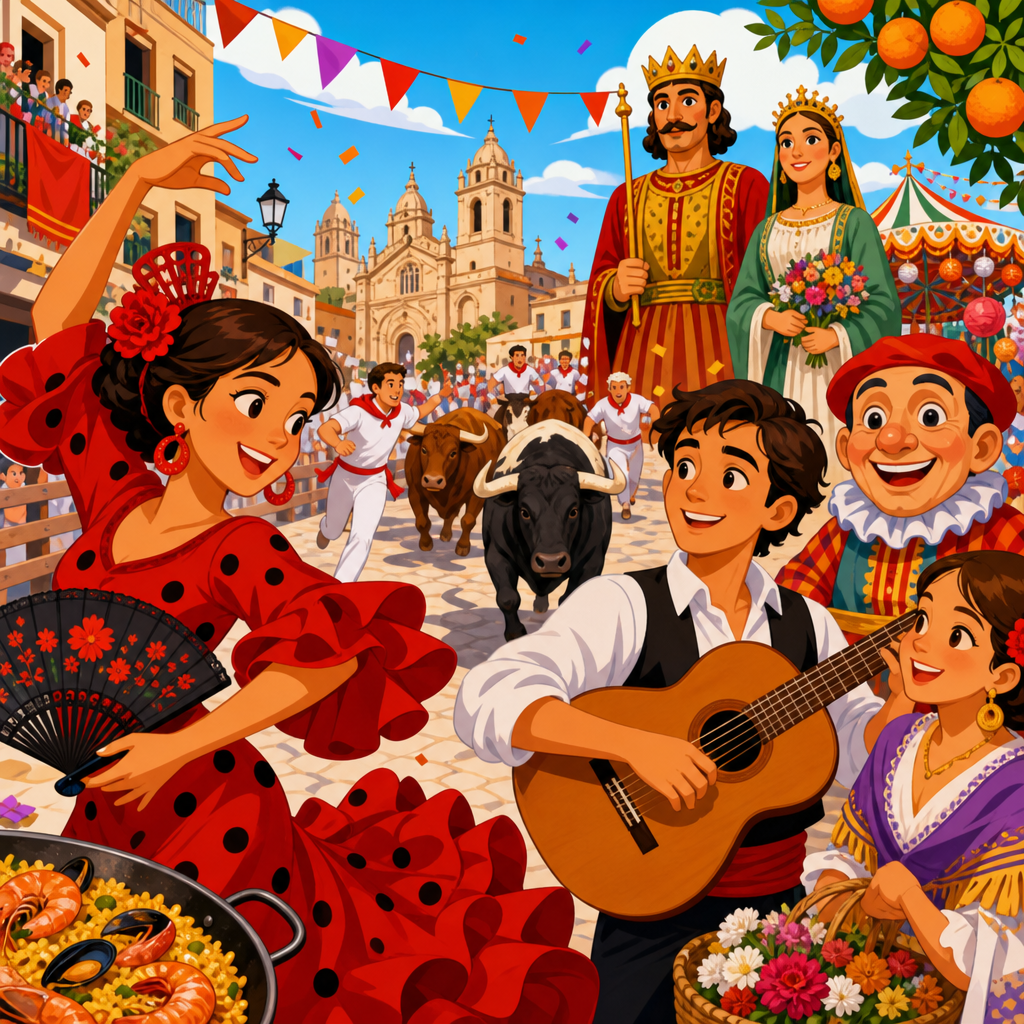
Celebrating Hispanic Heritage means honoring the histories, traditions, languages, foods, music, and family practices shaped by people whose roots trace to Spain, Mexico, the Caribbean, Central America, and South America. Hispanic heritage is not one single culture. It includes many national identities, Indigenous influences, African diasporic traditions, regional customs, and modern immigrant experiences that continue to evolve across generations. In community work, education programs, and cultural outreach, I have seen how this topic becomes most meaningful when it moves beyond a calendar observance and becomes a living conversation about identity, memory, and belonging. That is why a strong guide to stories and traditions matters: it helps families preserve what they value, gives educators and community leaders reliable context, and creates respectful entry points for anyone who wants to learn. This hub article brings together the broad themes that define Hispanic heritage, from oral storytelling and holiday rituals to foodways, music, art, language, migration, and intergenerational community life. It also addresses a key question many readers ask directly: how can people celebrate Hispanic heritage in a way that is accurate, inclusive, and useful year round rather than only during Hispanic Heritage Month. The answer starts with understanding both the shared threads and the rich differences within Hispanic communities.
Understanding Hispanic Heritage as a Living Mosaic
Hispanic heritage is best understood as a living mosaic rather than a fixed label. The term usually refers to people connected to Spanish-speaking cultures, yet even that simple definition has limits. Brazil is central to Latin America but Portuguese speaking. Many Hispanic families also identify more strongly with Latino, Latina, Latine, Afro-Latino, Indigenous, Chicano, Boricua, Tejano, or a national origin such as Colombian, Cuban, Dominican, Guatemalan, Peruvian, or Salvadoran. In practice, respectful celebration begins by asking how individuals describe themselves and by recognizing that identity can hold several layers at once.
This matters because traditions do not travel unchanged. A family from Oaxaca may center Indigenous culinary practices and community reciprocity, while a family from Puerto Rico may emphasize parranda music, Three Kings Day, and island sayings carried into diasporic neighborhoods in New York or Orlando. A second-generation teenager in Chicago may mix Spanish and English naturally, dance salsa and reggaeton, and still feel deeply connected to a grandmother’s recipes and stories about migration. Heritage stays alive through adaptation. That is why any hub on Spanish community and interaction must leave room for regional difference, mixed identities, and contemporary realities such as bilingual life, digital connection, and transnational family ties.
Stories, Oral History, and the Power of Memory
One of the strongest traditions across Hispanic communities is storytelling. Families pass down history through dichos, cuentos, testimonios, songs, prayers, nicknames, and repeated stories told at dinner tables, wakes, baptisms, holidays, and reunions. These stories teach values such as perseverance, respect for elders, faith, humor under pressure, and loyalty to family. They also preserve migration history. I have interviewed community members who could map an entire family journey through remembered details: the first U.S. apartment, the factory job, the church that sponsored paperwork, the aunt who mailed money home, the dish cooked on Sundays because it reminded everyone of where they came from.
Oral history has practical cultural value. It records experiences often missing from textbooks, especially for farmworkers, domestic workers, veterans, artisans, and recent immigrants. Community centers, public libraries, and schools increasingly use oral history projects to document local Hispanic stories using accessible tools such as smartphone recordings, Otter transcription, and the Library of Congress oral history guidelines. These projects matter because they convert memory into archive. For families, a simple recorded interview with grandparents can preserve pronunciation, humor, recipes, and life lessons that would otherwise disappear. If someone asks how to celebrate Hispanic heritage at home, one of the best answers is this: record the stories of the oldest relatives while you still can.
Traditions Through Food, Festivities, and Everyday Rituals
Food is one of the most visible expressions of Hispanic heritage, but reducing culture to cuisine alone misses the deeper meaning. Recipes are carriers of geography, class, migration, and ceremony. Tamales may mark Christmas, hallacas may define Venezuelan holiday preparation, mofongo may signal Puerto Rican roots, and arepas may appear in different forms in Colombia and Venezuela. Ingredients tell stories too. Corn, cassava, beans, cacao, plantains, sofrito, achiote, and chiles point to Indigenous knowledge, African influence, colonial exchange, and regional adaptation. In many households, the act of cooking together is the tradition, not just the finished dish.
Festivities also reveal how heritage is practiced. Día de los Muertos in Mexico centers remembrance, altars, marigolds, and offerings for loved ones. Las Posadas reenacts the search for shelter through song and procession. Quinceañeras mark a coming of age milestone through religious ritual, dance, family sponsorship, and symbolic transitions. Carnaval celebrations in parts of Latin America blend music, costume, and public performance with local history. Even everyday rituals matter: greeting elders with warmth, using affectionate honorifics, bringing food to neighbors, gathering for Sunday meals, or staying late after events because conversation is part of the event. These habits create social fabric and teach younger generations what community looks like in practice.
Music, Dance, Art, and Language in Community Life
Music and dance are often the fastest ways people connect to heritage because they activate memory immediately. Across Hispanic communities, styles differ widely: mariachi, son jarocho, salsa, merengue, bachata, cumbia, flamenco, tango, bolero, norteño, reggaeton, and Latin jazz all come from distinct histories. Some are tied to courtship and social dance, some to protest, some to religious celebration, and some to urban innovation. When community organizations build cultural programming, they succeed most when they explain the history behind the performance rather than presenting it as entertainment alone.
Language plays a similarly central role. Spanish itself contains regional vocabulary, accents, forms of address, and Indigenous borrowings that signal where people are from. Code-switching between Spanish and English is not confusion; it is a sophisticated social skill common in bilingual communities. Heritage language maintenance is linked in research to family cohesion and stronger cross-generational communication, yet many families also face pressure to assimilate linguistically. Effective celebration supports both fluency and access. That can mean bilingual signage, translated materials, Spanish book clubs, intergenerational reading circles, and classes that teach conversation, not just grammar drills.
| Cultural form | What it preserves | Practical community example |
|---|---|---|
| Oral storytelling | Family history, migration memory, values | Recording elders in a library oral history project |
| Food traditions | Regional identity, seasonal rituals, kinship roles | Cooking tamales together before holidays |
| Music and dance | Collective memory, celebration, resistance | Community salsa nights with historical context |
| Visual art and crafts | Symbolism, religious practice, local aesthetics | Workshops on papel picado or mural painting |
| Language use | Intergenerational connection, humor, worldview | Bilingual family storytelling circles |
Visual art adds another layer. Murals in Los Angeles, Chicago, San Antonio, and Philadelphia have documented labor struggles, neighborhood pride, faith traditions, and anti-displacement activism. Folk arts such as papel picado, alebrijes, retablos, embroidered textiles, and ceramic traditions deserve context, especially when shared in schools or museums. The best interpretation names origin, symbolism, and local variation. Heritage becomes stronger when art is treated as knowledge, not decoration.
Migration, Identity, and Intergenerational Change
Many Hispanic heritage stories are migration stories, whether movement occurred across borders, between rural and urban regions, or within the United States. Migration changes family structure, work patterns, religion, language use, and concepts of home. First-generation adults may focus on survival and sacrifice, second-generation children often navigate translation and cultural brokerage, and later generations may work consciously to recover customs that nearly faded. None of these experiences is more authentic than another. They reflect different moments in the same cultural continuum.
Community interaction is where these differences become visible. In one family, grandparents may insist on formal Spanish and traditional holiday observance, while younger relatives communicate through group chats, playlists, and hybrid celebrations that mix old and new. I have seen successful community programs bridge these gaps by centering participation rather than nostalgia. A heritage event works better when elders teach a song, teens document it on video, and children create artwork from what they learned. That format respects continuity while accepting change.
There are also challenges that honest cultural coverage must acknowledge. Some families carry trauma linked to war, dictatorship, racism, displacement, or economic hardship. Afro-Hispanic and Indigenous identities are still underrepresented in mainstream heritage programming. Commercialized celebrations can flatten serious history into costumes and food booths. Responsible celebration avoids stereotypes, names exclusions when they exist, and makes room for histories of labor, civil rights organizing, military service, literature, and public leadership alongside festive traditions.
How to Celebrate Hispanic Heritage Respectfully and Year Round
The most effective way to celebrate Hispanic heritage is to connect learning with participation. Start with local community institutions: cultural centers, Spanish-language libraries, neighborhood museums, churches, mutual aid groups, festivals, and small businesses. Support them directly. Attend a bilingual author talk, buy from a family-owned bakery, volunteer at a heritage archive, or sponsor student scholarships tied to language and cultural education. These actions sustain communities more than symbolic messaging alone.
In schools and workplaces, build celebrations around substance. Feature writers such as Julia de Burgos, Gabriel García Márquez, Isabel Allende, Sandra Cisneros, Rudolfo Anaya, or Juan Felipe Herrera. Discuss artists like Frida Kahlo, Fernando Botero, or Carmen Lomas Garza with historical context. Include scientists, educators, labor leaders, and public servants, not only entertainers. Use primary sources when possible, including speeches, interviews, letters, oral histories, recipes, music recordings, and family photographs. Accuracy improves trust, and trust is essential when cultural identity is involved.
For families, create repeatable traditions. Cook one ancestral recipe each month and write down its story. Celebrate Hispanic Heritage Month in September and October, but also mark Three Kings Day, Día de los Muertos, patron saint festivals, or independence commemorations specific to your heritage. Keep children engaged through questions: Who taught us this song? Why do we make this dish? What words did our grandparents use that we should remember? Heritage survives through repetition, explanation, and joy.
As a hub for the miscellaneous side of Spanish community and interaction, this topic connects many related paths for deeper reading: family communication, bilingual identity, holiday customs, regional foods, music traditions, oral history methods, community events, immigrant experiences, and respectful cultural education. The central lesson is simple. Celebrating Hispanic heritage is not about performing a single image of culture. It is about preserving stories, practicing traditions with context, and making space for the full diversity of Hispanic life. When people understand the meaning behind a recipe, a dance, a phrase, a procession, or a family story, they participate more thoughtfully and pass that knowledge forward with integrity. Use this hub as a starting point, then keep exploring local voices, family histories, and community institutions that turn heritage from a topic into a lived connection.
Frequently Asked Questions
What does it mean to celebrate Hispanic Heritage?
Celebrating Hispanic Heritage means recognizing and honoring the histories, traditions, languages, creativity, and lived experiences of people whose roots connect to Spain, Mexico, the Caribbean, Central America, and South America. It is not about reducing millions of people to one story, one language, or one set of customs. Instead, it means understanding that Hispanic heritage includes many national identities, regional traditions, family histories, and cultural influences, including Indigenous heritage, African diasporic traditions, European influences, and modern immigrant experiences. A meaningful celebration goes beyond food and festivals. It includes learning about historical contributions, listening to personal stories, appreciating literature and art, supporting Hispanic-owned businesses, and creating space for communities to share their own voices. In schools, workplaces, and community programs, celebrating Hispanic Heritage should be both joyful and respectful, highlighting cultural richness while also acknowledging resilience, migration, identity, and the ways traditions continue to evolve across generations.
Why is it important to remember that Hispanic heritage is diverse and not a single culture?
It is important because the term “Hispanic” describes a broad cultural and linguistic connection, not one uniform identity. Someone with roots in Puerto Rico may have different traditions, foods, music, and family customs than someone from Guatemala, Argentina, the Dominican Republic, or Spain. Even within one country, culture can vary dramatically by region, race, class, language, and community history. Recognizing this diversity helps avoid stereotypes and encourages more accurate, respectful conversations. It also allows people to understand how Hispanic heritage is shaped by many forces, including Indigenous civilizations, African heritage, colonial history, migration, religion, urban life, rural traditions, and contemporary social change. In practical terms, this means celebrations and educational programs should not present one dance, one dish, or one holiday as representing everyone. Instead, they should reflect the richness and variety of experiences that make Hispanic heritage so dynamic. When people embrace that complexity, they create more inclusive spaces where individuals and families feel seen for who they truly are.
What are some meaningful ways to celebrate Hispanic Heritage in schools, workplaces, and communities?
Meaningful celebration starts with education, participation, and respect. In schools, this can include reading books by Hispanic authors, studying historical leaders and community activists, inviting guest speakers, highlighting the contributions of scientists, artists, educators, and public servants, and encouraging students to explore family histories and oral storytelling. In workplaces, organizations can host cultural learning events, spotlight employee stories, support Hispanic leadership, partner with local community groups, and ensure that recognition goes beyond a single themed lunch or holiday post. In communities, meaningful celebration can include festivals, museum exhibits, bilingual programs, cooking demonstrations, music and dance performances, film screenings, and intergenerational storytelling events. It is especially valuable to include local voices and traditions rather than relying only on broad national symbols. Supporting Hispanic-owned businesses, attending neighborhood cultural events, and creating opportunities for dialogue are also powerful ways to participate. The most effective celebrations are those that are collaborative and community-led, where culture is shared with pride and care rather than presented as a performance for others. That approach helps turn recognition into genuine appreciation and connection.
How do language, food, music, and family traditions help preserve Hispanic heritage?
These cultural elements are often the everyday ways heritage is carried forward from one generation to the next. Language preserves memory, humor, values, and relationships. Whether a family speaks Spanish, an Indigenous language, English, or a mix of several languages, the words people use at home often reflect migration histories and cultural belonging. Food is another powerful link to heritage because recipes often hold family stories, regional identity, and ancestral knowledge. A dish prepared for a holiday, a community gathering, or a Sunday meal can reflect centuries of cultural blending and adaptation. Music and dance preserve emotional connection and community pride, whether through mariachi, salsa, merengue, cumbia, flamenco, reggaeton, folklórico traditions, or many other forms. Family practices such as storytelling, religious observances, quinceañeras, holiday celebrations, and respect for elders also help transmit identity and values. At the same time, these traditions are not frozen in the past. They often change as families move, intermarry, and adapt to new places. That evolution does not weaken heritage. In many cases, it shows how culture remains alive, relevant, and deeply personal.
How can people celebrate Hispanic Heritage respectfully and avoid stereotypes?
Respectful celebration begins with curiosity, humility, and a willingness to learn from people’s real experiences rather than relying on assumptions. One of the most important steps is to avoid treating Hispanic identity as a costume, trend, or single aesthetic. Not every person has the same background, appearance, accent, politics, or connection to tradition. Instead of making broad generalizations, focus on specific histories, communities, and contributions. Use accurate terminology when possible, ask people how they identify, and recognize that identity can be personal and complex. It also helps to center voices from within the community by reading Hispanic authors, listening to scholars and artists, supporting local leaders, and attending events organized by Hispanic groups themselves. Another key part of respect is acknowledging both celebration and struggle. Hispanic heritage includes joy, creativity, and resilience, but also histories of displacement, discrimination, labor inequality, and cultural erasure. A thoughtful celebration makes room for both pride and truth. When people engage with openness and respect, they move beyond token gestures and help create recognition that is more informed, inclusive, and meaningful.