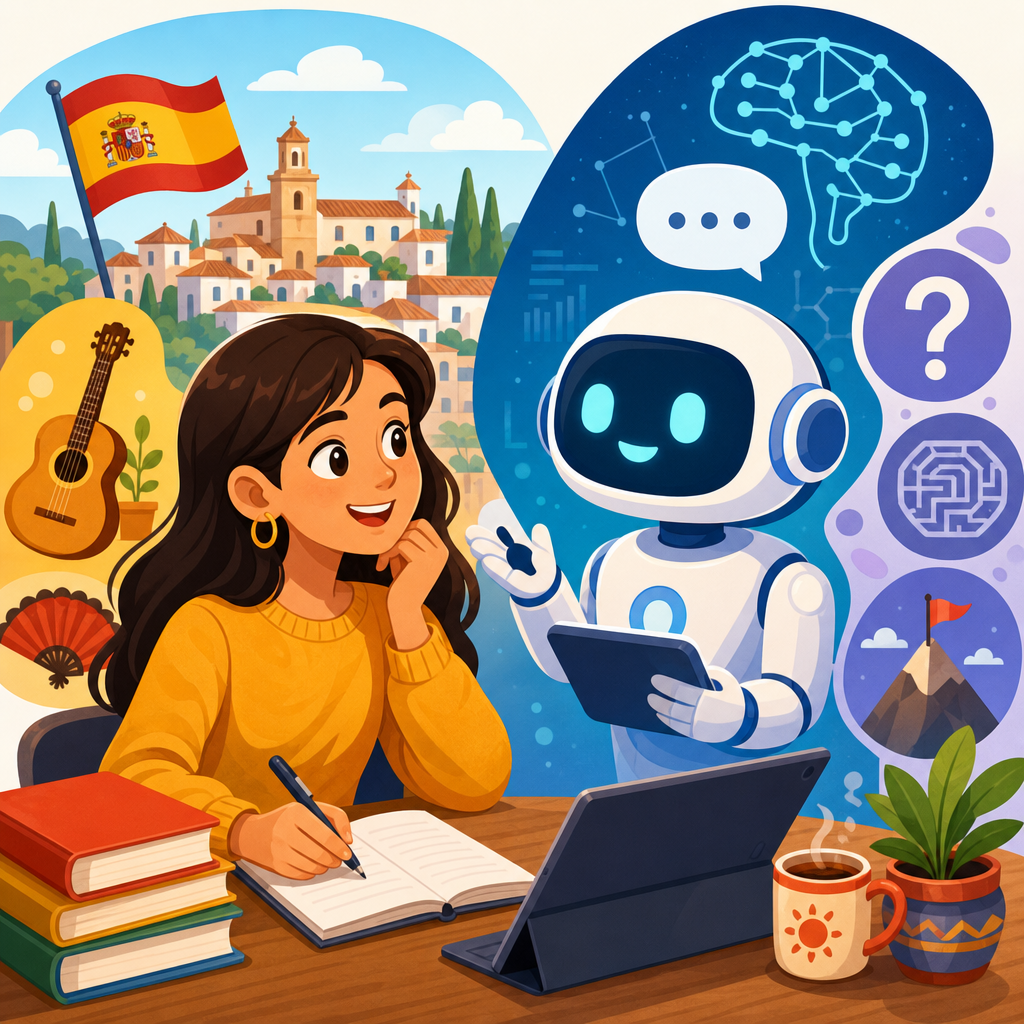
Artificial intelligence is reshaping how people learn languages, and Spanish learning is one of the clearest examples of both promise and complexity. In practical terms, AI in Spanish learning means software systems that can analyze learner input, generate responses, personalize exercises, score pronunciation, and simulate conversation at scale. That includes tools such as adaptive apps, speech recognition platforms, grammar correction systems, chatbots, translation engines, and large language models that produce explanations on demand. For learners in a Spanish community and interaction context, these systems matter because they can expand access to practice, lower costs, and create more frequent contact with the language between live conversations. They also introduce new risks, including inaccurate corrections, weak cultural nuance, privacy concerns, and overreliance on automated feedback.
I have worked with digital language products, online tutoring workflows, and learner communities long enough to see a clear pattern: AI helps most when it supports interaction instead of replacing it. A beginner can use guided speaking prompts to rehearse ordering food, asking for directions, or introducing family members before joining a class meetup. An intermediate learner can get immediate feedback on verb conjugations, accent marks, and word order. An advanced learner can use transcripts, summarizers, and roleplay tools to prepare for debates, interviews, or travel. Yet every one of those gains depends on careful use. Spanish is not a single monolith. Regional vocabulary, register, pronunciation, and cultural conventions vary across Spain, Mexico, Colombia, Argentina, the Caribbean, and the broader diaspora. Any article on AI and Spanish learning has to begin there: technology can accelerate exposure, but genuine competence still grows through human interaction, context, and informed judgment.
How AI supports Spanish learning in everyday study
The strongest opportunity AI offers Spanish learners is structured repetition with immediate response. Traditional study often breaks down because learners cannot get enough feedback between classes. AI tools can fill that gap. Spaced repetition systems schedule vocabulary review based on memory science. Speech analysis tools compare learner audio to target pronunciations. Writing assistants flag agreement errors like la problema instead of el problema, or yo fui comiendo ayer when a simpler past form is more natural in context. Chat interfaces create low-pressure conversation practice for users who feel intimidated speaking with native speakers at first.
In my experience, this convenience changes consistency more than it changes raw ability. Learners who practice ten minutes a day with useful prompts improve faster than those who cram once a week. AI makes that daily practice easier to maintain. A student can ask for five examples of the difference between por and para, request a mini quiz on the preterite and imperfect, or generate a roleplay set in a pharmacy in Madrid or a market in Oaxaca. Tools such as Duolingo, Memrise, Busuu, Babbel, and Quizlet have long used adaptive elements, while newer systems built on large language models can tailor explanations in a more flexible way. The key advantage is responsiveness: the software can notice repeated mistakes and adjust the next exercise rather than serving the same fixed sequence to everyone.
AI also improves access for learners outside major cities or formal programs. Someone without easy access to tutors can still get exposure to spoken Spanish through text-to-speech, automatic transcripts, and guided dialogues. A heritage learner who understands family Spanish but struggles with writing can receive targeted grammar practice. A professional in healthcare can simulate patient intake conversations and focus on high-frequency terms like síntomas, receta, and alergias. This flexibility is especially valuable within Spanish community and interaction work, where the goal is not just to memorize lists but to participate in real exchanges. Used well, AI becomes a bridge that prepares learners for stronger human conversations.
Where AI performs best: feedback, personalization, and speaking rehearsal
Not all language tasks benefit equally from automation. AI is most useful when the target is narrow, repeatable, and measurable. Pronunciation practice is a good example. Modern speech recognition can identify whether a learner consistently drops final sounds, confuses pero and perro, or places stress incorrectly in words such as teléfono and también. While these systems are imperfect, they can reveal patterns a learner may miss alone. I have seen learners improve quickly when they use audio comparison loops: hear a phrase, record it, compare waveform or transcript output, then repeat until intelligibility improves.
Grammar support is another strong area. AI can explain why estoy aburrido and soy aburrido are not interchangeable, provide contrastive examples, and generate personalized drills. It can detect recurring issues with gender agreement, article use, clitic pronouns, and tense selection. It can also simplify explanations for beginners and provide technical detail for advanced students. That matters because one learner may need “use ser for identity” while another needs a fuller discussion of copular contrast, adjective meaning shifts, and discourse context.
Conversation rehearsal may be the most practical benefit for nervous learners. A chatbot can simulate ordering coffee, greeting neighbors, meeting a host family, or attending a job interview. The learner gains turn-taking practice, vocabulary exposure, and confidence before entering a real exchange. This is not the same as talking with a person, but it is excellent preparation. The best results come when learners ask the system to stay within realistic constraints: speak at A2 level, use Mexican Spanish, correct only serious errors, and explain each correction in English. Precise prompts produce better study sessions than generic “teach me Spanish” requests.
| Use case | What AI does well | Main limitation | Best learner strategy |
|---|---|---|---|
| Vocabulary review | Schedules spaced repetition and adapts difficulty | Words can be learned without context | Pair flashcards with phrases and real conversations |
| Pronunciation | Provides instant scoring and repetition loops | Accent scoring may misread regional variation | Use native audio models from multiple regions |
| Grammar correction | Flags agreement, tense, and word order issues quickly | Corrections may sound grammatical but unnatural | Verify with trusted references and examples |
| Conversation practice | Offers unlimited roleplay and low-pressure speaking rehearsal | Responses may be bland or culturally off | Use roleplays to prepare for real human interaction |
| Writing support | Explains edits and suggests clearer phrasing | Can overedit and erase learner voice | Review each change rather than accepting all |
The biggest challenges: accuracy, nuance, and false confidence
The central challenge with AI and Spanish learning is that a fluent-sounding answer is not always a reliable one. Large language models can generate plausible grammar explanations that are incomplete, oversimplified, or simply wrong. Translation systems may produce text that is technically accurate but inappropriate for the social context. Speech tools may reward pronunciation that matches one training pattern while undervaluing legitimate regional accents. This matters because language learning depends on trust. If a learner receives shaky feedback often enough, weak habits become reinforced.
I regularly see false confidence appear in three places. First, learners assume corrected output equals understanding. A tool can rewrite a paragraph perfectly, but the learner may still not know why the changes were made. Second, learners confuse transactional success with proficiency. If AI helps them compose a restaurant dialogue, they may believe they can manage any dining conversation, then struggle when a waiter speaks quickly, uses colloquial expressions, or asks follow-up questions. Third, learners rely too heavily on one neutralized variety of Spanish and fail to recognize regional differences. A phrase accepted in one country can sound unusual, outdated, or overly formal in another.
Nuance is especially difficult for automated systems. Consider address forms: tú, usted, and vos carry social meaning that changes by region and relationship. Humor, irony, and politeness strategies are also context dependent. An AI tool may teach direct translations that miss the tone of real interaction. For community-centered learners, this is not a minor issue. The difference between sounding textbook-correct and socially appropriate affects relationships, trust, and participation. That is why any serious Spanish learning plan must treat AI output as useful draft guidance, not final authority.
Community, culture, and the human side of Spanish interaction
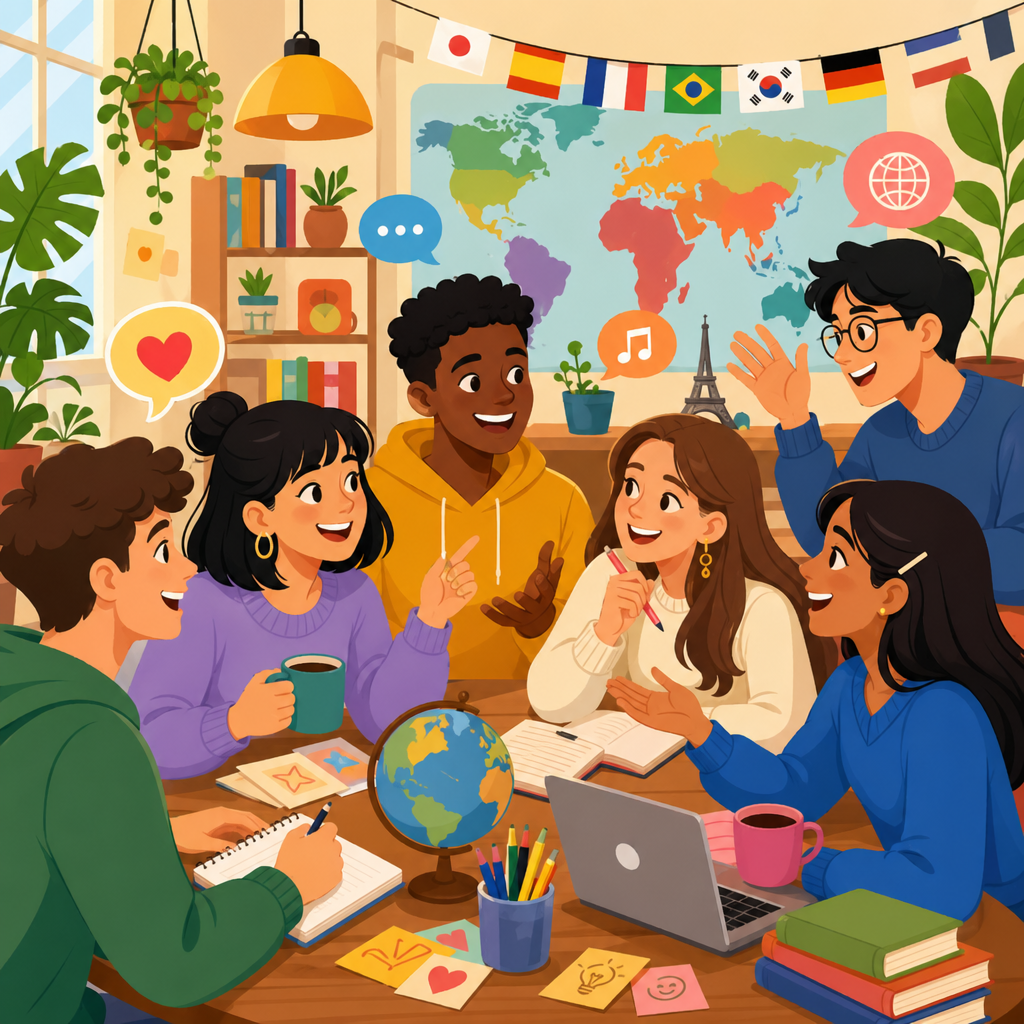
Because this article sits within Spanish community and interaction, the most important question is not whether AI can teach vocabulary. It can. The more important question is whether it helps learners participate meaningfully in Spanish-speaking spaces. Sometimes it does. Learners can prepare for volunteer work, neighborhood events, parent-teacher meetings, church gatherings, or travel by rehearsing likely exchanges. They can practice respectful greetings, requests, and clarification phrases such as ¿Puede repetir?, No entendí bien, and ¿Cómo se dice…?. That preparation lowers anxiety and makes first contact easier.
But community participation requires more than linguistic accuracy. It requires listening, responsiveness, and cultural humility. AI can provide scenario practice, yet it cannot fully replicate how people interrupt, joke, soften disagreement, switch registers, or reference shared local realities. In one tutoring program I observed, learners who used AI roleplays before conversation circles arrived better prepared with vocabulary, but the biggest gains still came from real exchanges with native and heritage speakers. They learned how quickly meaning shifts through gesture, tone, pacing, and local references. No app fully captures that.
The best approach is blended learning. Use AI to prepare, then use human interaction to validate and deepen what you studied. Join language exchanges, community classes, online conversation groups, gaming communities, book clubs, or volunteer settings where Spanish is used for a real purpose. Keep a running list of phrases you hear repeatedly and compare them with what your app taught you. Ask speakers from different regions how they would say the same thing. This process turns AI from a substitute into a stepping stone, which is exactly where it provides the most value.
Privacy, bias, and responsible use of AI tools
Every serious discussion of AI in education must address privacy and bias. Many language platforms collect text, audio, usage patterns, device data, and performance history. Some use that data to improve models or personalize content. Before uploading voice samples, journal entries, or classroom recordings, learners should read the platform’s privacy policy, data retention terms, and account controls. This is especially important for minors, schools, healthcare workers, and anyone handling sensitive information. Convenience is not a reason to ignore data governance.
Bias is equally important. AI systems learn from training data that may underrepresent dialects, accents, socioeconomic variation, and informal speech. As a result, they may treat one prestige variety as default and frame other valid forms as mistakes. A learner using Caribbean Spanish, Rioplatense voseo, or U.S. Spanish community forms may receive misleading corrections. The practical safeguard is comparison. Check important points against trusted references such as the Real Academia Española, Asociación de Academias de la Lengua Española resources, credible learner grammars, corpus examples, and qualified teachers. For pronunciation and listening, use media from multiple regions rather than one synthetic voice.
Responsible use also means designing tasks that fit the tool. Do not ask a chatbot to be your sole judge of fluency. Use it to generate examples, explain patterns, create drills, and simulate realistic situations. Then test those skills with human listeners and authentic content. If you manage a learning community, set norms for disclosure and verification. Members should know when feedback comes from AI, when a translation was machine generated, and when a native speaker or instructor has reviewed it. Transparency improves trust and helps learners understand the limits of the technology.
How to build an effective AI-supported Spanish learning plan
An effective plan starts with goals, not tools. Decide whether you need travel Spanish, workplace communication, academic reading, family conversation, or broad fluency. Then match AI features to those goals. For speaking confidence, prioritize pronunciation feedback and roleplay. For writing, use correction tools that explain edits. For vocabulary retention, use spaced repetition with sentence-level examples. For listening, combine transcripts, slowed audio, and repeated exposure to authentic media. The sequence matters: input, guided practice, feedback, real interaction, reflection.
I recommend a simple weekly structure. Spend two or three short sessions on AI-guided drills, one session on focused writing or speaking analysis, and at least one session on live interaction with people. After each conversation, note gaps: words you lacked, corrections you received, moments you misunderstood. Feed those gaps back into the AI tool for targeted practice. This creates a feedback loop grounded in real communication rather than isolated app progress. It also prevents the common trap of optimizing for streaks, badges, or completion rates instead of usable Spanish.
Measure progress with external benchmarks. The Common European Framework of Reference can help define levels from A1 to C1, but practical outcomes matter more: Can you introduce yourself clearly, ask follow-up questions, understand a voice note, write a polite message, or handle an unexpected reply? If the answer is improving in real situations, the plan is working. AI can accelerate that progress when used deliberately, but it works best as part of a broader Spanish community and interaction strategy built on authentic content, diverse speakers, and regular participation.
AI and Spanish learning create a powerful combination when technology is used to strengthen, not replace, human communication. The opportunities are real: more access, more feedback, more personalization, and more chances to practice between classes or conversations. Learners can sharpen pronunciation, review grammar efficiently, simulate common situations, and identify weak areas faster than ever before. For busy adults, isolated learners, heritage speakers, and professionals with specific language needs, these tools can remove barriers that once slowed progress for months.
The challenges are just as real. AI can sound authoritative while giving weak advice. It can flatten regional diversity, miss social nuance, and encourage dependence on polished output rather than true skill. Privacy and bias require attention, especially when speech and personal writing are involved. That does not make AI unsuitable for Spanish learning. It means the technology should be used with judgment, comparison, and clear boundaries. Trust the tool for repetition and support; trust people for nuance, culture, and reality checks.
If you want lasting results, build your Spanish study around real interaction and let AI serve that goal. Use it to prepare for community conversations, reinforce what you hear, and close specific gaps after speaking with others. Then keep testing your progress with authentic listening, live dialogue, and culturally grounded exchange. Start with one practical routine this week: choose a real-life scenario, rehearse it with AI, and then use it in an actual Spanish conversation.
Frequently Asked Questions
How is AI changing the way people learn Spanish?
AI is changing Spanish learning by making practice more personalized, immediate, and scalable than traditional one-size-fits-all methods. Instead of giving every learner the same sequence of lessons, AI-powered platforms can analyze performance in real time and adjust vocabulary, grammar drills, listening tasks, and review schedules based on strengths and weaknesses. For example, if a learner consistently struggles with ser versus estar, verb conjugations, or gender agreement, the system can surface targeted exercises and additional explanations exactly when they are needed. This kind of adaptation can make study time more efficient and can help learners progress at a pace that matches their actual ability rather than a fixed curriculum.
Another major shift is the availability of interactive practice on demand. AI chatbots, conversation simulators, and speech-enabled tools allow learners to practice Spanish at any hour without needing a live tutor present. That matters because many learners need more exposure and repetition than they can realistically get in a classroom alone. AI can generate dialogues, role-play real-world situations such as ordering food or interviewing for a job, and provide instant feedback on grammar, vocabulary choice, and sentence structure. In that sense, AI expands access to practice and lowers barriers to frequent use, which is essential for language acquisition.
At the same time, AI does not replace the deeper human dimensions of language learning. Spanish is not just a set of grammatical rules; it is tied to culture, identity, humor, regional variation, and social context. AI can support learning very effectively, but its biggest value usually comes when it complements human teaching, authentic media, and real conversation rather than trying to stand in for all of them.
What are the biggest opportunities of using AI for Spanish learners?
The biggest opportunities lie in personalization, consistent feedback, increased speaking practice, and broader access to learning support. Personalization is especially important because Spanish learners often have very different goals. One person may need conversational fluency for travel, another may want professional writing skills, and another may be preparing for academic study. AI can tailor lessons to these goals by adjusting reading level, selecting relevant vocabulary, and emphasizing the skills each learner needs most. That kind of customized pathway can make learning feel more relevant and can improve motivation over time.
Feedback is another major advantage. In many learning environments, students wait for a teacher to correct errors, which limits how much practice they can do between sessions. AI tools can provide immediate responses on spelling, syntax, pronunciation, and word choice. If a learner writes a sentence with an incorrect tense or misuses a preposition, the system can flag the problem instantly and offer a corrected version or explanation. Speech technologies can also help learners notice pronunciation issues with sounds that are often difficult for non-native speakers, such as the rolled r, vowel clarity, or rhythm and stress patterns.
AI also expands access. Learners who cannot afford frequent tutoring, live in areas with few Spanish teachers, or need flexible study options can still get meaningful support through apps and digital platforms. Conversation simulators can give beginners a safe, low-pressure environment to practice, while advanced learners can use AI to debate ideas, summarize articles, or rehearse workplace scenarios in Spanish. In practical terms, AI makes intensive exposure more available to more people, and that is one of the most significant opportunities in modern language education.
What challenges or limitations should learners be aware of when using AI to study Spanish?
One of the main challenges is that AI can sound confident even when it is incomplete, unnatural, or simply wrong. This is particularly important in Spanish because correct usage often depends on nuance, register, region, and context. A tool may generate a grammatically possible sentence that a native speaker would rarely say in a real situation. It may also oversimplify explanations, miss subtle distinctions, or provide translations that are technically accurate but socially awkward. Learners who rely too heavily on AI without cross-checking with quality sources may end up reinforcing mistakes rather than eliminating them.
Regional variation is another important limitation. Spanish is spoken across many countries, and vocabulary, pronunciation, verb usage, and tone can vary considerably. An AI tool might teach one regional norm without making that clear to the learner. Words that are standard in Spain may sound unusual in Mexico, while common expressions in Argentina, Colombia, or the Caribbean may differ from textbook Spanish. This does not mean AI is ineffective, but it does mean learners should be intentional about which variety of Spanish they want to practice and whether the tool supports that goal.
There are also concerns related to overdependence and shallow learning. If learners use AI mainly to generate answers, translate everything, or correct every sentence automatically, they may reduce the mental effort required to build long-term proficiency. Real language learning requires recall, uncertainty, experimentation, and repeated exposure. AI should support those processes, not bypass them. Finally, privacy and data use deserve attention, especially with speech tools and chat systems that collect user input. Learners should understand what data is stored, how it is used, and whether the platform is appropriate for educational settings involving minors or sensitive information.
Can AI really help with Spanish speaking and pronunciation?
Yes, AI can be very helpful for speaking and pronunciation practice, especially because it gives learners a chance to rehearse far more often than they typically could in a classroom setting. Speech recognition systems can listen to spoken Spanish, identify pronunciation patterns, and provide feedback on individual sounds, pacing, and intelligibility. For beginners, this can be valuable in building confidence and helping them distinguish between sounds that may not exist in their native language. Even intermediate learners can benefit from repeated speaking exercises that reinforce rhythm, connected speech, and common conversational structures.
Conversation simulation is another strength. AI tools can prompt learners with realistic scenarios, respond dynamically, and encourage spontaneous production instead of memorized repetition. That helps develop fluency because learners must retrieve vocabulary and construct sentences in real time. Some systems can also adjust difficulty by slowing responses, simplifying language, or introducing more complex topics as ability grows. This kind of graduated speaking practice is useful because many learners understand more Spanish than they can actively produce, and AI can help close that gap through regular, low-stakes interaction.
However, AI pronunciation support is not perfect. It may score speech based on recognition accuracy rather than truly human-like naturalness, and it can miss issues involving intonation, emotion, or regional accent differences. A learner might receive a decent score while still sounding stiff or unnatural in real conversation. For that reason, AI works best as a supplement to exposure to native speakers, audio from authentic media, and, when possible, feedback from teachers or conversation partners. It is excellent for repetition and awareness, but human interaction remains essential for sounding natural and communicating comfortably in real life.
What is the best way to use AI as part of an effective Spanish learning strategy?
The best approach is to use AI as a smart practice partner, not as the sole teacher. A strong Spanish learning strategy combines AI tools with proven language-learning habits such as spaced repetition, active recall, listening to authentic Spanish, reading level-appropriate material, writing regularly, and speaking with real people whenever possible. AI is particularly effective for generating extra practice, explaining errors, creating custom exercises, and simulating dialogue. It can help learners maintain daily contact with the language, which is often one of the biggest predictors of progress.
To use AI well, learners should be specific and intentional. Instead of asking for generic lessons, they can request targeted help such as “quiz me on the preterite versus imperfect,” “correct this paragraph and explain each change,” or “simulate a job interview in Mexican Spanish.” This produces more useful output and helps keep learning aligned with real goals. It is also wise to verify important grammar explanations and vocabulary with reliable references, especially when precision matters. Using AI critically rather than passively leads to better results.
Most importantly, learners should make sure AI supports actual language production. That means speaking out loud, writing without immediate translation, trying to think in Spanish, and reviewing mistakes deliberately. If AI is used only to provide answers, progress may stall. If it is used to prompt effort, increase repetition, and provide feedback, it can become a highly effective part of a broader learning system. In short, the most successful learners treat AI as an accelerator for consistent practice, not as a shortcut that replaces the work of learning the language.