Learning Spanish can be an enriching experience, not only because of its widespread use around the world but also due to its melodic and rhythmic charm. Among the essential components of mastering this language are the vowel sounds, which are the building blocks of pronunciation. Unlike English, Spanish vowels are relatively straightforward and consistent, yet they carry subtle nuances that might perplex learners at first. Understanding these nuances is crucial, as they can significantly impact communication quality, intelligibility, and the authenticity of one’s Spanish accent.
Spanish has five primary vowels: A, E, I, O, U. These vowels are pronounced consistently in all positions within a word, contrasting sharply with English, where vowel sounds can vary widely. For Spanish learners, mastering these sounds is paramount to avoid misunderstandings and ensure clarity when speaking. Moreover, Spanish vowels form the foundation for learning more complex Spanish phonetic elements, playing a pivotal role in the rhythm and melody of the language. By grasping these sounds, learners can enhance their competence, leading to greater confidence in both verbal communication and comprehension. In this article, we’ll explore the nuances of Spanish vowel sounds, providing a roadmap for learners to refine their pronunciation skills.
The Fundamental Qualities of Spanish Vowels
Spanish vowels are known for their short, crisp, and consistent sounds. Regardless of their position in a word, they are always pronounced the same way. This consistency is a major characteristic that appeals to learners and facilitates the learning process. Here’s a brief overview of each of the Spanish vowels:
- A: Similar to the ‘ah’ in “father”
- E: Resembles the ‘e’ in “met”
- I: Sounds like ‘ee’ in “see”
- O: Comparable to ‘o’ in “more”
- U: Echoes the ‘oo’ in “food”
Consider the word “peso” (weight). The ‘e’ in “peso” is the same as in “met,” which ensures that once a learner familiarizes themselves with this sound pattern, pronunciation becomes instinctive irrespective of the dialect. Practicing these vowels through repetition and by mimicking native speakers can significantly enhance learners’ pronunciation skills.
Common Vowel Combinations and Diphthongs
Spanish also includes various vowel combinations known as diphthongs, which involve two vowels being pronounced as a single syllable. These combinations add complexity and variety to the Spanish language. Key examples include:
- ai/ay: As in “aire” (air)
- ei/ey: As in “rey” (king)
- oi/oy: As in “hoy” (today)
- iu: As in “ciudad” (city)
For instance, the word “paisaje” (landscape) contains the diphthong ‘ai’. When learners practice phrases and words with these diphthongs, it sharpens their pronunciation and helps them become more attuned to the fluidity of spoken Spanish.
The Impact of Accents on Vowel Sounds
Spanish vocabulary also includes accented vowels, which denote changes in stress and sometimes pronunciation. Accents can change the meaning of a word entirely, emphasizing the importance of their correct placement and pronunciation. For example, “sí” (yes) versus “si” (if), where the accent over the ‘i’ indicates a difference in meaning.
The accent mark typically indicates that the syllable should be stressed when speaking. Practicing with a focus on accented vowels is critical for the reader to convey meaning accurately and effectively.
Dialectal Variations and their Influence
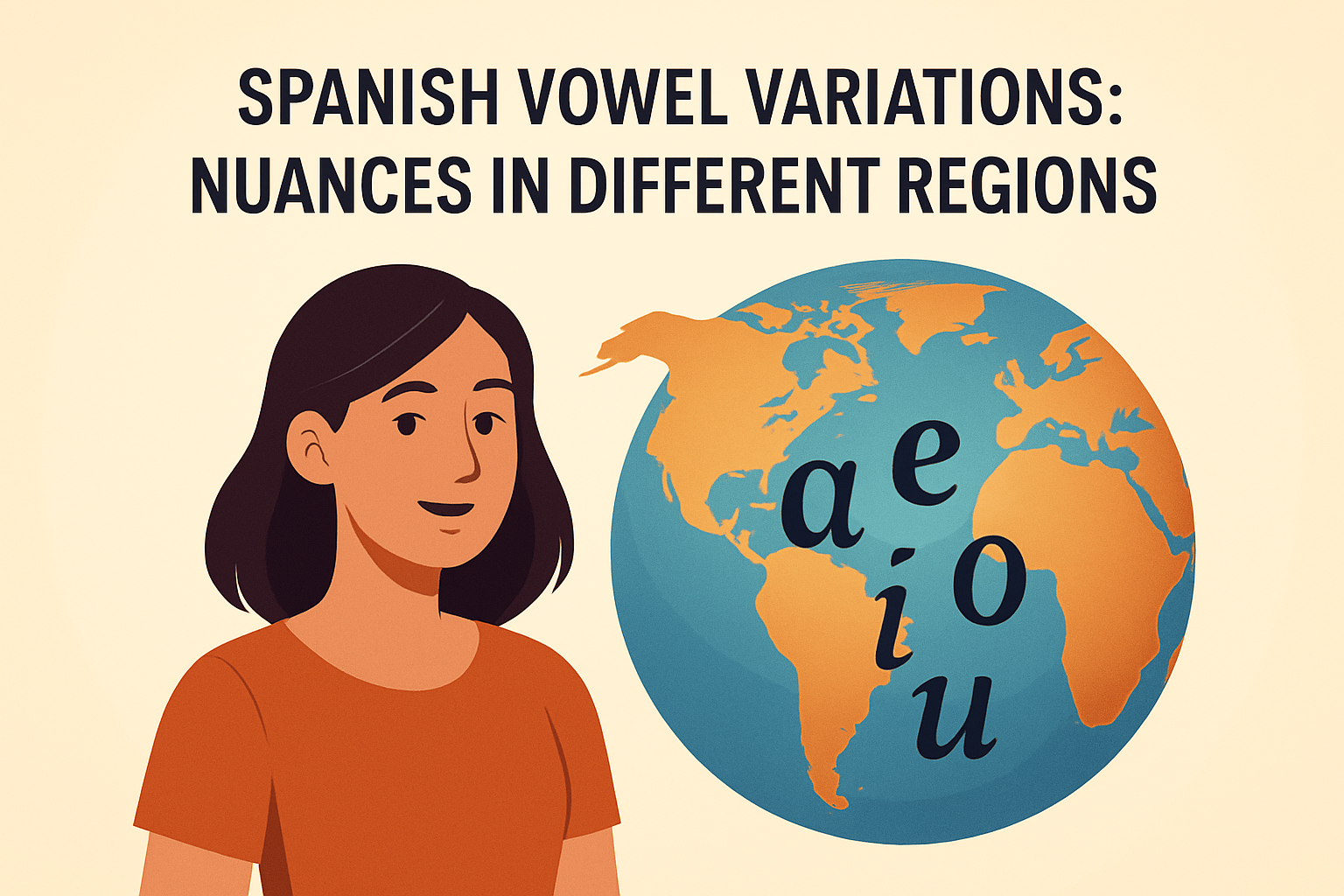
While Spanish vowels are consistent, slight deviations exist across different Spanish-speaking regions. For instance, in some parts of Colombia, the ‘o’ in “como” (how) might sound slightly more closed compared to how it’s pronounced in Spain. Let’s consider more:
| Region | Vowel Variation |
|---|---|
| Spain | Clear, long vowels |
| Mexico | Slighter nasal quality |
| Argentina | Distinct pronunciation of ‘ll’ and ‘y’ |
Understanding these subtle variations can aid learners in developing a more authentic Spanish accent appropriate for the specific region they are interested in. Furthermore, exposure to diverse accents through media or conversation with native speakers can familiarize students with these distinctions.
Common Missteps and How to Overcome Them
Mispronunciation of vowels is a common pitfall for English speakers learning Spanish, primarily due to the variability of vowels in English. For example, the English vowel sound ‘a’ can be pronounced differently in words like “cat,” “car,” and “cake.” Spanish learners might struggle by inadvertently elongating vowels or misplacing stress.
A practical approach to overcoming these missteps is through deliberate and focused practice. Here are steps you can take:
- Practice with audio recordings of native speakers.
- Record your own pronunciation and compare it with native audio.
- Engage in listening exercises to fine-tune your ear to the sounds of vowels or diphthongs.
- Use language apps or software that focus specifically on pronunciation exercises.
Through harnessing such effective strategies, learners can gradually refine their Spanish pronunciation and minimize the mispronunciation of vowels, leading to clearer and more correct speech.
Tools and Resources for Enhancing Pronunciation
Several tools and resources can assist learners in mastering Spanish vowel sounds. Language learning apps often feature pronunciation practice with feedback from native speakers. Additionally, online resources such as YouTube have numerous videos dedicated to Spanish phonetics.
Podcasts and audio books provide another way to immerse oneself in the sounds of the language, allowing learners to absorb the nuances in context. Moreover, joining forums or language exchange groups can provide real-time feedback and conversation practice, significantly boosting confidence and skill in pronunciation.
Conclusion: Steps Forward in Mastering Spanish Vowels
Understanding and mastering the nuances of Spanish vowel sounds is instrumental for developing a strong foundation in the language. These vowels form the pillars upon which the clarity and rhythm of Spanish are built. For learners, investing time and effort into perfecting these sounds not only enhances pronunciation but also leads to more effective communication and deeper cultural integration.
By exploring vowel characteristics, common diphthongs, the impact of accents, regional variations, and avoiding common missteps, learners can greatly improve their understanding and articulation of these vital components. Utilizing various tools and engaging in regular practice will ensure steady improvement and increased confidence.
Whether you are a novice or seeking to refine your skills, start by integrating specific practice routines into your language learning regimen. Begin by focusing on the accuracy and consistency of vowel sounds you pronounce, and actively converse with others in Spanish-speaking settings. As you solidify these foundational elements, you’ll find your ability to communicate effectively in Spanish will naturally flourish. Keep pressing forward, and enjoy the rich tapestry of sounds that is the Spanish language.
Frequently Asked Questions
1. Why are Spanish vowel sounds considered more straightforward compared to English?
Spanish vowel sounds are often deemed more straightforward than those in English because Spanish vowels have a consistent pronunciation regardless of where they appear in a word. In English, the pronunciation of vowels can change depending on the word, its origin, or its position. For example, the English letter “a” is pronounced differently in words like “cat,” “cake,” and “ball.” However, in Spanish, each vowel has one sound. For instance, the letter “a” is always pronounced like the “a” in “father” no matter its placement in a word. This consistency is a particularly welcoming feature for learners who are adjusting to mastering a new language. Yet, even with its simplicity, Spanish vowels have their nuances which learners must grasp to achieve proper pronunciation and fluency.
2. What are the basic Spanish vowel sounds and how should they be pronounced?
The Spanish language consists of five primary vowels: A, E, I, O, and U. Each of these vowels corresponds to a specific sound:
- A: This vowel is pronounced like the “a” in “father.” It’s an open front vowel, meaning your tongue is placed low in the mouth, and the mouth is open wide.
- E: This one sounds similar to the “e” in “bet” or sometimes like the “e” in “they,” though in Spanish, it is typically shorter and not drawn out as in English.
- I: Pronounced like the “ee” in “see.” It’s a high front vowel, where the tongue is raised close to the roof of the mouth.
- O: This vowel is similar to the “o” in “not” or “hot,” though it’s not as open. It’s more rounded and pronounced slightly shorter.
- U: Equivalent to the “oo” in “boot.” This sound is made with rounded lips and a tongue raised near the roof of the mouth.
Understanding and practicing these sounds is foundational to proper Spanish pronunciation and critical for distinguishing between words that might seem identical to the untrained ear but differ due to subtle vowel shifts.
3. How do these vowel nuances affect word understanding in Spanish?
In Spanish, vowel nuances play a crucial role in distinguishing between different words that would otherwise be identical in form. One classic example is the distinction between “papa” and “papá.” The former means “potato,” while the latter means “dad.” The stress and subtle variation in vowel pronunciation change the meaning completely. Similarly, “casa” (house) and “caza” (hunt) are differentiated by how they are vocalized, with the context given by vowels guiding understanding.
Failure to appreciate these nuances can lead to misunderstandings. Imagine a learner telling a friend they’re bringing “papas” to a family gathering, when they meant “papás!” These differences highlight the importance of precision and the potential for humor or embarrassment if the nuances are overlooked. Therefore, practicing these sounds and paying attention to context are essential for learners wanting to engage effectively in meaningful conversations.
4. What techniques can help learners recognize and master Spanish vowel sounds?
To master Spanish vowel sounds, immersion and practice are key. Here are several techniques that learners might find helpful:
- Listening Practice: Frequent exposure to spoken Spanish through music, movies, or podcasts enhances recognition of vowel sounds. Observing native speakers enables learners to pick up subtle pronunciation cues.
- Repetition and Mimicking: Repeating words and sentences after native speakers and mimicking their pronunciation can dramatically improve vocal accuracy. Use language learning apps or voice recording software to practice and listen to your own speech.
- Focus on Phonetics: Studying the phonetic alphabet for Spanish can aid understanding of each vowel’s distinct sound. Phonetic descriptions provide specific guidance on mouth and tongue placement which facilitates correct pronunciation.
- Contextual Learning: Engage with different contexts where specific vowel sounds might change meaning—such as a language exchange or speaking with native friends about daily topics.
By incorporating these techniques into regular learning routines, learners will find themselves increasingly adept at recognizing and reproducing authentic Spanish vowel sounds.
5. Are there regional variations in Spanish vowel sounds that learners should be aware of?
Yes, regional variations exist in the pronunciation of Spanish vowel sounds, much like with other languages. For instance:
- Latin American Spanish: Tends to have a more consistent vowel pronunciation with less vowel reduction than European Spanish, which can lead to clearer pronunciation of vowels.
- Spain’s Regional Accents: In some areas of Spain, particularly regions like Andalusia, vowels may be pronounced more softly or merged with adjacent sounds leading to a more ‘slurred’ style of speaking.
- Caribbean Spanish: Known for its rapid pace and dropping of some vowels or consonants, which can affect how vowels are perceived and understood.
While these are just a few examples, understanding regional variations is part of the charm of learning and appreciating a language like Spanish. For learners, being aware of these differences can help adjust expectations and listening strategies when engaging with content from different Spanish-speaking regions.